



Lignes de walking bass

Avec
Tim Richards
Le contenu du cours
23 leçons (1h 23min) · 1 gratuites






Transcription de la leçon
Exploring Left-Hand Techniques in "Take the A Train"
Before we leave this swing feel tune, Take the A Train, let's talk a little about another important left-hand style.
Reviewing Previous Techniques
We've already covered:
- The two feel
- Chords
However, we haven't yet explored a walking bass line for this tune. This is something you might like to dive into! Here are a couple of tips to guide your practice:
Basic Walking Bass Line Techniques
-
Full Bar Chords
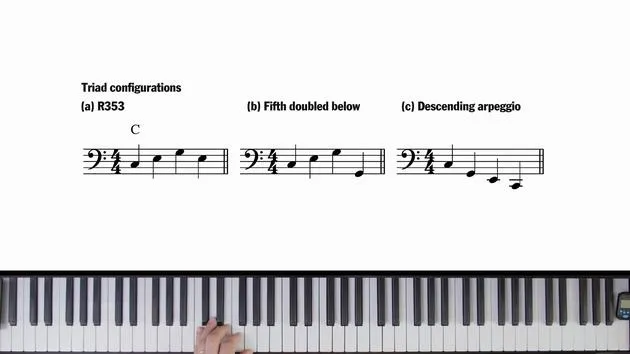
If you have one bar on a chord, you can play an ordinary triad pattern in its simplest form.- This could be:
- Down low
- Up high
Additionally, you can put the fifth on the bottom. This works for both major and minor chords.
- This could be:
-
Descending Triads
As we've seen before, descending triads can be effective in your playing.
Half Bar Approach
What happens if you only have half a bar on a chord?
I recommend a straightforward approach for this, especially in turnarounds.
- Example Turnaround: C, A, D, G
- Two beats each
- Play root and third
This would sound like this:
- C, A, D minor, G
To practice, try it an octave lower.
Complete Bass Line Example
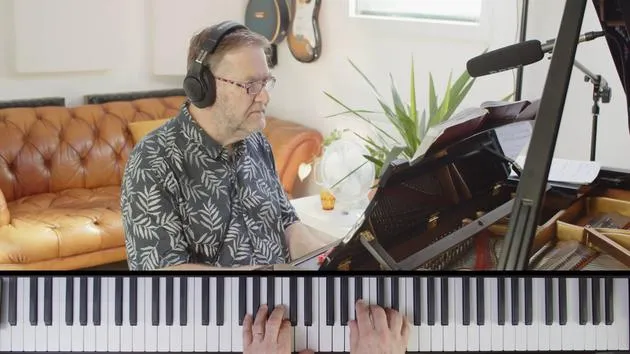
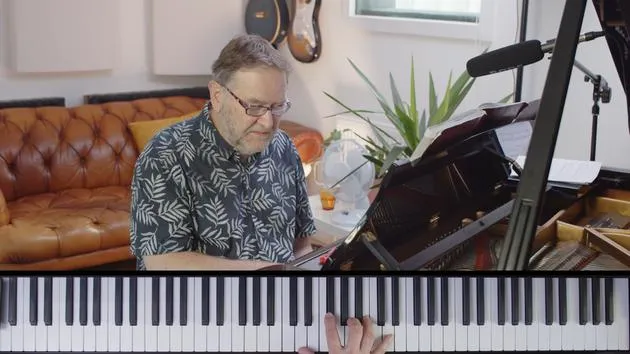
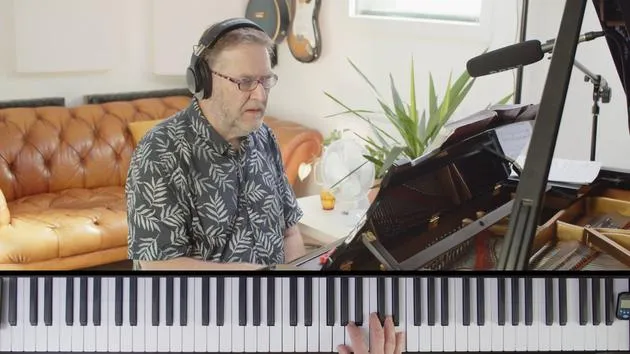
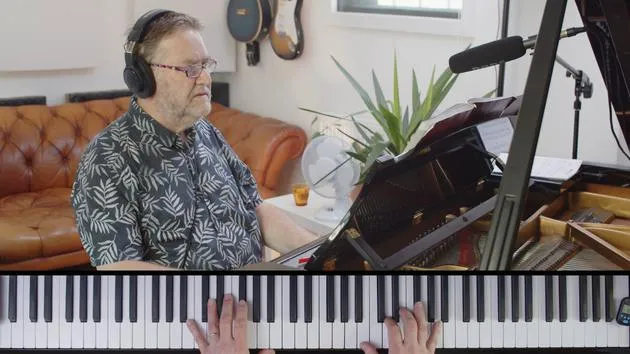
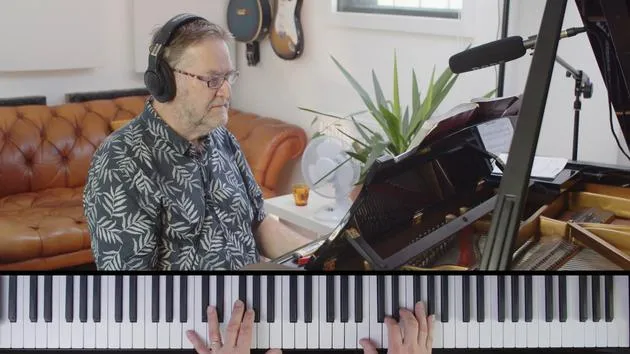
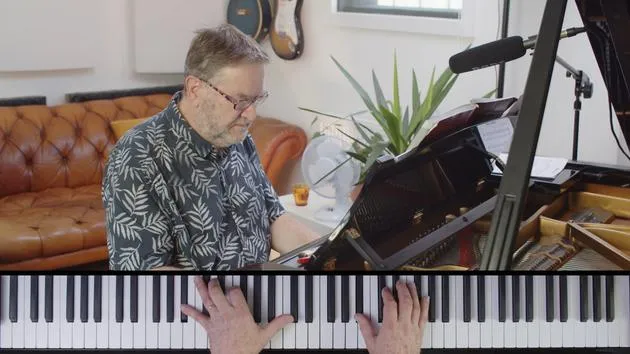
Here's a complete bass line for the first eight bars of Take the A Train. I've incorporated each of the devices mentioned.
(Note: It sounds even better down low.)
- Tip: Try some improvisation!
Mastering the Left-Hand Technique
If you can take the time to master this slightly more complex left hand, practice at slow to medium tempos.
It's a wonderful skill to be able to improvise or play the melody while keeping the walking bass going.
Introducing the "Run Up"
Before we wrap up, let's discuss a very common figure known as a "run up."
- Definition: This is when you go up a fourth.
- Instead of sticking to the notes of the chord, play a scale pattern from D minor to G, for example.
- You'll hear bass players do this all the time.
Application of the Run Up
Essentially, we're ascending the scale of the chord, but adding an extra note.
As we reach G, we want it on beat one, not beat four.
- If you're going from G to C, you can apply the same principle.
Practicing with Variations
Let's do our bass line again and include those two run-ups. This time, I'll incorporate the chords that lead us to the bridge.
- Bridge Arrival: Now I'm on F.
Key Transitions:
- Two run-ups: D minor → G7, then
- A descending triad,
- Root and third on G,
- Root and third on C.
This transition takes me neatly to F.
Conclusion
Have fun with that!
23 leçons
1h 23m de leçons vidéo structurées
Fonctions vidéo avancées
Ralentissez, bouclez un passage, suivez la partition
Mobile, tablette et ordinateur
Pratiquez où vous voulez
Satisfaction garantie à 100 %
Garantie remboursement 30 jours
Rencontrez votre guru
Rencontrez votre guru
Salué par la critique, le pianiste et compositeur de jazz Tim Richards est l'un des pédagogues de jazz les plus expérimentés de Grande-Bretagne, enseignant le piano en privé depuis plus de 30 ans, ainsi qu'au Morley College, au Goldsmiths College, à l'University of Surrey, aux Premises Studios et dans d'autres lieux au Royaume-Uni et à l'étranger. Il a produit de nombreux titres pour Schott Music, dont les best-sellers en deux volumes Exploring Jazz Piano, Blues, Boogie & Gospel Collection et le très apprécié Improvising Blues Piano. Il est également coauteur, avec John Crawford, de Exploring Latin Piano et Brazilian Piano Collection.
Plus récemment, Schott a publié Jazz, Latin & Modern Collection (15 pièces pour piano seul), réunissant des originaux de Tim Richards aux côtés de pièces de Duke Ellington et Thelonious Monk, ainsi que le coffret en deux volumes Beginning Jazz Piano (désormais un cours MusicGurus en deux parties).
“La véritable joie de la musique de Tim… c'est qu'elle est à la fois extrêmement pédagogique et tellement amusante à jouer. Quiconque a le moindre intérêt pour apprendre à jouer ou à enseigner le piano jazz devrait vraiment se procurer un ensemble des ouvrages de Tim.” PianoDao
En tant qu'interprète, Tim est une figure de la scène jazz britannique depuis les années 1980, jouant aussi le blues avec des légendes britanniques et américaines telles qu'Otis Grand, Earl Green, Dana Gillespie, Larry Garner, Joe Louis Walker et Mojo Buford. Il a sorti plus d'une douzaine d'albums en tant que leader (avec bon nombre des meilleurs musiciens de jazz de Londres, dont Pete King, Gilad Atzmon, Tony Kofi, Jason Yarde, Seb Rochford, Ed Jones, Dick Pearce et beaucoup d'autres) et a tourné dans toute l'Europe avec des formations allant du duo au nonette. Son dernier enregistrement, l'album ‘Telegraph Hill’ du sextet Hextet, a été décrit dans The Observer comme "Un pur bonheur du début à la fin".
Plus d'informations sur son site web www.timrichards.ndo.co.uk







