



Analyse, explication et démonstration avec Ana Chumachenco
Avec
Ana Chumachenco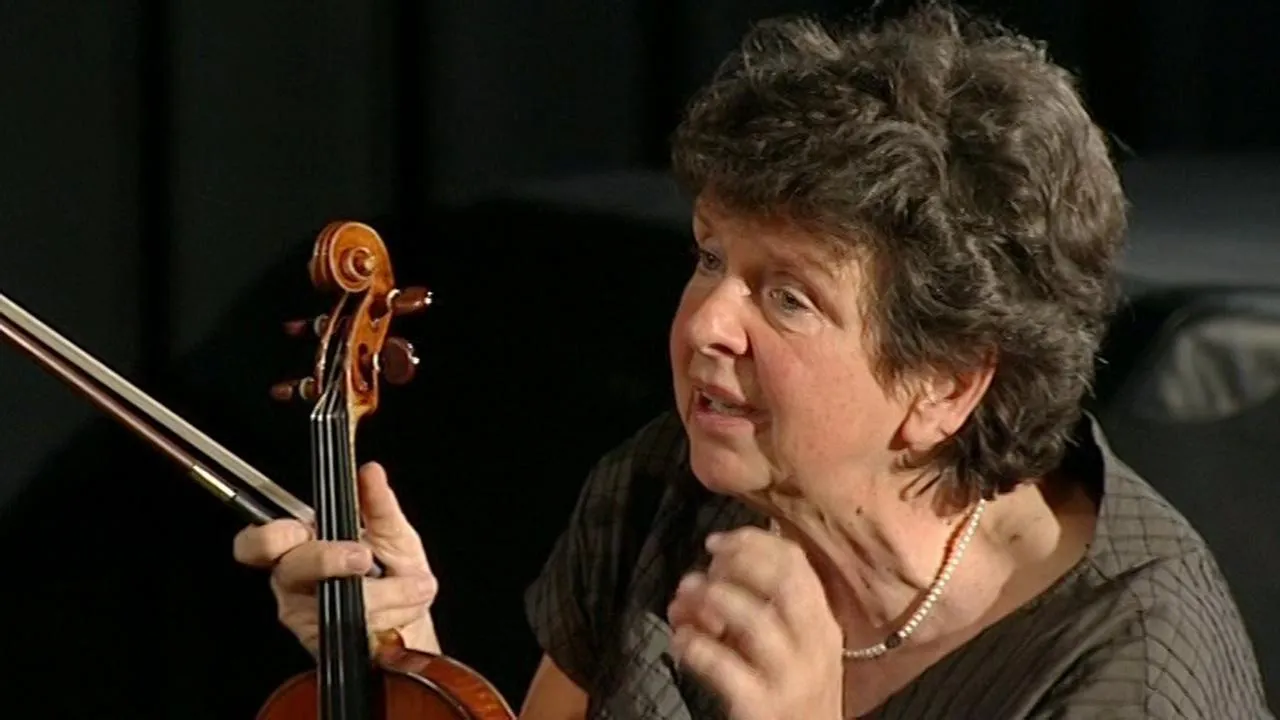
Le contenu du cours
6 leçons (1h 59min) · 1 gratuites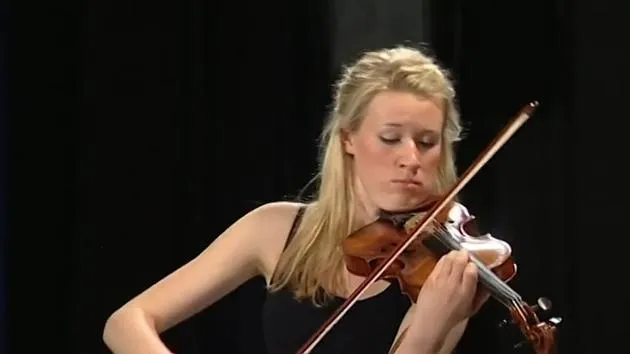
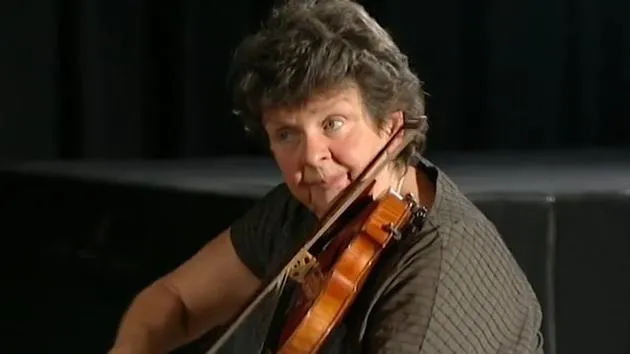
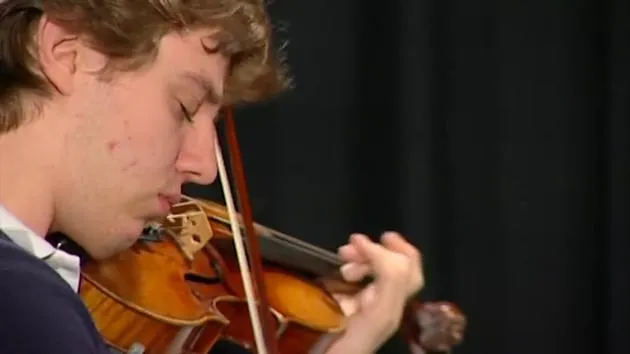
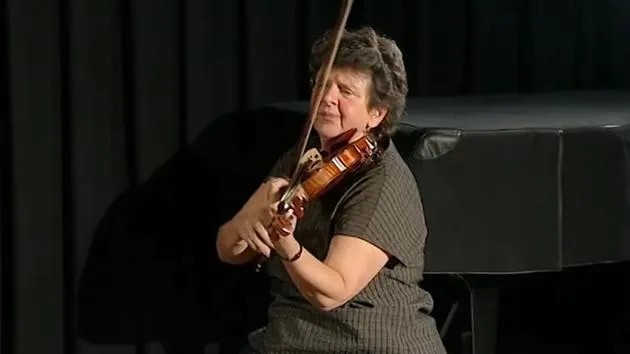
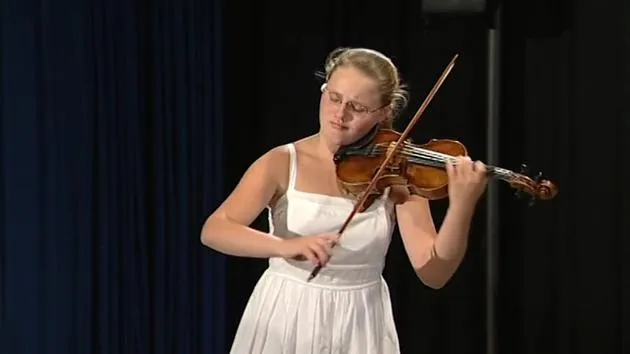
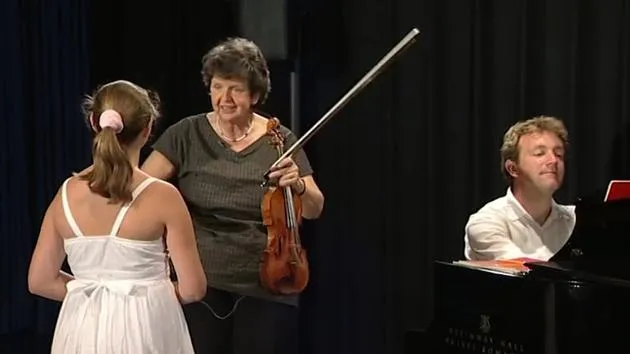
Transcription de la leçon
Music Lesson
Introduction to Details in Performance
"Only sometimes the details you do are very little. Nice details, but one doesn't hear them."
Key Concepts: Balance and Differentiation
-
Finding the Balance:
- "It's nice. It's beautiful. But it's too little."
- It's always about finding the right measure.
- The balance must be maintained so that the student feels this balance.
-
Revisiting the Beginning:
- "The beginning was very beautiful. But maybe we can start again."
- "Don't do those too long. Not too much of that. Those accents. Let's start again."
Working with Timing and Dynamics
-
Interaction with the Orchestra:
- "You wait for Tobias or for the orchestra when you play also. No, not too soon."
-
Listening Skills:
- "I'm sorry, maybe I have some trouble here. I don't hear the first two."
Articulation and Control
- Final Notes and Phrasing:
- "You have to learn to play the last note. To end. To finish a phrase."
- "It's a question of bow control. Too much bow is never enough bow."
Technical Execution
-
Clarifying Techniques:
- "Think about it. Somewhere around there. Yes. Yes, it's much better."
- "The endings are disappearing. This cuts everything into little pieces."
-
Building Connections:
- "That's a way also of making a connection between all these different parts."
Practicing with Intent
- Differentiating Sounds:
- "The less you play, the more piano, the more you have to articulate very clearly."
- "We can play very, very piano. But I think we don't know how to play pianos."
Encouragement for Improvement
- Technical Challenges:
- "There is a little bit of a technical problem. You play either a lot with the fingers, and the other things you play with the arm."
- "Make sure you give the movement from here, but the changes you do from here."
Refinement and Practice
- Refining Phrasing and Dynamics:
- "More bow, more sound, more everything."
- "Always the trills up bow. With a little accent for the articulation."
Conclusion
- Final Thoughts on Performance:
- "When you have control of everything, then you can let go."
- "It's either ways, but when you know everything functions, let it come by itself."
Closing Remarks:
"Thank you very much."
6 leçons
1h 59m de leçons vidéo structurées
Fonctions vidéo avancées
Ralentissez, bouclez un passage, suivez la partition
Mobile, tablette et ordinateur
Pratiquez où vous voulez
Satisfaction garantie à 100 %
Garantie remboursement 30 jours
Rencontrez votre guru
Rencontrez votre guru
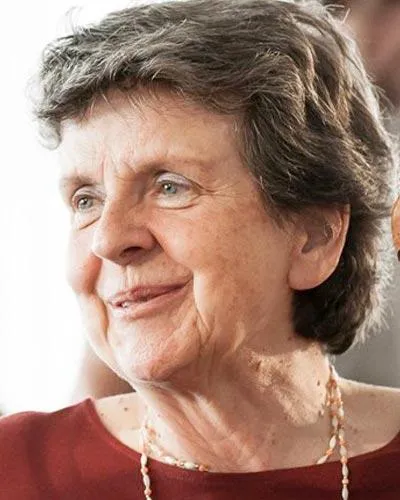
D'origine russe mais née en Italie et de nationalité argentine et allemande, Ana Chumachenco a commencé le violon à l'âge de quatre ans sous la houlette de son père, disciple de Leopold Auer, puis avec Ljerko Spiller à Buenos Aires. Après avoir mené une carrière remarquable dès ses premières années, elle est revenue en Europe à 17 ans pour poursuivre ses études. Un an plus tard, elle remportait la médaille d'or au concours Carl Flesch de Londres et, quelques années après, la médaille d'argent au Concours Reine Élisabeth de Bruxelles. Ses mentors musicaux de ces années furent Joseph Szigeti, Sandor Vegh et Yehudi Menuhin.
Outre ses récitals et ses apparitions en soliste avec de grands orchestres, Ana Chumachenco a consacré une grande partie de son temps à la musique de chambre, notamment au sein d'un trio à cordes avec son mari et altiste, Oscar Lysy, et le violoncelliste Walter Notas, avec qui elle s'est produite pendant plus de 20 ans sous le nom de Munich String Trio.
Ana Chumachenco est titulaire d'une chaire à la Musikhochschule de Munich et l'une des professeures de violon les plus recherchées au monde : ses élèves sont de remarquables jeunes violonistes devenus eux-mêmes solistes internationaux. Elle est aussi régulièrement invitée à siéger comme jurée dans de grands concours de violon, tels que le Concours musical international Reine Élisabeth de Belgique, le Concours international de violon Jean Sibelius de Helsinki, et d'autres.
Dans sa masterclass MusicGurus sur les Concertos pour violon n° 3, 4 et 5 de Mozart, tu peux étudier directement avec elle. Ana partage les intuitions qui ont façonné toute une génération de solistes : comment modeler une phrase, colorer ton timbre, maîtriser les coups d'archet et l'articulation, et faire ressortir le caractère, l'esprit et le chant qui rendent Mozart si révélateur à jouer.







