



When Harry Got To Heaven
Avec
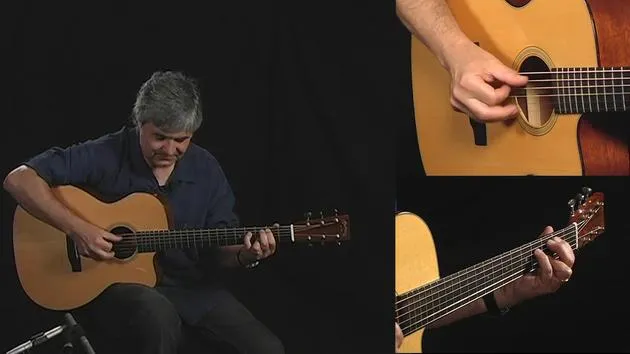
Laurence JuberDans cette vidéo, Laurence t'enseigne et interprète son morceau When Harry Got To Heaven.
Le contenu du cours
11 leçons (1h 58min) · 1 gratuites
Transcription de la leçon
Music Lesson: When Harry Got to Heaven
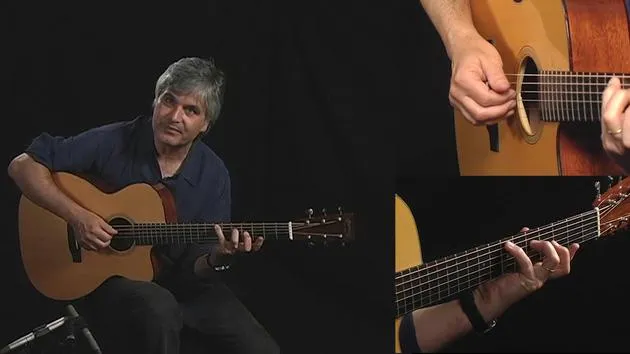
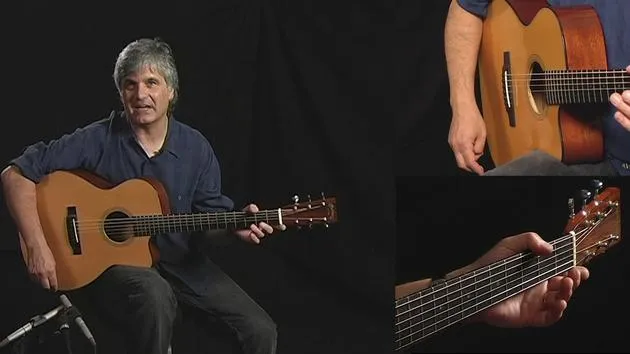
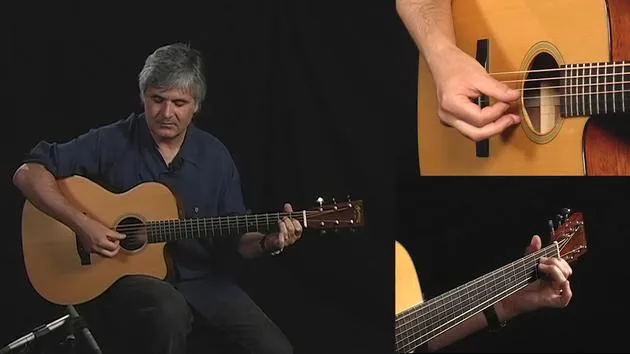
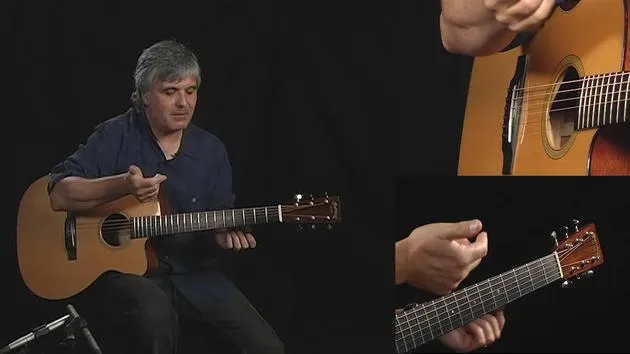
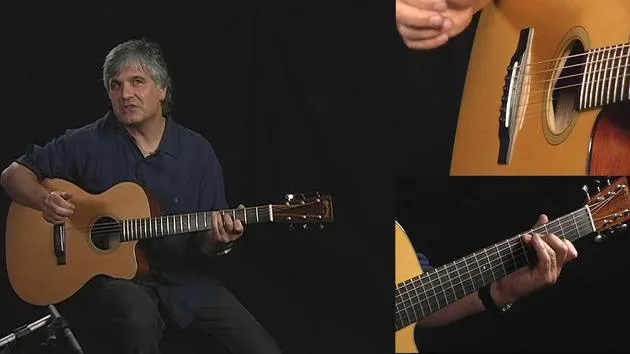
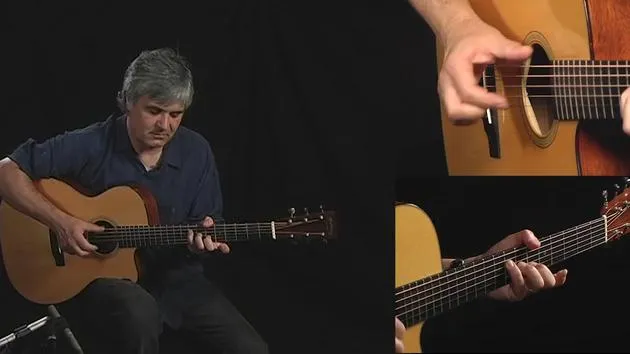
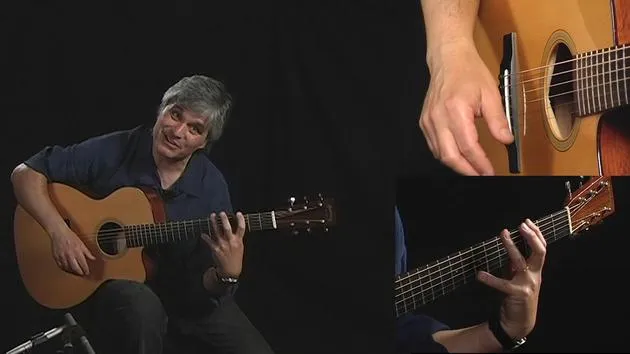
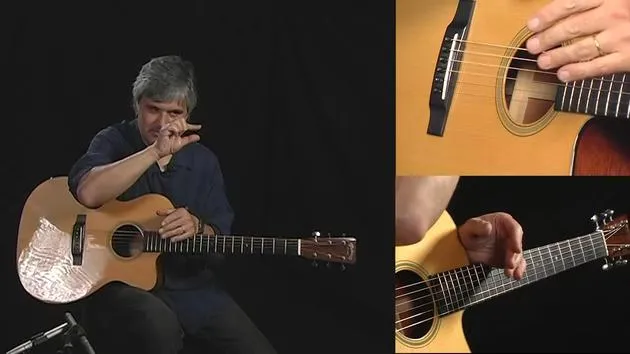
That's a tune of mine called When Harry Got to Heaven. I'm not going to do a full breakdown of it, but I'll just talk about some parts of it because it uses certain elements of what we've been discussing in music theory.
Key and Chord Progressions
-
Key: F
This key is not the easiest for guitar in standard tuning because it kind of revolves around the bar or thumb position in the first position. -
Chord Changes:
- F
- Bb Major 7
- A7
Now I got a little tricky movement here. I'm really trying to go for open strings ringing together.
Harmonic Analysis
There, I'm going from a Bb to essentially what is an E7 flat 9, but over a B. Actually, let's analyze it a little differently.
- It is an E7B9 over a B.
- This is a second inversion chord.
Next, I'm going from an F (first inversion F, very dense and low when played as a chord). However, I'm not playing it as a chord; it's part of the counterpoint.
Then, I move to a D minor. Instead of playing a traditional D minor, it's just a D with:
- D bass
- F in the melody
- E in the melody
Melodic Movement
Moving up from:
- E to E7
- A7
- C7
You can see how, instead of playing block chords, I've got bass movement and melodic movement. Within the style, these elements come together. I'm not thinking in terms of the chords themselves, but of the whole texture.
B Section Complexity
It gets tricky in the B section because I go to:
- F sharp (temporarily)
- G
- E minor (which is a long way from my home key of F)
But I manage to get back there by doing:
- B, C, B, C
These are straightforward chord shapes, and then I'm back in F.
Octaves for Melodic Strength
One of the things I really want to point out is how I'm using octaves in the third section to get melodic strength. I don't have to define harmonies there. My basic harmony is a C.
- You hear the C chord, and I love this nice bluesy lick.
- I'm walking down to an A and walking up to a D minor.
Now I'm jumping down to this position and walking down with the bass line, creating contrary motion where the bass and melody are moving in different directions.
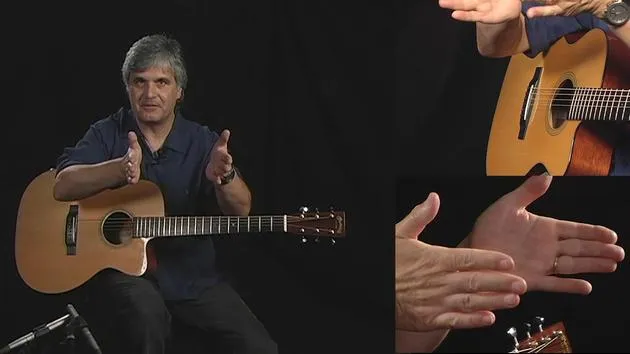
Here's an example where I'm making the stretch, stretching back to the low note:
- Stretching over 1, 2, 3, 4, 5 frets.
- Stretching back makes it easier.
Progression Overview
The whole progression is in octaves, and you don't really miss the harmony because it's forceful and, in the style, it makes sense to do that.
Then I have this kind of progression:
- D minor to G
- A, D
- G to D minor to C
All these things work out in terms of how you can analyze them harmonically. However, it takes it to an advanced level where I'm doing almost a clear-cut chord melody, outlining the whole melody within the chordal progression.
Conclusion
You can study that music and see how far you can take that particular piece.
In the next segment, we will look at the combination of chord melody and also delve into the more advanced area of minor key harmonization.
11 leçons
1h 58m de leçons vidéo structurées
Fonctions vidéo avancées
Ralentissez, bouclez un passage, suivez la partition
Mobile, tablette et ordinateur
Pratiquez où vous voulez
Satisfaction garantie à 100 %
Garantie remboursement 30 jours
Rencontrez votre guru
Rencontrez votre guru
Laurence Juber s'est d'abord fait connaître comme guitariste principal des Wings, le groupe de Paul McCartney. Depuis, il a bâti une carrière de guitariste fingerstyle, compositeur et arrangeur, travaillant essentiellement en accordage DADGAD, ce qui lui a valu le surnom de 'the Duke of DADGAD'.
Élu Guitariste de l'année par les lecteurs de Fingerstyle Guitar Magazine et cité parmi les meilleurs guitaristes par le magazine Acoustic Guitar, il affiche aussi une longue liste d'albums solo et de tournées à travers le monde.
Dans ses cours, il enseigne sa technique fingerstyle et l'accordage DADGAD qui l'a rendu célèbre, comment agencer mélodie, harmonie et basse pour la guitare solo, et les morceaux - comme sa pièce phare 'Wooden Horses' - qui réunissent le tout.







