



Análisis, explicación y demostración con Steven Isserlis
Qué incluye el curso
2 lecciones (1h 13m) · 1 gratis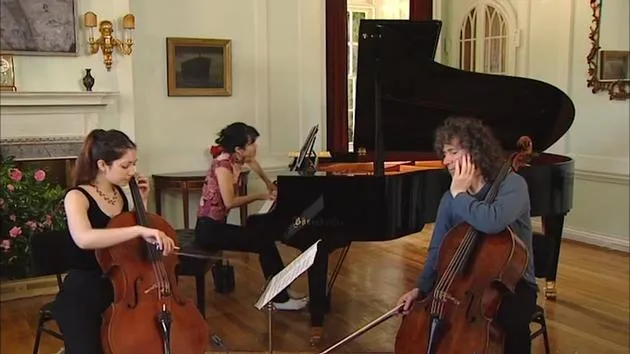
Transcripción de la lección
Music Lesson
Discussion on Interpretation:
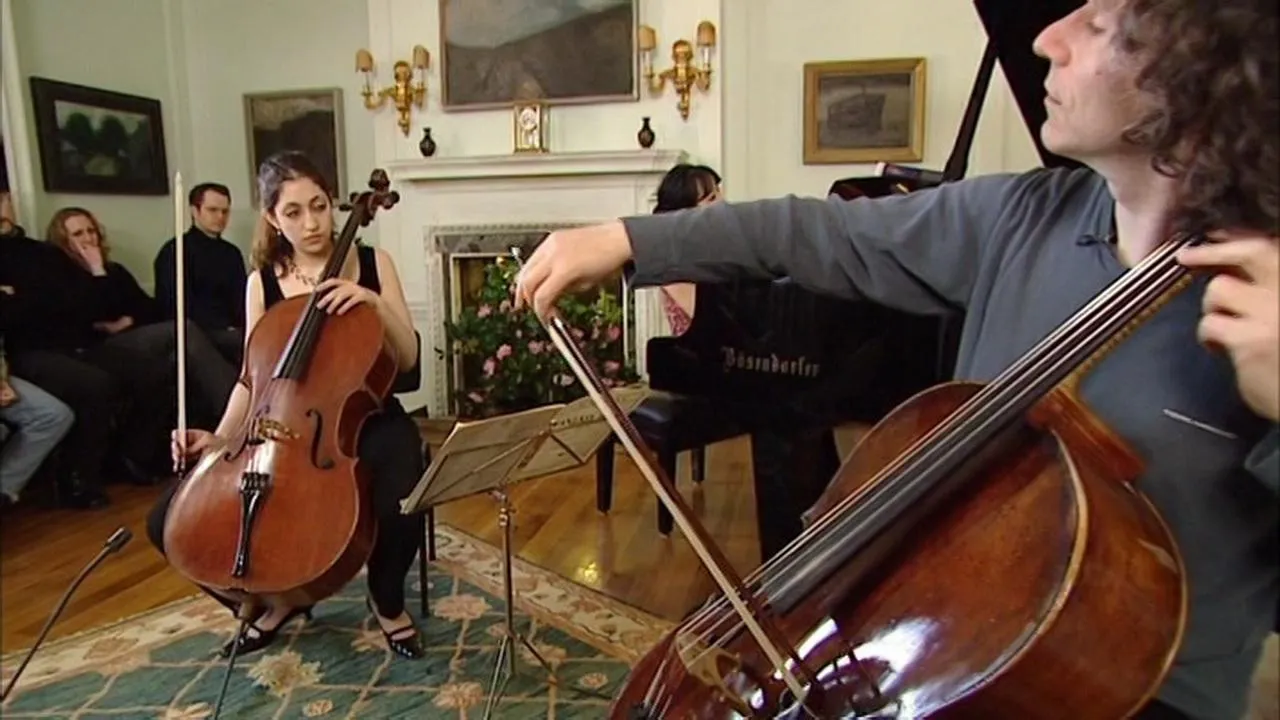
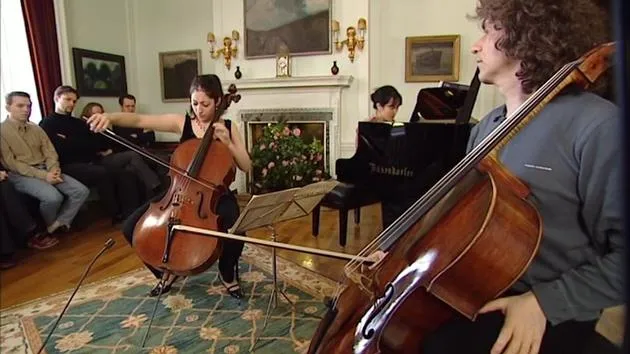
Okay. You want to talk about that? Okay. Yeah, it's very nice. The thing is, what's the marking at the top?
Metronome Mark:
- 80 - Yes, that. Which is actually. That's the metronome mark. Yes, which is slow. It's slower than what you're doing.
Mood Indication:
- Tender and Expressive - Okay. I mean, what you're doing is very appassionata. I would say it was passionate. It doesn't strike me as tender.
Analysis of Phrasing:
- The fact that he writes a slow metronome mark and then he writes these gentle triplets and these conversations between the two of you, I'm not really hearing them. I'm hearing a kind of outburst of passion, but I'm not sure that's what he's asked for.
Revisiting Phrasing:
- Let's begin again and think.
- Do the phrases tend to be rising or falling?
- Rising.
- Is that rising? No, I think not. I think it's basically these falling phrases.
- You're kind of pushing through them, so we miss some of the beauty of that.
Beginning Again:
- Okay, let's begin again.
Piano Introduction:
- Now, how does the piano start? What's the tune before you come in?
- Yes, the triplets. Yes, accompanying.
- But what's the... what do you really respond to without looking?
- That's cheating.
- Cheers. Exactly. And you respond. She asks the question, and you answer.
Dialogue in Music:
- Okay, I didn't hear the dialogue. I mean, I think you could bring out the question, the forte piano, a little more. But then you have to respond to it in kind.
- Yeah, okay. But she goes, and I want to hear from you.
Phrasing and Importance:
- What you're doing is... I don't hear the same phrase, which then, of course, goes on. But I have to hear that conversation.
Identifying Central Notes:
- What is more? What are your central notes to this phrase?
- What's the most important? Which ones?
- The F and then A. Yeah.
Curve of the Phrase:
- Okay. So there's, in a very gentle way, what you're doing is you're making each note equal. And that somehow doesn't make this lovely curve to the phrase.
Expressiveness of Notes:
- Why is the G there? I mean, the first time you went. Now you go, why?
- It's more emphatic. It's expressive.
- Okay. But you ran through it.
Slowing Down for Expressiveness:
- I mean, that's why I think you're a bit hurried for this, because you got to have time to enjoy this kind of... this beauty here and all these conversations.
- Listen to that. The piano goes. And you answer, and more. So nothing's in a hurry. Nothing's breathless.
Imagery of a Love Duet:
- It's kind of a... sorry, I know it's very inappropriate, but it's kind of a love duet, isn't it? A love conversation.
- So you can imagine whoever playing the piano having this.
Natural Flow of Music:
- No, sorry, it's not. If you have equal notes like that, it's like we are talking like that. It doesn't sound natural, so you have to go. So it just falls again.
Visualizing the Music:
- You can see, when you look at the music, these curves. He's written lovely soft lines. So go with them outside.
Final Encouragement:
- Yeah, okay. That was very nice. It was very nice. But you phrase beautifully here.
- See you later, darling. It was kind of... I think you need that.
Going Back to Beginning:
- Go with the curve. That's much more poetic. Otherwise, it becomes solid. You can't really go from anywhere in there.
- So one last time from the beginning.
Maintaining the Flow:
- Yeah, not a... Sorry, one more time from the beginning. But you still sound in a hurry. I mean, somehow it's a poem, this.
Key Observations:
- If any, if you use kind of some boring prosaic word, it's no longer poetic.
- And that's what you're doing. If you go, you've had these strange words.
- In the midst of all this beauty, you just let it float.
- It's not never solid, this music.
- Listen, answer good. Loud curve.
Transitioning to the Next Phrase:
- Okay, good.
Exploring the Questioning Phase:
- Despite that. What's the difference here now?
- What's happened after that?
- Yeah, after that it's questioning.
- What's happened after that?
Listening and Responding:
- Okay, so in your color question, the piano goes. And you join in.
- So not a kind of... okay, not solid, but not definite.
Understanding the Phrase's Intent:
- The color. Just from there.
Continuing the Phrase:
- Yeah, okay. Do you want the phrase to stop or to go on?
- Go on.
Maintaining Rhythm:
- Okay, so what you're doing is keep landing on the beat. Always take it away from the beat. And then it'll want to go on the phrase.
Gestalt of the Music:
- It's not the bit I was doing.
Conclusion:
Your performance and interpretation can be transformed into a more poetic and flowing representation of the music. It's essential to remain responsive to the dialogue within the piece and connect emotionally to each section while maintaining the natural rhythm and color of the music. Remember, this is a journey of expression, let the music guide you!
2 lecciones
1h 13m de lecciones en vídeo estructuradas
Funciones de vídeo avanzadas
Ralentiza, repite un pasaje, sigue la partitura
Móvil, tablet y ordenador
Practica donde quieras
Garantía de satisfacción 100%
30 días de garantía de devolución
Conoce a tu gurú
Conoce a tu gurú
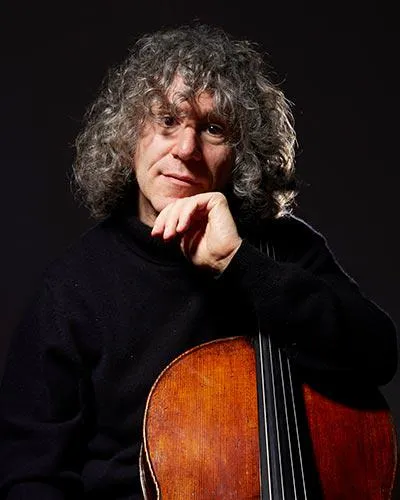
Steven Isserlis es un violonchelista cuya pasión por la música trasciende las divisiones convencionales, aclamado en todo el mundo tanto por su musicalidad como por su técnica. Es también uno de los profesores más generosos del mundo del violonchelo: imparte clases magistrales con regularidad por todo el planeta y desde hace tiempo es director artístico del seminario de clases magistrales y música de cámara IMS Prussia Cove. Aprender de él significa acceder a esa rara combinación de erudición, imaginación y puro gozo por la música.
Se siente igual de cómodo atrayendo al público a su círculo de amigos para tocar música de cámara o en recital; sumergiéndose en los archivos históricos para rescatar una joya olvidada; o en el escenario junto a algunas de las orquestas y directores más prestigiosos del mundo. Nacido en Gran Bretaña, Isserlis muestra un profundo interés por la interpretación con criterios históricos y toca con muchas de las principales orquestas de instrumentos de época. En temporadas recientes ha interpretado todas las obras de Beethoven para violonchelo junto al fortepianista Robert Levin, tanto en Boston como en el Wigmore Hall de Londres, y ha interpretado el Concierto para violonchelo de Dvořák con la Orchestra of the Age of Enlightenment bajo la dirección de Sir Simon Rattle.
Schumann es una pasión particular: interpretó el Concierto para violonchelo de Schumann en una gran gira por Alemania, impulsó un proyecto Schumann en Japón e intervino en una velada de palabras y música dedicada a la historia de Schumann y Brahms —con un guion escrito por el propio Isserlis— en Londres y Nueva York.
Escribir y tocar para niños es otro de sus grandes intereses. Su primer libro, una historia para niños sobre la vida de seis grandes compositores, Why Beethoven Threw the Stew, fue publicado por Faber and Faber en octubre de 2001, y una secuela, Why Handel Waggled his Wig, apareció en 2006.
Con una discografía galardonada, las grabaciones de Isserlis reflejan sus diversos intereses en el repertorio; su publicación de las Suites completas para violonchelo solo de Bach en el sello Hyperion recibió la más alta aclamación de la crítica y ganó numerosos premios. Nombrado CBE en 1998 en reconocimiento a sus servicios a la música, ha recibido muchos otros honores, entre ellos, en el año 2000, el Premio Schumann de la ciudad de Zwickau (lugar de nacimiento de Schumann).







