



Análisis, explicación y demostración por Steven Isserlis
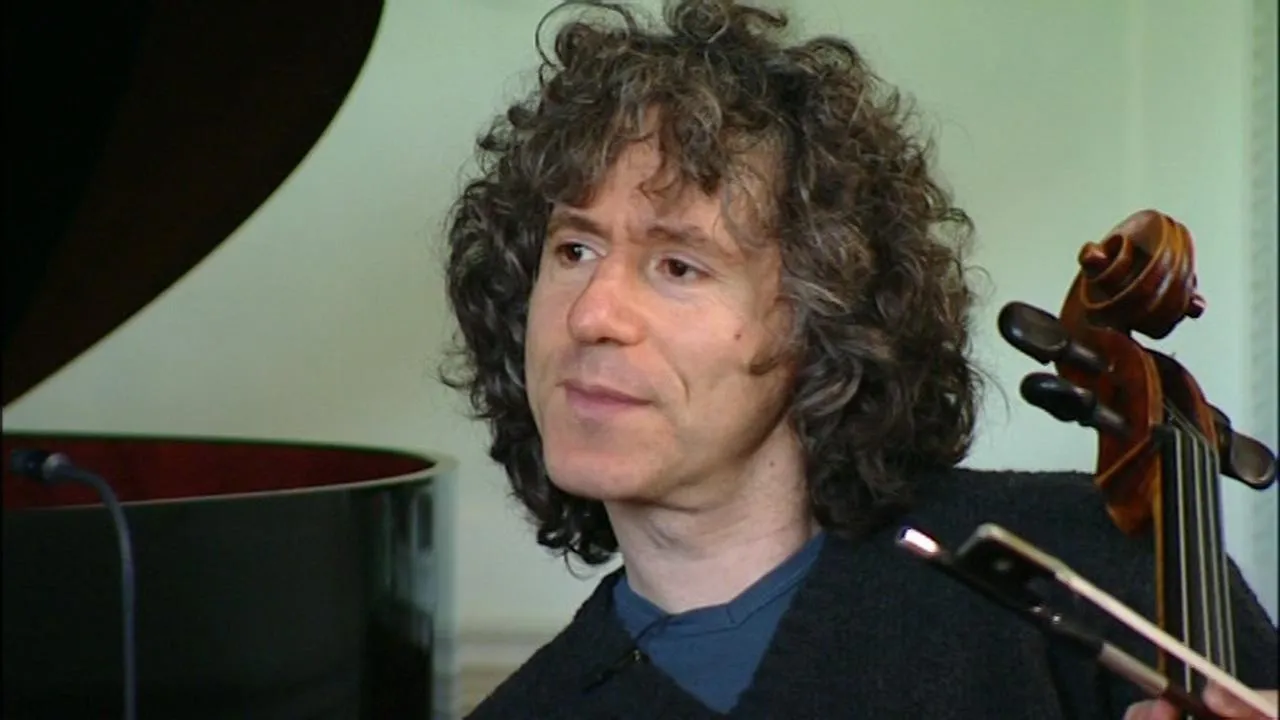
Qué incluye el curso
2 lecciones (1h 15m) · 1 gratis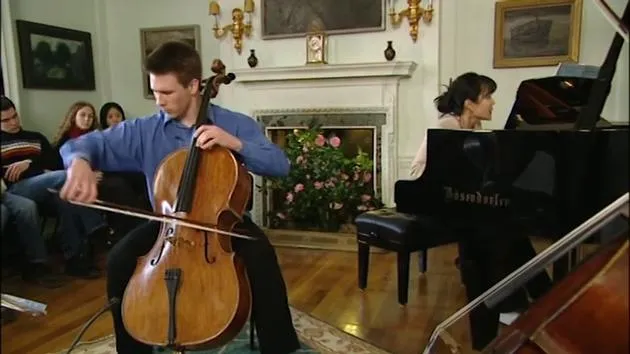
Transcripción de la lección
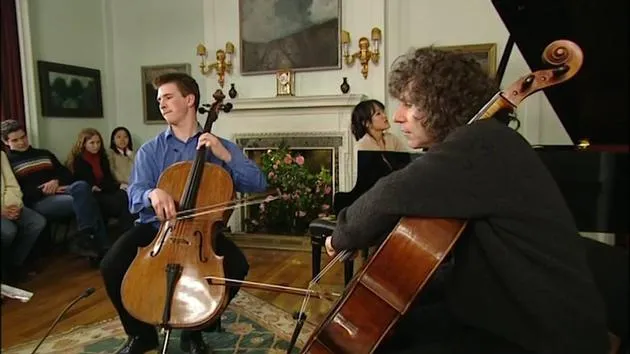
Music Lesson
Discussion on Color and Dynamics
"Goody. I think you could pull your colors much further apart when you're being very active. I think in terms of color, in terms of dynamic, and in terms of tempo."
- Active Passages:
There are passages that really want to move forward, transitioning into new realms. - Beautiful Melodies:
Some sections are designed to relax; however, you're never really relaxing.
Challenges in Balance
"I know it's a difficult piece for balance. There's one bar in the slow movement where the piano has 62 notes and the cello has four."
- One must be very careful that all these notes in the piano let the cello through.
Pianissmo and Courage
"Having said that, I do think your pianissimos have gone missing a bit. You just got to have the courage to do nothing at some points."
- Impact of Contrast:
When it's really impassioned, it's much more exciting if there are contrasting moments of stillness.
Atmosphere of the Introduction
"What do you think about the introduction? What's the atmosphere?"
- Searching and meditative, looking for something.
- "I thought you started that way, but by bar three, you were already in quite a panic about whether you were going to find it."
Crescendo Significance
"What's the significance of this? Why does he crescendo to this?"
- It may suggest a bit of hope.
- "But I mean, it's just a suggestion, not a statement."
Relaxation and Emotions
"Relax, relax. Switch off your vibrator, boy. It's not expressing anything."
- Vibrato should be used to express emotion; it should not be an automatic part of your sound.
Tempo Considerations
"Why are you going faster? I suppose because I feel it's going somewhere."
- Feel for Change:
Has it changed harmonically?
Finding the Right Key
"Do you find it there? What key is that? Is that what you've been looking for?"
- "You've been lost, and suddenly you get this announcement. And then the piano goes."
Discussion on Phrasing
"I mean, this piece is full of bells, I think."
- "Remember how the piece started. This question about an E flat. And now this E flat announces that you're gonna go home."
Final Thoughts
"Take time, if anything, on that. Relax there."
- Rising Tension:
"This isn't tense. I want to hear all that story happening."
Conclusion
"Good. Very good. Well, I'm funny. It's."
2 lecciones
1h 15m de lecciones en vídeo estructuradas
Funciones de vídeo avanzadas
Ralentiza, repite un pasaje, sigue la partitura
Móvil, tablet y ordenador
Practica donde quieras
Garantía de satisfacción 100%
30 días de garantía de devolución
Conoce a tu gurú
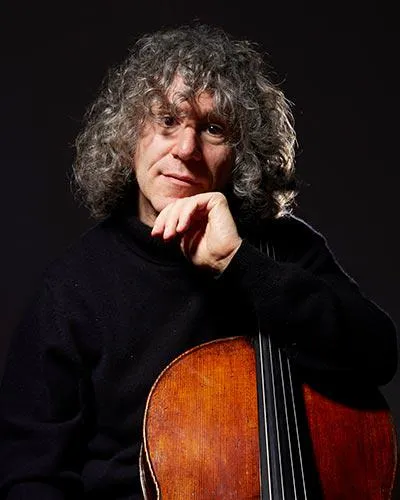
Conoce a tu gurú
Steven Isserlis es un violonchelista cuya pasión por la música trasciende las divisiones convencionales, aclamado en todo el mundo tanto por su musicalidad como por su técnica. Es también uno de los profesores más generosos del mundo del violonchelo: imparte clases magistrales con regularidad por todo el planeta y desde hace tiempo es director artístico del seminario de clases magistrales y música de cámara IMS Prussia Cove. Aprender de él significa acceder a esa rara combinación de erudición, imaginación y puro gozo por la música.
Se siente igual de cómodo atrayendo al público a su círculo de amigos para tocar música de cámara o en recital; sumergiéndose en los archivos históricos para rescatar una joya olvidada; o en el escenario junto a algunas de las orquestas y directores más prestigiosos del mundo. Nacido en Gran Bretaña, Isserlis muestra un profundo interés por la interpretación con criterios históricos y toca con muchas de las principales orquestas de instrumentos de época. En temporadas recientes ha interpretado todas las obras de Beethoven para violonchelo junto al fortepianista Robert Levin, tanto en Boston como en el Wigmore Hall de Londres, y ha interpretado el Concierto para violonchelo de Dvořák con la Orchestra of the Age of Enlightenment bajo la dirección de Sir Simon Rattle.
Schumann es una pasión particular: interpretó el Concierto para violonchelo de Schumann en una gran gira por Alemania, impulsó un proyecto Schumann en Japón e intervino en una velada de palabras y música dedicada a la historia de Schumann y Brahms —con un guion escrito por el propio Isserlis— en Londres y Nueva York.
Escribir y tocar para niños es otro de sus grandes intereses. Su primer libro, una historia para niños sobre la vida de seis grandes compositores, Why Beethoven Threw the Stew, fue publicado por Faber and Faber en octubre de 2001, y una secuela, Why Handel Waggled his Wig, apareció en 2006.
Con una discografía galardonada, las grabaciones de Isserlis reflejan sus diversos intereses en el repertorio; su publicación de las Suites completas para violonchelo solo de Bach en el sello Hyperion recibió la más alta aclamación de la crítica y ganó numerosos premios. Nombrado CBE en 1998 en reconocimiento a sus servicios a la música, ha recibido muchos otros honores, entre ellos, en el año 2000, el Premio Schumann de la ciudad de Zwickau (lugar de nacimiento de Schumann).







