



Freightshaker, Simon Troup (lección)

Qué incluye el curso
27 lecciones (2h 50m) · 2 gratis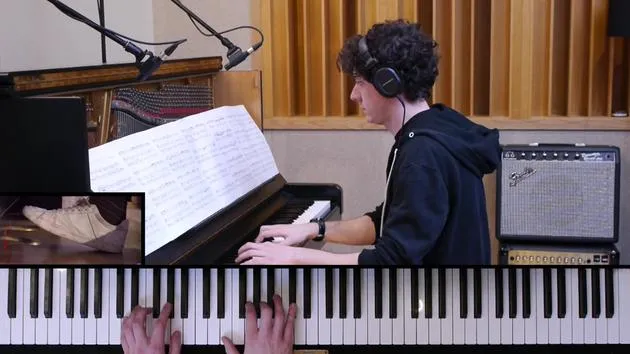
01. These Are The Days, Jamie Cullum (interpretación)
3:28
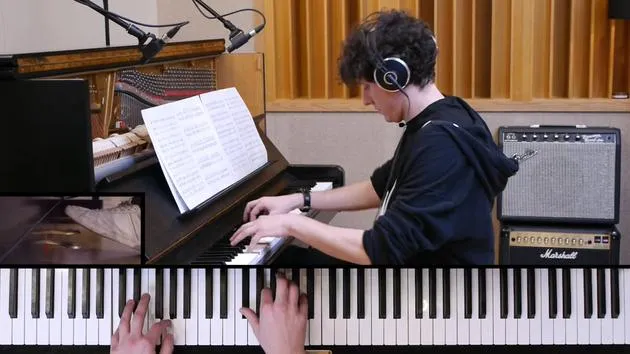
02. Straighten Up And Fly Right, Diana Krall (Interpretación)
Lección gratis4:08
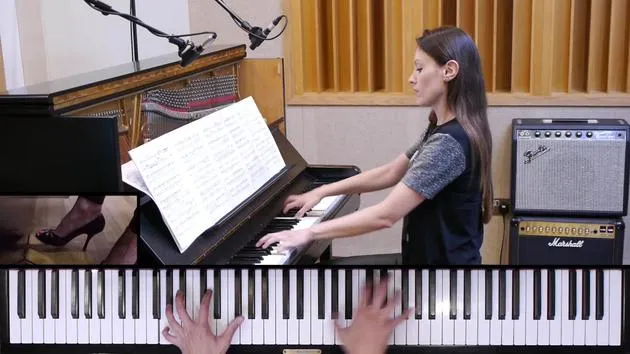
03. Bohemian Rhapsody, Queen (Interpretación)
5:19
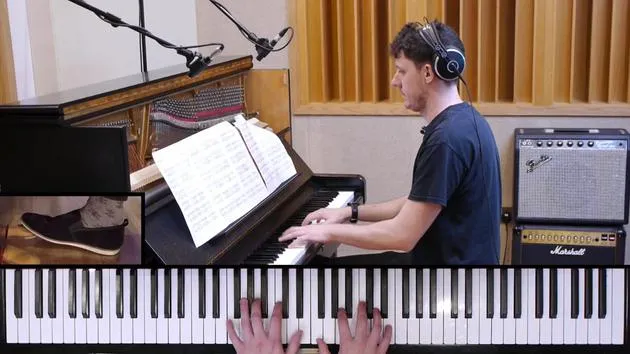
04. Nosso Samba, Noam Lederman (interpretación)
3:18
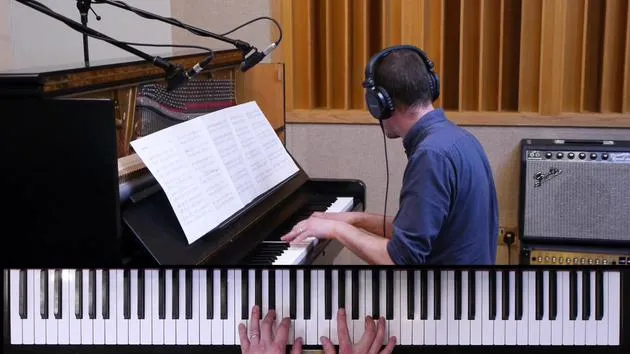
05. Freightshaker, Simon Troup (Interpretación)
3:20
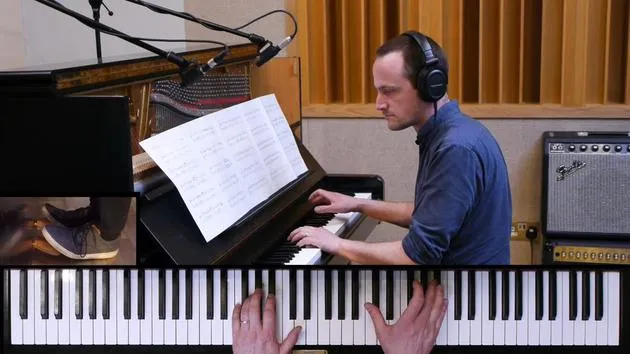
06. Mind The Gaps, Kit Morgan (interpretación)
3:41
Transcripción de la lección
Freight Shaker: An Up Tempo Blues Song
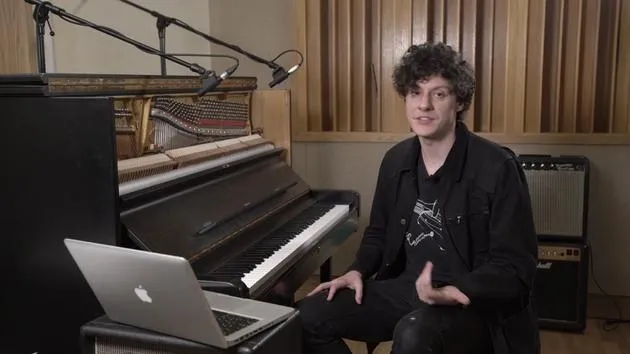
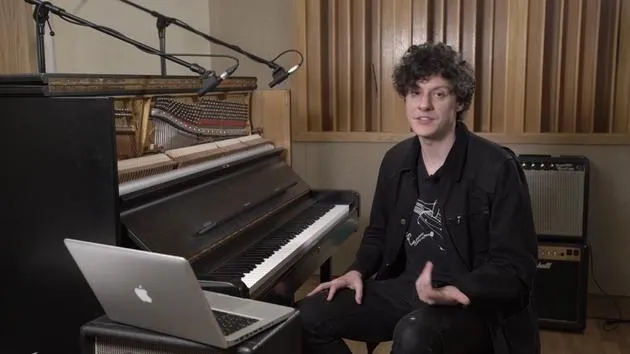
So here we have Freight Shaker. This is an up tempo blues song. Again, lots of stuff to cover here. This particular piece has strong roots in the Texas blues tradition. I think the composer might have modeled this piece on the guitarist Stevie Ray Vaughan.
Texas Blues Tradition
- Guitar obviously played a big part in the tradition.
- Texas was rich in piano players as well, often grouped into what were called schools characterized by similarities of style and approach.
- One such group was the Santa Fe Group, based in the southwestern corner of the state. Here you can find pianists such as:
- Pine
- Todd Birks
- Son Becky
- Rob Cooper
So, maybe check a few of those guys out!
Approaching the Piece
Moving on to the piece itself, right at the very top in the A section, we've got a heavy sort of approach to rhythm playing.
Tips for Practicing:
- Don't be afraid to dig in with this one.
- Imagine yourself in a live band setting; from personal experience, even at the top of the track, I'd probably struggle to hear myself and would naturally play louder.
- This kind of piece suits that vibe.
When approaching this piece, think in terms of how a guitar might approach it. The guitar might be quite overdriven, so don't hesitate to put some weight behind the chords.
Syncopated Chords
At the top, these chords are a little bit syncopated.
Definition: Syncopation refers to rhythms that are played off the beat.
-
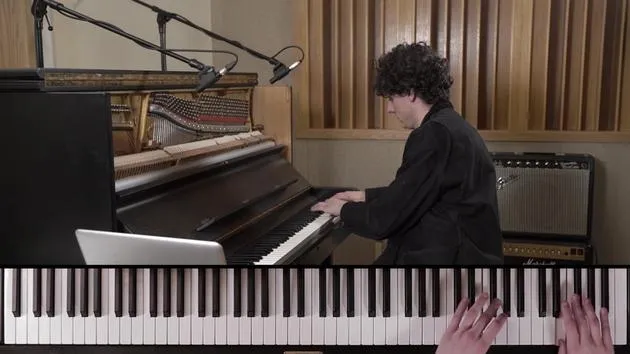
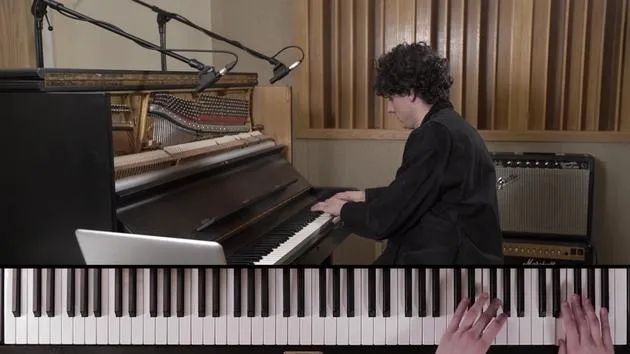
Practice these in isolation. I can demonstrate this:
Counting:
- One, two, one, two, three, four.
- One, two, one, two, three, four.
It's not essential, but it's a good idea to count while playing these rhythms to understand exactly where they fall in the bar.
Watch for Tempo
Be aware that when tackling this section, syncopations may lead to a tendency to push ahead of the beat.
B Section: Main Melody
When we move to the B section where the main melody comes in, we have a strong sharp nine chordal sound.
- This is immediately obvious with the second note of the melody, we've got a seven.
- You can hear the sharp nine sound in the melody.
Focus on Syncopation:
-
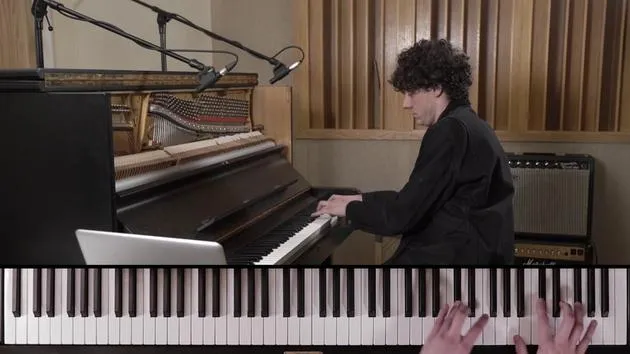
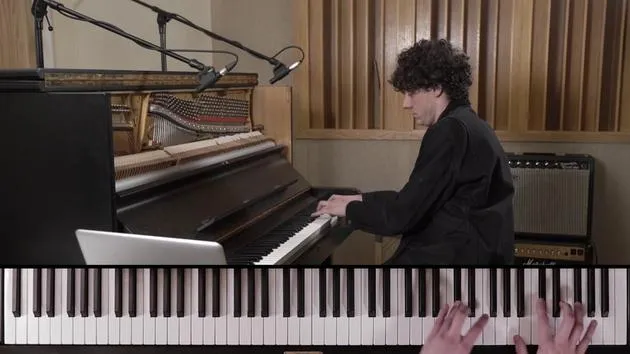
The melody features syncopation as well:
Counting:
- 1, 2, 3, 4.
As with the intro, ensure all notes are correctly positioned in the bar.
Emphasize Groove
Remember, with this type of music, it's all about the groove and feel. It's crucial to concentrate on overall feel rather than 100% accuracy. Consider how it sits when you're playing with real musicians.
Swing Feel
Next, let's talk about the feel of the eighth notes or quavers.
- This is most definitely a swing feel with a shuffle groove in the background.
- Practice your swing quaver feel, perhaps using the A minor pentatonic scale, which much of the melody is based around.
Practicing Tips
- Use a metronome to practice your swing feel.
- Ensure your quavers feel nice and even. If it doesn't swing, you sort of miss the point of the piece.
Developing Your Ideas
Later on, I'll discuss the solo, which is written out, and how you could potentially develop some of your own ideas using the A minor pentatonic scale.
Swing Feel and Tempo
Be aware that practicing your swing feel will be more pronounced at slower tempos. Start by exaggerating the swing feel to an extreme, and then as you speed up the piece, naturally let the rhythms straighten out.
Independence Between Hands
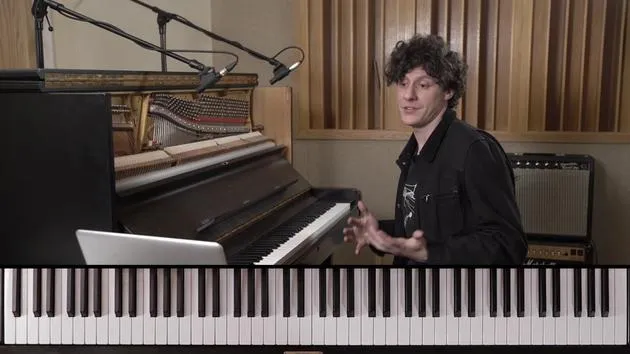
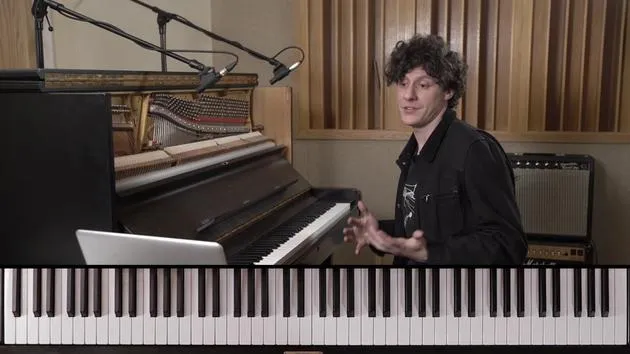
Let's consider the independence between the hands.
Start by practicing the left hand on its own. For instance, in the B section:
Counting:
- 1, 2, 3, 4.
The left hand primarily emphasizes rhythm, while the right hand presents more complexity.
Focus on the Right Hand
- Don't be overly concerned if you can't maintain the left hand rhythm the whole time.
- Make sure the right hand shapes the solo; focus on the right detail rather than the left.
C Section
Moving on to the C section, here are some pointers:
- Pay attention to the right hand in bar 23.
- This is a typical blues trait: melody lines underneath a consistent top line.
Melodic Lines
- Pick out the lower line, as that contains the movement in the phrases.
- Watch the fingering in the run-up to bars 27 and 28 as this is based around the A minor pentatonic scale.
Take your time to slow things down to perfect:
- Fingerings
- The evenness of quavers
- How the triplets feel
Bars 31 and 32
In bars 31 and 32, consider:
- Picking out the lower melody line in bar 30.
- Ensuring fingering is spot on for bar 32.
Remember, these phrases could be improvised blues lines, so have fun with it.
Solo Section Insights
The solo section contains a lot of previously discussed material.
Focus on Technique
Now, the main challenge is getting your fingers around some notes:
- Many notes are based around the A minor pentatonic scale.
- Expect some more bluesy notes creeping in.
Technical Challenges:
- Be aware of bars that require trills or specific fingering, like in bar 41.
- Pay attention to articulation in bar 47 and watch the rhythm in bars 51 and 52.
E Section and Beyond
In the E section, come down a bit dynamically for a bass solo.
Counting
There's a lot of counting during the drum solo:
- Keep track of your place as there are quite a few bars of rest.
The original melody will return, so be cautious with bar 92, particularly the grace notes.
Final Thoughts
As we transition to the G section:
- Give space for the bass solo and maintain focus on the last set of triplets in the penultimate bar.
Wrap Up
That wraps it up for Freight Shaker. It's a tremendously fun piece, but there's a lot to grasp. I'm sure you'll enjoy the process.
See you for the next one!
27 lecciones
2h 50m de lecciones en vídeo estructuradas
Funciones de vídeo avanzadas
Ralentiza, repite un pasaje, sigue la partitura
Móvil, tablet y ordenador
Practica donde quieras
Garantía de satisfacción 100%
30 días de garantía de devolución







