



Análisis, explicación y demostración con Maxim Vengerov
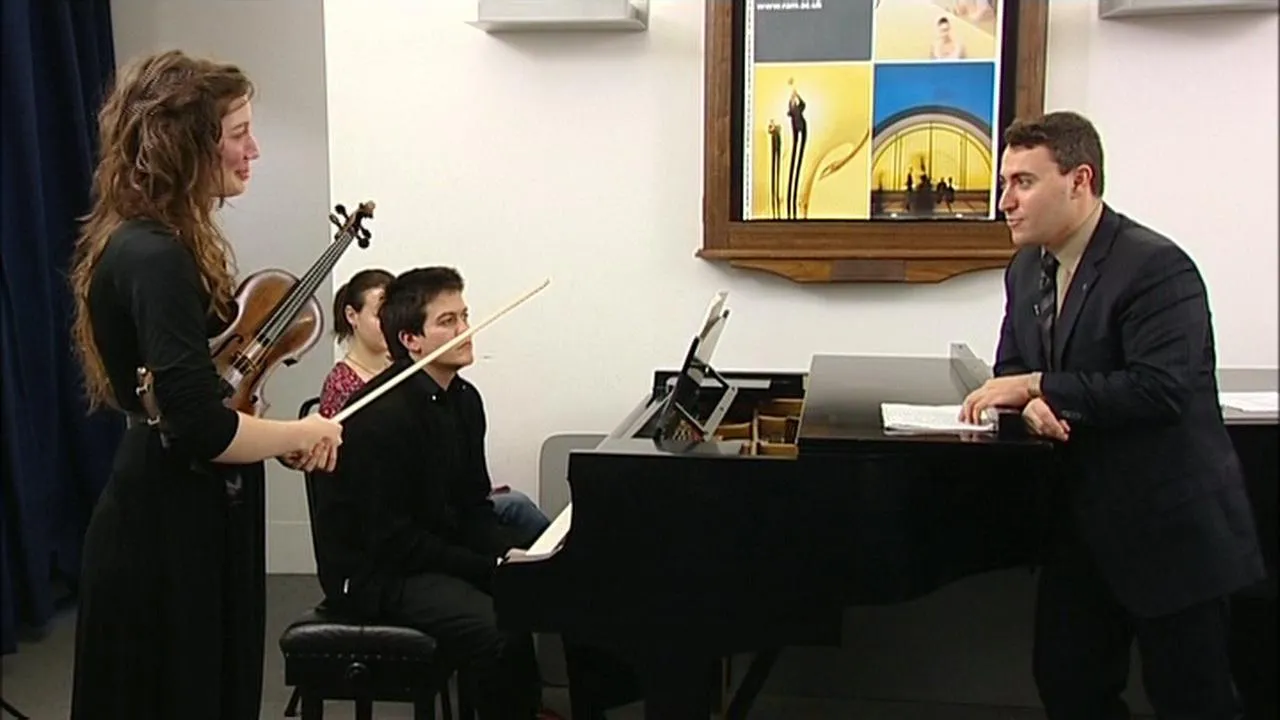
Maxim Vengerov guía a Eloisa-Fleur Thom a través del concierto de Sibelius, trabajando la armonía, el tempo, la interpretación y el dramático carácter finlandés que hay tras la música.
Qué incluye el curso
2 lecciones (0h 52m) · 1 gratis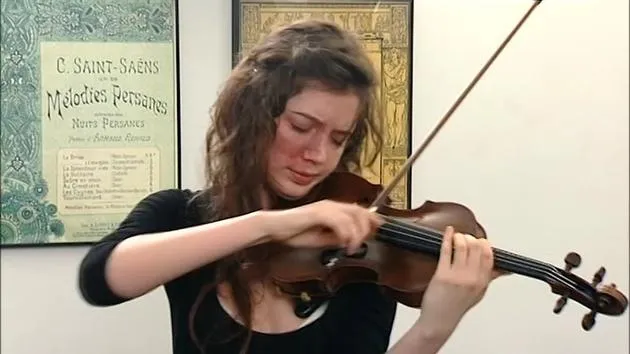
Transcripción de la lección
Music Lesson
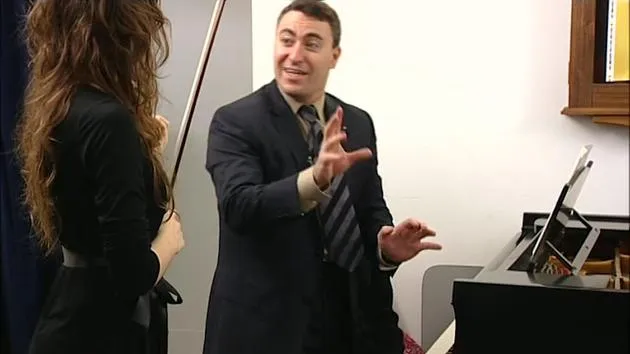
Instructor: Well, Lisa, molto brava. Very good. I really loved also, you know, this. Your feeling for the music is right, and you know what's right. You have a really great feel for this music.
Points for Refinement
Instructor: However, let's talk about a few points that will make your performance even more beautiful and more refined. When we talk about the Sibelius concerto, I think we should not forget this is not a romantic concerto.
Key Insight:
- We have to get to know Sibelius and try to understand his intentions. My feeling is that every time I play a composition, whether it's Beethoven, Tchaikovsky, or Mozart, I try to forget myself and my current state of being.
Artistic Approach
Instructor:
- I was in Brussels yesterday, had a flight, and might be tired. I didn't sleep much, but then the music could be joyful. So I have to be joyful.
- We have to be artists in this way. If we feel happy and jolly, then we play something tragic, like a Shostakovich concerto, we have to become sad, very tragic, even melodramatic at times.
Each composer has a unique character that sometimes does not correspond with our own. We must try to forget ourselves, our feelings, and interpretations as much as possible. The music itself provides the answers through its harmonies and articulations.
Sibelius's Music
Instructor: This is dramatic music.
- If we consider Finland, we see a bold countryside filled with forests, an eternity of natural beauty. If we imagine ourselves as eagles flying and observing everything around us, that spirit embodies the beginning of this music.
Concept:
- When you're an eagle, there's no question of tempo; the world is yours. You play as you feel what you see and embrace the world. That's what this music represents, very generous music.
Execution and Emotion
Instructor:
- You must be generous in your gestures. If you're making a crescendo, take the time to grow into it.
- When you perform a sforzando, do it with the right amount of passion. It's passionate music filled with sorrow, bitterness, and tenderness, not in the Latin sense, but in the bold Finnish way.
Tenderness in this context signifies melancholy, meditation, and a sense of being unlike anyone else in the rest of the world. Sibelius wished to be recognized as a European composer, a German composer, yet he never fully succeeded.
Understanding the Score
Instructor:
- Let's discover what "Dolce" and "espressivo" mean in Sibelius's work.
- It's wonderful how you play; the color is good. Sometimes, you take your time, and this is great. Your instincts are guiding you.
If you feel like taking a slower tempo, why not? You have the world under your wings.
The Role of Performance
Instructor:
- Your performance should be unique compared to your colleagues. If you want to take the slower tempo, please do.
- Let's analyze specific notes, starting with one note.
Notation and Techniques
Instructor:
- This note should be evident. Imagine seeing something unexpected emerge from a cloud, like a folk song.
- It should not be predictable. This is hypnotizing eternity and embodies the essence of "Dolce."
Remember, Sibelius was not Italian, so "Dolce" should reflect that uniqueness.
Dynamic Contrast
Instructor:
- Play with contrasting dynamics; it should not be in tune with the orchestra but rather provide contrast.
- It's like the sun breaking through the clouds, unexpected yet radiant.
Consider playing on the E string for a different color. You can achieve the same color on the A string but ensure it is not overpowering.
Embracing Different Elements
Instructor:
- When you hear an echo, it's time for a color change. This should feel shocking, as if transforming into a different instrument.
- Rather than focusing solely on beauty, it's essential to strategically hold back certain elements, showing your artistry without just showcasing technical skill.
Playing with Intention
Instructor:
- Regarding crescendos in the next few bars, we must follow what the composer intended. It's logical.
- Sing without vibrato to capture the essence more deeply, as how it is written is crucial in interpretation.
Final Touches
Instructor:
- Stay grounded and allow your hand to breathe.
- Play with ease and connection. This should reflect freedom.
You do not have to push; the weight will naturally create the sound.
Conclusion
Instructor:
- Trust your instincts and allow for an organic flow.
- It's essential to maintain focus on the theme and prioritize clarity in your playing.
Remember, the soul of the music lies in these nuances. Play gently, yet passionately, and allow yourself the freedom to explore the emotions within the piece.
2 lecciones
0h 52m de lecciones en vídeo estructuradas
Funciones de vídeo avanzadas
Ralentiza, repite un pasaje, sigue la partitura
Móvil, tablet y ordenador
Practica donde quieras
Garantía de satisfacción 100%
30 días de garantía de devolución
Conoce a tu gurú
Conoce a tu gurú
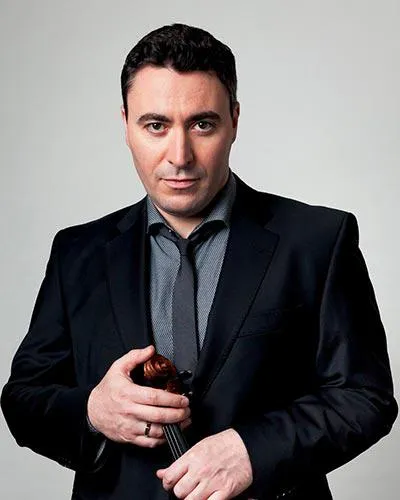
Maxim Vengerov está reconocido como uno de los violinistas más apasionantes del mundo. Ofreció su primer recital a los cinco años y, tras estudiar con Galina Tourchaninova y el profesor Zakhar Bron, ganó el Primer Premio en el Junior Wieniawski Competition a los diez años. En 1990, con quince años, ganó el Carl Flesch International Violin Competition, confirmando su reputación como músico del más alto nivel.
En mayo de 2000, tras un contrato de grabación de diez años con Teldec Classics, Maxim Vengerov firmó un contrato en exclusiva con EMI Classics. Entre sus galardones y premios se encuentran el Gramophone Young Artist of the Year y el Ritmo (España) Artist of the Year en 1994; el Gramophone Record of the Year y nominaciones a los Grammy Award en las categorías de Classical Album of the Year y Best Instrumental Soloist with Orchestra en 1996; el Edison Award al Best Concerto Recording en 1997; el Gramophone Artist of the Year en 2002; y tanto un Edison Award como un Grammy Award en 2004 al Best Instrumental Soloist Performance (with Orchestra) por su grabación del Concierto para violín de Britten y el Concierto para viola de Walton.
En 1997, Vengerov fue el primer músico clásico nombrado Envoy for Music por UNICEF. En ese papel ha conocido y ha tocado para niños desfavorecidos en Uganda, Harlem, Tailandia y a ambos lados de la división étnica kosovar, una labor que le ha permitido tanto inspirar a niños de todo el mundo como animar a otros a recaudar fondos para programas asistidos por UNICEF. Otra pasión de la vida de Vengerov es su dedicación a los jóvenes a través de las clases magistrales. Uno de estos eventos fue grabado por Channel Four Television como parte de un documental sobre Vengerov titulado 'Playing by Heart', proyectado en el Cannes Television Festival en 1999. Desde junio de 2005 es Professor of Violin en la Royal Academy of Music de Londres.
Esa misma pasión por la enseñanza recorre sus clases magistrales en MusicGurus, en las que Vengerov te introduce en el gran repertorio para violín —desde la Tzigane de Ravel y la Carmen Fantasy de Sarasate hasta los conciertos de Sibelius, Mendelssohn, Britten y Shostakóvich—, compartiendo la técnica y la musicalidad que hay detrás de cada frase.







