



Análisis, explicación y demostración con Maxim Vengerov
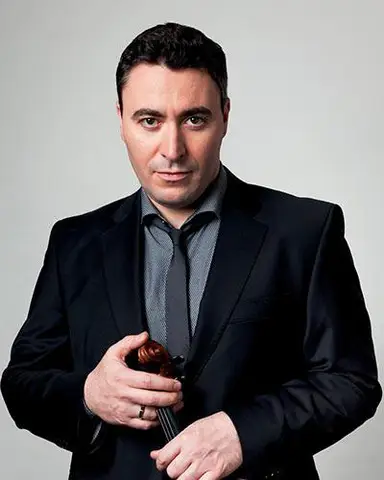
Lesson time: (36min 2sec)
Maxim Vengerov trabaja con su alumno Pedro en 'Tzigane' de Ravel, explorando su armonía, tempo, interpretación y la historia detrás de la música con perspicacia y humor.
Course preview
This lesson is part of the course Ravel - Tzigane
Watch a preview of the full course below.
Lesson transcript:
Music Lesson: Analyzing Ravel's "Tzigane"
Introduction
Pedro, wonderful, great performance. I like it. I like it very much. I like the spirit that you deliver in "Tzigane." As you know, the story goes back to when Ravel heard Jelly D'Aranyi, a wonderful violinist, in a concert in London. She really dazzled him with her incredible ability. I think she was also incredibly beautiful. He was inspired to write something for violin solo, a piece like "Tzigane."
The Story Behind "Tzigane"
After the concert that Jelly had given, Ravel asked her to exhibit some of the tricks that the violin can do when they went to the restaurant. Until 2:00 in the morning, she was playing for him and explaining what the violin can do and cannot do. So he was getting familiar with the instrument and its nature, but he was really inspired by the spirit of this incredible charismatic woman.
As a result, we have this beautiful "Tzigane," which is a concert piece. For me, this piece does have the spirit of "Tzigane," but we shouldn't approach it like one of the pieces we would hear a Tzigane playing in a restaurant or on the street for tips. A serious approach to the piece is crucial. Ravel was an incredible composer who had, first of all, a structured framework; he was very organized in his music.
To play this wonderful "Tzigane" without any structure would be quite wrong.
Analyzing the Piece
So, I would like you to perform a little analysis. Let's analyze together what this piece is all about.
-
The First Cadenza: This is separated into a few sections. First of all, there is a "Tzigane" alone and then two "Tzigane" sections with double stops. That's very important. When he starts this monologue, it carries a powerful message.
- G String's Power: He wanted to show that the most powerful string in the violin is the G string. You can play in the first position, but you can also play in the higher positions where you get the strength. The gypsies are very strong; they have strength from within. This character gives the piece an extroverted feel, but sometimes it goes inward, and that's where the conflict appears.
-
Introducing Yourself: This monologue should present who you are. It's important to say, "Here I am. My name is [insert name]."
-
Building the Theme:
- It should feel like a visit card introducing yourself, saying, "I come from Hungary."
- You can say, "And that is my friend, although we don't really get along. We grew up in the same village together."
-
Musical Points: The harmonic points, when in D minor, are repetitive but always accelerating. This represents who we are.
Performing the Cadenza
Let's try it! I don't know if you have analyzed it, but there is a particular rhythm, a kind of rubato that is already written.
-
Tempo Awareness:
- It is labeled "lento quasi cadenza."
- You have to know how long it is all about and then you can improvise, stretch, or shrink the rhythm. The basic frame must be there.
-
Ravel's Precision: Ravel was very particular in his works about what he wrote, including markings for dynamics like piano and forte.
- For instance, when he writes "espressivo," it's crucial to play it as he intended.
- "Tempo rubato" means that it begins more strictly and then it can loosen.
Interpretation Tips
-
Managing Expression: If you play without understanding the nuances, you lose a lot.
-
Acting in Poses: We need to act in the poses. This is essential music.
-
Be Explosive: Think about the bow and don't put all the strength at once.
-
Tempo Counts:
- Let's count together: Lento, lento, two, three.
- Take a slightly slower tempo to build the character.
Character and Expression
Pedro, remember that this is how the music starts.
-
The character begins short at the 32 mark.
-
Address your friend in the music, but with modesty.
-
Continue with the original markings and don't create anything new, as that may diminish the essence of the piece.
-
Gypsy Intonation: Utilize gypsy intonation, play with real dynamics, and leave the accents where appropriate.
Finding Your Voice
As you play, you should tell a story.
- Imagine the gypsy in his village practicing retakes.
- Don't rush; rhythmically explore the notes.
- Remember, for every note you play, you are paid.
Key Takeaways
- Keep in mind the detailed notations Ravel has provided.
- For every bar and phrase, feel the music rather than forcing musicality.
- Build up to the intensity in the variations, and convey the conflict and discontent within the song.
Conclusion
Finally, explore every note as if elaborating on a detailed narrative.
Thank you very much!
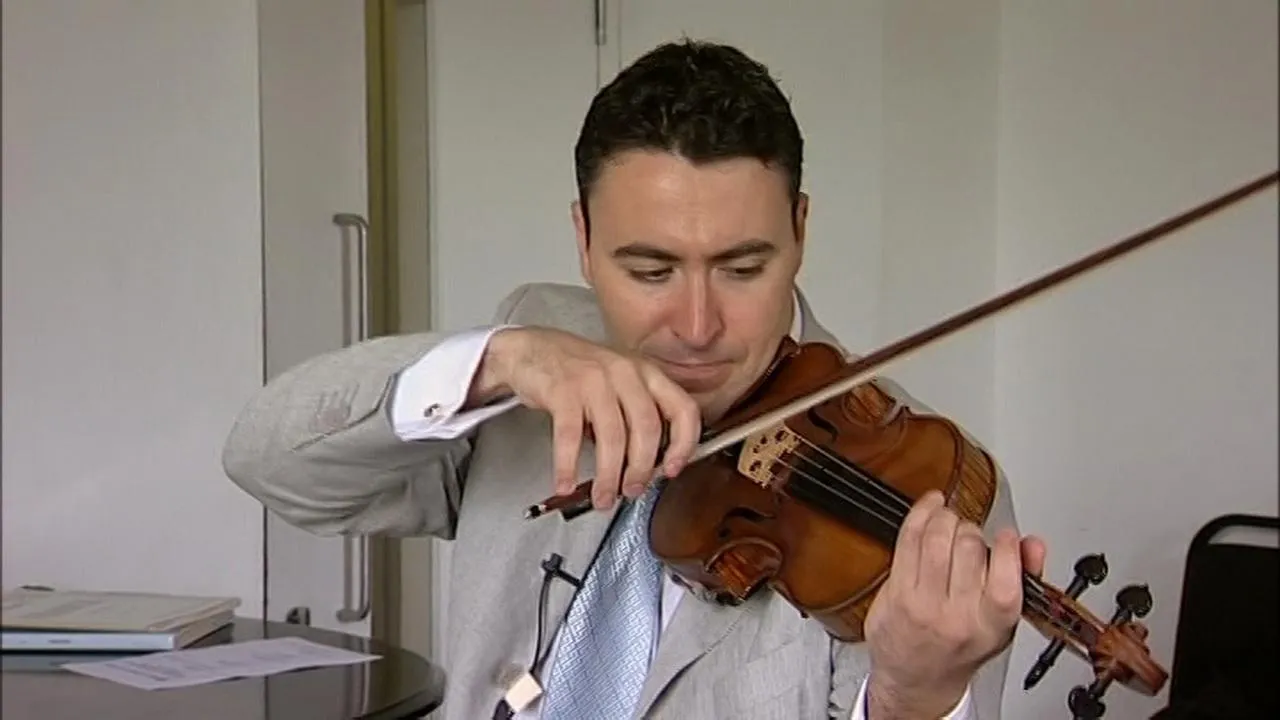
About the instructor
Maxim Vengerov está reconocido como uno de los violinistas más apasionantes del mundo. Ofreció su primer recital a los cinco años y, tras estudiar con Galina Tourchaninova y el profesor Zakhar Bron, ganó el Primer Premio en el Junior Wieniawski Competition a los diez años. En 1990, con quince años, ganó el Carl Flesch International Violin Competition, confirmando su reputación como músico del más alto nivel. En mayo de 2000, tras un contrato de grabación de diez años con Teldec Classics, Maxim Vengerov firmó un contrato en exclusiva con EMI Classics. Entre sus galardones y premios se encuentran el Gramophone Young Artist of the Year y el Ritmo (España) Artist of the Year en 1994; el Gramophone Record of the Year y nominaciones a los Grammy Award en las categorías de Classical Album of the Year y Best Instrumental Soloist with Orchestra en 1996; el Edison Award al Best Concerto Recording en 1997; el Gramophone Artist of the Year en 2002; y tanto un Edison Award como un Grammy Award en 2004 al Best Instrumental Soloist Performance (with Orchestra) por su grabación del Concierto para violín de Britten y el Concierto para viola de Walton. En 1997, Vengerov fue el primer músico clásico nombrado Envoy for Music por UNICEF. En ese papel ha conocido y ha tocado para niños desfavorecidos en Uganda, Harlem, Tailandia y a ambos lados de la división étnica kosovar, una labor que le ha permitido tanto inspirar a niños de todo el mundo como animar a otros a recaudar fondos para programas asistidos por UNICEF. Otra pasión de la vida de Vengerov es su dedicación a los jóvenes a través de las clases magistrales. Uno de estos eventos fue grabado por Channel Four Television como parte de un documental sobre Vengerov titulado 'Playing by Heart', proyectado en el Cannes Television Festival en 1999. Desde junio de 2005 es Professor of Violin en la Royal Academy of Music de Londres. Esa misma pasión por la enseñanza recorre sus clases magistrales en MusicGurus, en las que Vengerov te introduce en el gran repertorio para violín —desde la Tzigane de Ravel y la Carmen Fantasy de Sarasate hasta los conciertos de Sibelius, Mendelssohn, Britten y Shostakóvich—, compartiendo la técnica y la musicalidad que hay detrás de cada frase. read more