



N.º 10 análisis, explicación y demostración con Joanna McGregor
Qué incluye el curso
8 lecciones (2h 24m) · 1 gratis
01. Interpretación de los n.º 1, 2, 3
Lección gratis2:42
02. Análisis, explicación y demostración de los n.º 1, 2 y 3 con Joanna McGregor
33:10
03. Interpretación de los n.º 4 y 13
7:29
04. Análisis, explicación y demostración de los n.º 4 y 13 con Joanna McGregor
32:43
05. Interpretación del n.º 10
8:43
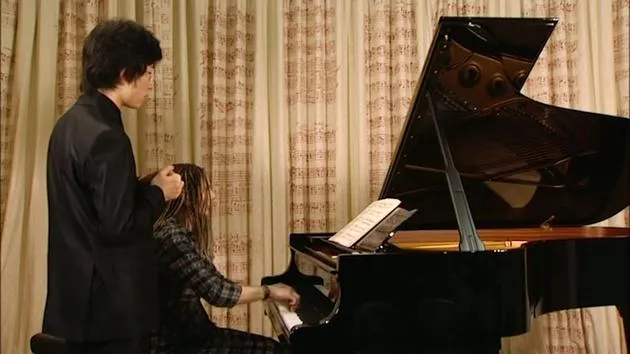
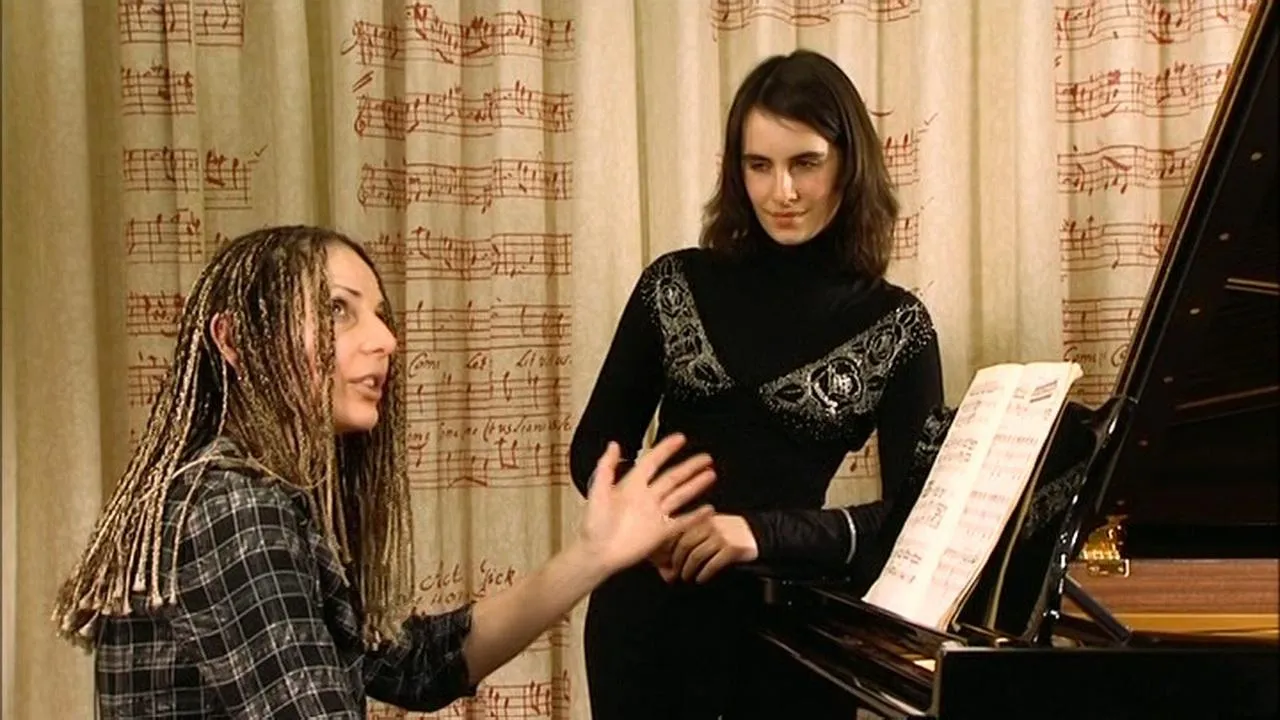
06. N.º 10 análisis, explicación y demostración con Joanna McGregor
Estás aquí27:52
07. Interpretación del n.º 11
7:34
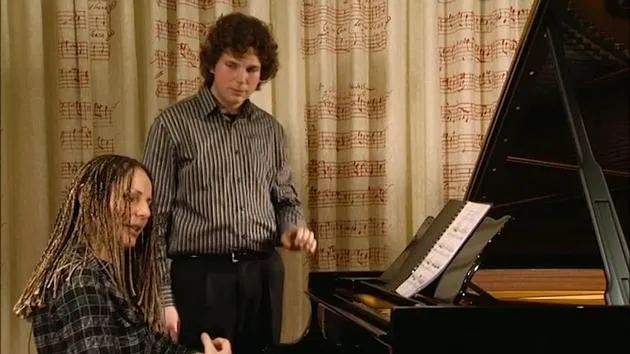
08. N.º 11: análisis, explicación y demostración con Joanna McGregor
23:53
Transcripción de la lección
Music Lesson
Instructor: How do you feel? I was thinking halfway through, you must be very tired, because, I mean, just doing it, you know, once is enough. It's very good. You play it very, very well. Very, very well. So I think you play it extremely well.
Feedback on Sound and Technique:
- I don't have any sort of major criticism or anything, but I am going to make some suggestions about your whole sound at the piano.
- Now, this isn't a very easy piano to make a big sound.
- I felt your sound was a little tight and constricted, and I was watching how you play.
Suggestions for Improvement:
- One of the things you might do now, you've got a piece and you've got great command of the notes and the technique and everything.
- You might think about the largeness of the sound that you're making.
- I notice your opening was like that, but it is marked forte. You need to have a slightly bigger sound at times.
- What I feel is that you're very accurate; you're playing highly accurately. However, one of the things you sacrificed is volume in order to achieve that accuracy.
Playing Technique:
- I can see that you're physically making the shapes, but try to:
- Concentrate on the sound.
- If necessary, drop the speed a bit and focus on the sound I'm talking about.
- When you play this opening, try and feel as though you're swinging.
Encouragement:
- All of this should be quite loose and free in order to get the sound to flow out.
- Shake the sound out rather than having to force it.
- Just keep it relaxed, this here. That's it. That's a good sound.
Working with Dynamics:
- Now, with these, the way Messian's divided them, don't play them individually.
- I need to hear more of the fours and the twos and the threes.
- Drop the staccato slightly and focus on picking it up naturally.
Returning to Original Speed:
- I wonder if we can go back to your original speed while keeping some of that depth of sound.
- Try not to overemphasize every single note.
- It should project a ferocious sound and writing style.
Personal Preference:
- I'd actually prefer something that sounds more vibrant.
- I like that sound because it conveys seriousness in the playing.
- It's more work for you, but if you concentrate on keeping relaxed, it shouldn't feel so hard.
Playing with Phrasing:
- When you have big phrases, think of a huge phrase mark above each thing.
- Try to maintain long lines rather than playing each note individually.
Messian's Masterclass:
- I do remember seeing Messian and his wife give a masterclass on this.
- They emphasized these chords should shine and have a romantic sound.
Using Pedal:
- Don't play so fast that it's merely digital, think of it as written by Rachmaninoff.
- Use pedal underneath to make it sound more luminous.
Practicing Difficult Sections:
- For the difficult middle section, think a little bit jazzier.
- Focus on rhythm; don't worry about speed.
Tips for Practicing:
- Show me how you practice this passage. What would you do?
- Practice slowly and softly.
- You need to make more of the grace notes; they are important.
Rhythm and Phrasing:
- It's essential to allow the detail to come out rather than just hammering through the notes.
- Explore the contrasts in the music to keep it lively and interesting.
Final Thoughts:
- When programming this movement for recitals, think about how it will be received by the audience.
- If it's too dense and complex, consider pairing it with quieter pieces to help the audience digest it.
- Recommendation: Don't play this as an encore; it needs to be presented thoughtfully.
Conclusion:
- Well done, thank you!
8 lecciones
2h 24m de lecciones en vídeo estructuradas
Funciones de vídeo avanzadas
Ralentiza, repite un pasaje, sigue la partitura
Móvil, tablet y ordenador
Practica donde quieras
Garantía de satisfacción 100%
30 días de garantía de devolución
Conoce a tu gurú

Conoce a tu gurú
Joanna MacGregor es una de las músicas más versátiles e innovadoras del momento, con una carrera dedicada a conectar géneros y a desafiar toda clasificación fácil. Ha actuado en más de sesenta países, con muchas de las grandes orquestas del mundo (entre ellas la Filarmónica de Nueva York, las Sinfónicas de Londres y Sídney, la Radio de los Países Bajos, la Filarmónica de Oslo y la Chicago Symphony Orchestra) y bajo la batuta de eminentes directores como Boulez, Davis y Rattle. Por el camino ha estrenado varias composiciones emblemáticas, ha colaborado con destacados artistas de jazz y pop, desde el jazz sudafricano hasta la electrónica más vanguardista, y ha ideado proyectos multimedia que han girado por todo el mundo.
Joanna debutó como directora en 2002 y dirige con regularidad sus propios proyectos orquestales. Disfrutó de una estrecha colaboración artística como directora e intérprete con la Britten Sinfonia, con la que giró por Sudamérica y creó el aclamado proyecto Moondog/Art of Fugue, una reelaboración radical de la última obra maestra de Bach junto a la música del famoso músico callejero neoyorquino de los años 50, publicada como 'Sidewalk Dances'.
Su álbum 'Play', en su propio sello discográfico SoundCircus, recibió una nominación al Mercury Prize, y sus libros didácticos 'Piano World' han sido aclamados como 'dignos del nuevo milenio'. También es directora artística del Bath International Music Festival.
En este curso te guía a través de la monumental 'Vingt Regards sur L'Enfant-Jesus' de Messiaen, compartiendo la comprensión, la técnica y la imaginación interpretativa que necesitas para dar vida a una de las grandes obras del repertorio pianístico.







