



Analyse, Erklärung und Demonstration mit Steven Isserlis
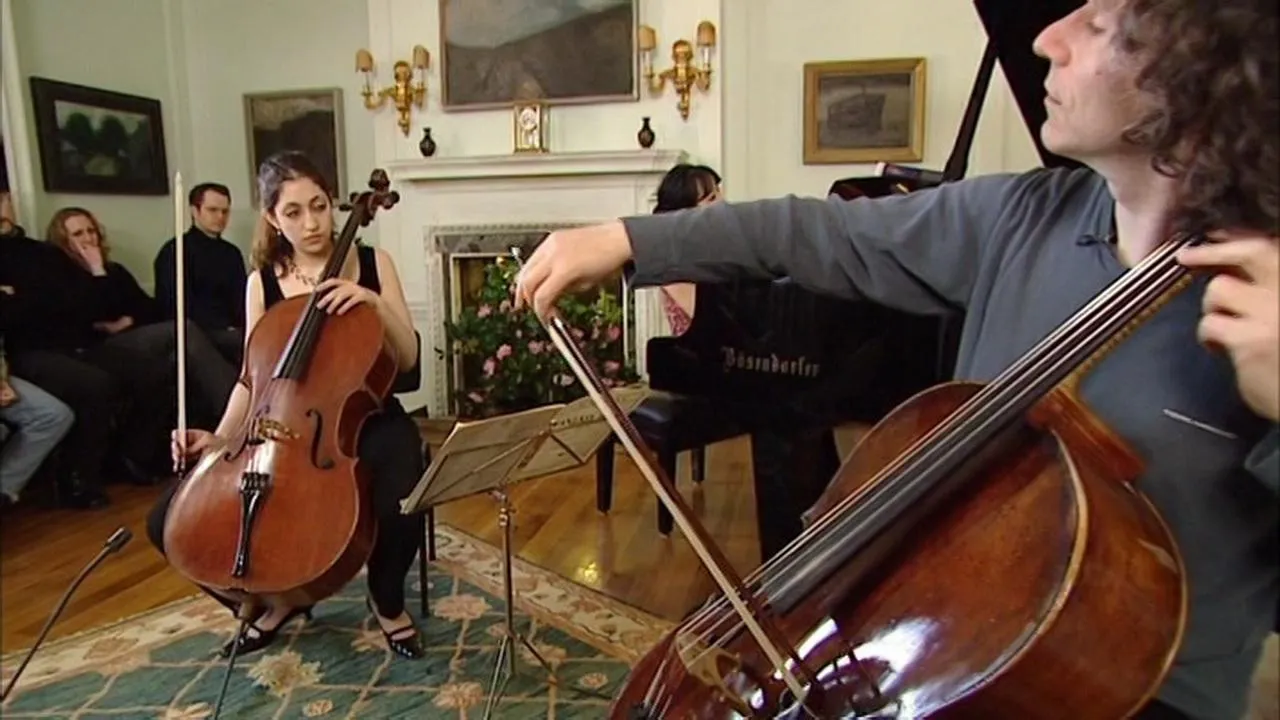
Das steckt im Kurs
2 Lektionen (1h 13m) · 1 gratis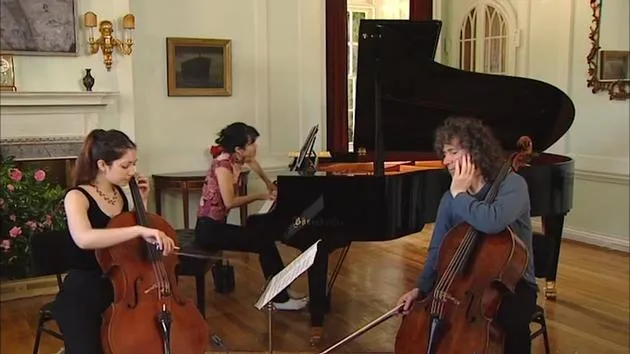
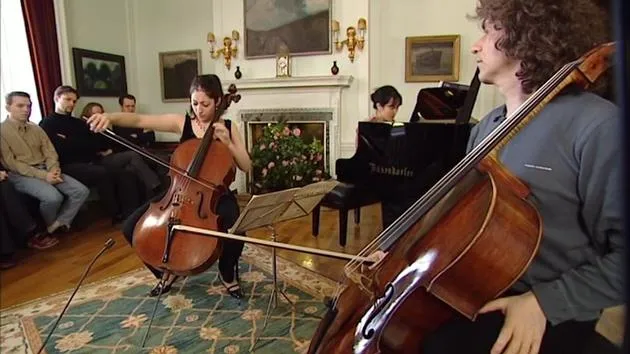
Transkript der Lektion
Music Lesson
Discussion on Interpretation:
Okay. You want to talk about that? Okay. Yeah, it's very nice. The thing is, what's the marking at the top?
Metronome Mark:
- 80 - Yes, that. Which is actually. That's the metronome mark. Yes, which is slow. It's slower than what you're doing.
Mood Indication:
- Tender and Expressive - Okay. I mean, what you're doing is very appassionata. I would say it was passionate. It doesn't strike me as tender.
Analysis of Phrasing:
- The fact that he writes a slow metronome mark and then he writes these gentle triplets and these conversations between the two of you, I'm not really hearing them. I'm hearing a kind of outburst of passion, but I'm not sure that's what he's asked for.
Revisiting Phrasing:
- Let's begin again and think.
- Do the phrases tend to be rising or falling?
- Rising.
- Is that rising? No, I think not. I think it's basically these falling phrases.
- You're kind of pushing through them, so we miss some of the beauty of that.
Beginning Again:
- Okay, let's begin again.
Piano Introduction:
- Now, how does the piano start? What's the tune before you come in?
- Yes, the triplets. Yes, accompanying.
- But what's the... what do you really respond to without looking?
- That's cheating.
- Cheers. Exactly. And you respond. She asks the question, and you answer.
Dialogue in Music:
- Okay, I didn't hear the dialogue. I mean, I think you could bring out the question, the forte piano, a little more. But then you have to respond to it in kind.
- Yeah, okay. But she goes, and I want to hear from you.
Phrasing and Importance:
- What you're doing is... I don't hear the same phrase, which then, of course, goes on. But I have to hear that conversation.
Identifying Central Notes:
- What is more? What are your central notes to this phrase?
- What's the most important? Which ones?
- The F and then A. Yeah.
Curve of the Phrase:
- Okay. So there's, in a very gentle way, what you're doing is you're making each note equal. And that somehow doesn't make this lovely curve to the phrase.
Expressiveness of Notes:
- Why is the G there? I mean, the first time you went. Now you go, why?
- It's more emphatic. It's expressive.
- Okay. But you ran through it.
Slowing Down for Expressiveness:
- I mean, that's why I think you're a bit hurried for this, because you got to have time to enjoy this kind of... this beauty here and all these conversations.
- Listen to that. The piano goes. And you answer, and more. So nothing's in a hurry. Nothing's breathless.
Imagery of a Love Duet:
- It's kind of a... sorry, I know it's very inappropriate, but it's kind of a love duet, isn't it? A love conversation.
- So you can imagine whoever playing the piano having this.
Natural Flow of Music:
- No, sorry, it's not. If you have equal notes like that, it's like we are talking like that. It doesn't sound natural, so you have to go. So it just falls again.
Visualizing the Music:
- You can see, when you look at the music, these curves. He's written lovely soft lines. So go with them outside.
Final Encouragement:
- Yeah, okay. That was very nice. It was very nice. But you phrase beautifully here.
- See you later, darling. It was kind of... I think you need that.
Going Back to Beginning:
- Go with the curve. That's much more poetic. Otherwise, it becomes solid. You can't really go from anywhere in there.
- So one last time from the beginning.
Maintaining the Flow:
- Yeah, not a... Sorry, one more time from the beginning. But you still sound in a hurry. I mean, somehow it's a poem, this.
Key Observations:
- If any, if you use kind of some boring prosaic word, it's no longer poetic.
- And that's what you're doing. If you go, you've had these strange words.
- In the midst of all this beauty, you just let it float.
- It's not never solid, this music.
- Listen, answer good. Loud curve.
Transitioning to the Next Phrase:
- Okay, good.
Exploring the Questioning Phase:
- Despite that. What's the difference here now?
- What's happened after that?
- Yeah, after that it's questioning.
- What's happened after that?
Listening and Responding:
- Okay, so in your color question, the piano goes. And you join in.
- So not a kind of... okay, not solid, but not definite.
Understanding the Phrase's Intent:
- The color. Just from there.
Continuing the Phrase:
- Yeah, okay. Do you want the phrase to stop or to go on?
- Go on.
Maintaining Rhythm:
- Okay, so what you're doing is keep landing on the beat. Always take it away from the beat. And then it'll want to go on the phrase.
Gestalt of the Music:
- It's not the bit I was doing.
Conclusion:
Your performance and interpretation can be transformed into a more poetic and flowing representation of the music. It's essential to remain responsive to the dialogue within the piece and connect emotionally to each section while maintaining the natural rhythm and color of the music. Remember, this is a journey of expression, let the music guide you!
2 Lektionen
1 Std. 13 Min. strukturierte Videolektionen
Erweiterte Videofunktionen
Verlangsamen, Passagen loopen, mitlesen
Handy, Tablet & Desktop
Üben, wo du willst
100 % Zufriedenheitsgarantie
30 Tage Geld-zurück-Garantie
Lern deinen Guru kennen
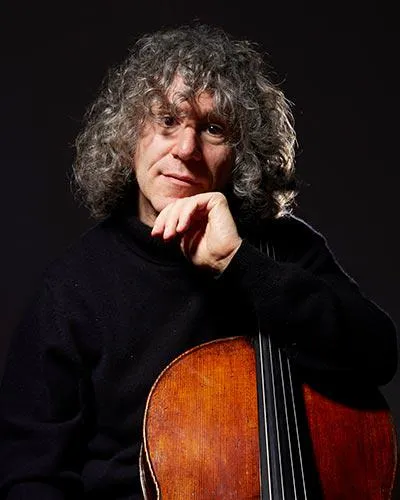
Lern deinen Guru kennen
Steven Isserlis ist ein Cellist, dessen Leidenschaft für die Musik über herkömmliche Grenzen hinausgeht und der weltweit sowohl für seine Musikalität als auch für seine Technik gefeiert wird. Er zählt zudem zu den großzügigsten Lehrern der Cellowelt: Er gibt regelmäßig Meisterkurse auf der ganzen Welt und ist seit Langem künstlerischer Leiter des Meisterkurs- und Kammermusikseminars IMS Prussia Cove. Von ihm zu lernen bedeutet, Zugang zu jener seltenen Mischung aus Gelehrsamkeit, Vorstellungskraft und purer Freude an der Musik zu gewinnen.
Er fühlt sich gleichermaßen wohl dabei, das Publikum für die Kammermusik oder ein Recital in seinen Freundeskreis zu ziehen; in historischen Archiven zu stöbern und ein vergessenes Kleinod zutage zu fördern; oder auf dem Konzertpodium mit einigen der renommiertesten Orchester und Dirigenten der Welt zu stehen. Der in Großbritannien geborene Isserlis hat ein starkes Interesse an historisch informierter Aufführungspraxis und spielt mit vielen der führenden Originalklangorchester. In den letzten Spielzeiten führte er sämtliche Werke Beethovens für Cello mit dem Hammerklavierspieler Robert Levin auf, sowohl in Boston als auch in der Londoner Wigmore Hall, und spielte Dvořáks Cellokonzert mit dem Orchestra of the Age of Enlightenment unter Sir Simon Rattle.
Schumann ist eine besondere Leidenschaft: Er spielte Schumanns Cellokonzert auf einer großen Deutschland-Tournee, initiierte ein Schumann-Projekt in Japan und wirkte an einem Abend aus Wort und Musik mit, der der Geschichte von Schumann und Brahms gewidmet war — mit einem von Isserlis selbst verfassten Text — in London und New York.
Das Schreiben und Musizieren für Kinder ist ein weiteres großes Anliegen. Sein erstes Buch, eine Kindergeschichte über das Leben von sechs großen Komponisten, Why Beethoven Threw the Stew, erschien im Oktober 2001 bei Faber and Faber, und eine Fortsetzung, Why Handel Waggled his Wig, folgte 2006.
Mit einer preisgekrönten Diskografie spiegeln Isserlis' Aufnahmen seine vielfältigen Repertoire-Interessen wider; seine Veröffentlichung der vollständigen Suiten für Violoncello solo von Bach beim Label Hyperion stieß auf höchstes Lob der Kritik und gewann zahlreiche Preise. 1998 wurde er in Anerkennung seiner Verdienste um die Musik zum CBE ernannt und erhielt viele weitere Auszeichnungen, darunter im Jahr 2000 den Schumann-Preis der Stadt Zwickau (Schumanns Geburtsort).







