



Analyse der Fantasie in f mit Stephen Kovacevich
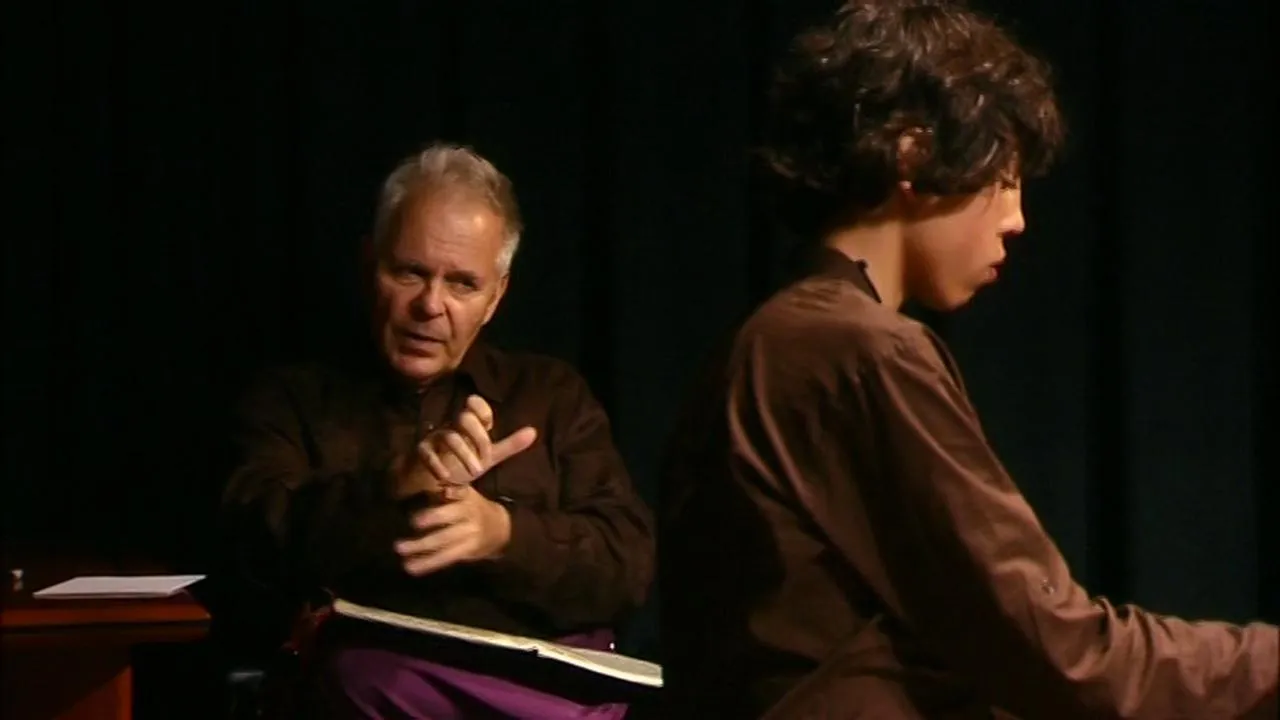
Das steckt im Kurs
2 Lektionen (0h 44m) · 1 gratis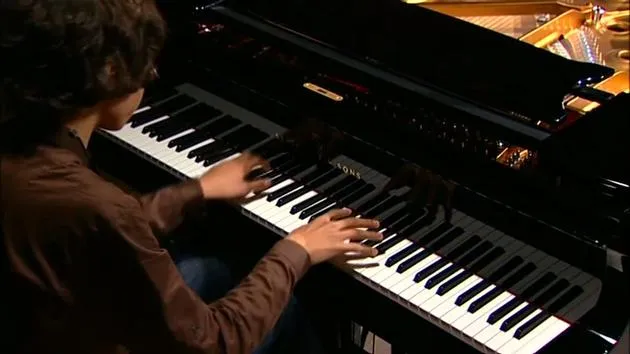
Transkript der Lektion
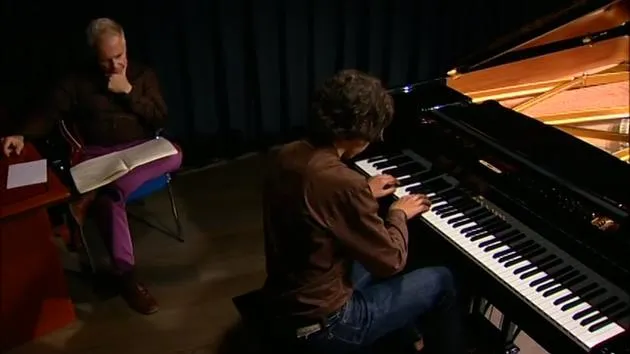
Music Lesson
Introduction
First of all, it's very good. There are things to think about and work on, but first of all, it's very, very good.
Chords and Sound
Just on the very end of the piece:
- When you play your chords, you tend to go right to the bottom of the key, and it sounds a bit heavy.
- I don't know how it works with pianos, but if you release, don't just go to the bottom of the key.
Relaxation and Pedal
- Go and relax your hand.
- Let the pedal do a lot. Just the last two chords.
Play Again
Try it again. Could I ask you to play not with this, so much more with the fingers so that your internal ear can balance the sound?
"Because if you play like this, your internal ear, which is making how much soprano you want, how much middle, doesn't have a chance because you're doing it with your arm."
Try to think more about using your fingers.
Forte and Counterpoint
Now, forte.
"This time, try it with the tiny counterpoint, the F flat to the E flat."
- A little bit more F flat.
- Yes.
- No, make it speak.
"You know you're ending a huge piece, and it has to... we'll work on it, but I want you to sleep on it."
- You need more sound.
- Even in chords, have a sense of counterpoint that is not just straightforward.
Opening Thoughts
Now look.
Almost everything that a person says in a situation like this is personal.
- I have a personal reaction to the tempo.
- Somebody else, you included, have a different one.
I know it's grave, but it struck me as just a tiny bit too slow.
"Poco, poco, poco, poco."
If you want to play at that tempo that you did, then:
- There were some bars that were good, but your sound was extremely well organized.
- All the chords related to each other.
If it's very, very slow, you have to concentrate like hell to ensure a long line.
"Because any chord that isn't quite right, it's daunting."
First Note
Now try the first note.
It's very funny. In a piece of this nature, if the first note sounds pedantic or too academic, it takes:
"Do you see?"
- Try it with a wet staccato.
Good! If your sound had been consistent, that would have been beautiful. Do you see what I mean?
Personal Reflection
I remember when I, Nelson Frere, a great pianist, heard me play Beethoven 4. It begins with a piano solo, and I was expressive.
"He said, Stephen, it's too early in the piece to be so expressive."
I would say the same to you. You're opening up quite a long piece. I wouldn't do the conventional thing. Experiment now.
- Don't be too generous too soon, even that.
- You see, you're already doing it ? piano absolutely hypnotic.
Musical Structure
Now wet staccato to begin with. Yes, good. Hypnotic.
That's the conventional thing to do to open up. I get frustrated when I hear that because:
- When you go down to suddenly the major harmony, you're opening up the music.
- Don't add to it.
Try from the second wet.
- Don't slow up.
When he writes this, it's beautiful.
Interpretation and Rubato
This was all done as if it were a classical piece. There's a tiny bit of rubato in the arpeggio.
You play it as if it's Beethoven, or not even Beethoven, Mozart.
"There's a tiny bit of something."
Try from "beam body."
Yeah, that one. It's that one.
- Good.
- Go on.
- Don't slow up.
Tempo Considerations
The danger is it's in four. I'm actually hearing you in eight. In other words, I cannot sustain listening to you in four.
"I start to listen in eight. One, two."
Good.
It's a crescendo in half a bar from piano to fortissimo. I think that Chopin is even in this piece much more changeable.
- You did it in a very beautiful but rather classical way.
- I lacked a bit of the cri de coeur, the desperation suddenly in the music.
Encouragement to Express
Try it from the C flat. Yes, good.
I want you to hurt us ? that's the public and me.
When it gets to the fortissimo, surprise that it's so loud.
"Hurt us."
But not before, okay? You didn't have the courage of your own.
- You did a beautiful piano, which is indicated.
- Then the accompaniment was...
Try a little quicker even for just... good.
The tempo is good. It's a funeral march tempo that.
- Yes, this.
- You did it more beautifully before.
You can allow yourself a little bit of spice, something from trauma.
"Yes, exactly. This beautiful dissonance..."
Enjoyment in Dissonance
Could you enjoy that a little bit more?
- A little bit from before?
- Yeah, exactly.
Now, good again, very good.
Transition and Introduction of Material
Are you convinced of making the transition?
- Yeah, yeah. From the bars before, try...
- Yeah, exactly.
Good for stopping.
- Try not to hit the F.
- Just this beautiful sound we have that comes out of it.
Introducing New Material
Now when you wait, it's officially musical what you do, because you're introducing new material.
- I think it's more imaginative to introduce the new material by surprise.
- Don't warn us that something is coming.
Instead, introduce the new material so we hear it without preparation.
Good!
Syncopation and Balance
Trifera bing, bing, bum.
If you do the conventional bomb now, it's really starting to move. If you wait, it takes away the A tempo.
Okay, excellent!
The agitato didn't quite work.
Could you try to do it almost in time?
- So Schwarzado has to be really whacked.
- Then just time it perfectly from...
Yes, yes.
Could you give the impression somehow that we actually hear the syncopation?
Final Critiques
To my ear, there was a little too much left and not enough, but that's a question of taste.
But when you get to this, the music is really moving.
- The left hand, you play very well, but it's difficult.
- I can hear you going to be safe to be accurate.
Could you try to make your left hand follow the right and let the right dominate?
You might miss some notes, but try to catch this passage.
Experimentation and Building Tension
Okay, now better try the balance more.
- I'm hearing a lot of left.
- Let this sing.
I'd like you to experiment instead of waiting; let the tumultuous thing go.
"Don't be so musical in a way."
Try from before.
It's very, very good. But speaking on a very high level, it's a little careful.
Excitement and Rhythm
In other words, it is exciting, but try not to be so careful.
- The octaves, if you make a mistake, just keep going.
- Those dotted rhythms in Chopin are like steel.
You know, try from sometime before.
Good!
It doesn't have to get faster to be exciting; it just has to not stop.
Ending Notes
I can hear that you're saving your sound suddenly at one place.
- It's too obvious.
- Do you see?
It stops the same place again.
Final Thoughts
Okay, magnificent!
That was magical. I could feel also the public somehow gripped by what you did because you had the courage to stick with what you had started.
"I hate to work like this."
Now, can we stop? That was great.
Conclusion
You did it beautifully. Remember, when interpreting, have the courage to keep the same color throughout, balancing your left and right hand effectively. Bravo!
2 Lektionen
0 Std. 44 Min. strukturierte Videolektionen
Erweiterte Videofunktionen
Verlangsamen, Passagen loopen, mitlesen
Handy, Tablet & Desktop
Üben, wo du willst
100 % Zufriedenheitsgarantie
30 Tage Geld-zurück-Garantie
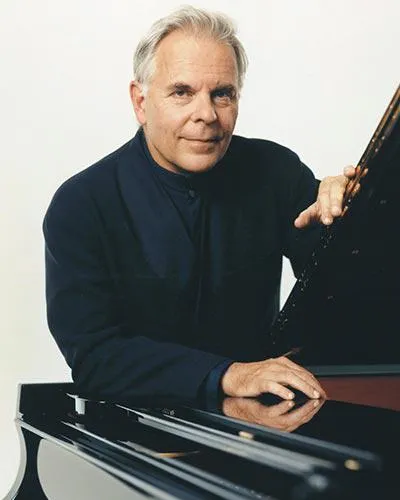
Lern deinen Guru kennen
Lern deinen Guru kennen
Stephen Kovacevich ist einer der forschendsten Interpreten am Klavier und hat sich mit seinem Spiel von Beethoven, Brahms, Mozart und Schubert unübertroffene Bewunderung erworben. Neben seiner langen und angesehenen Laufbahn als Solist hat er viele Jahre lang dirigiert und für seine Arbeit mit Orchestern in aller Welt im Repertoire des 18. und 19. Jahrhunderts warmes Lob geerntet.
In Los Angeles geboren, gab er sein Konzertdebüt als Pianist im Alter von 11 Jahren. Mit 18 zog er nach England, um bei Dame Myra Hess zu studieren. Sein internationaler Ruf gründet sich sowohl auf seine Konzertauftritte, die für ihre Nachdenklichkeit und nachschöpferische Intensität gerühmt werden, als auch auf die hochgelobten Aufnahmen, die er im Laufe seiner Karriere gemacht hat.
Kovacevich pflegte zwei langjährige Beziehungen zu Plattenfirmen, zunächst Philips und dann EMI. Seine Konzertaufnahmen für Philips, darunter Beethoven, Schumann und Bartók, sind seit Langem feste Größen des Katalogs. Als Exklusivkünstler von EMI nahm er beide Klavierkonzerte von Brahms mit dem London Philharmonic Orchestra und Sawallisch auf. Die weiteren großen Projekte seiner Arbeit mit EMI waren eine fesselnde Reihe von Schubert-Sonaten und eine 2003 vollendete Gesamteinspielung der 32 Beethoven-Sonaten, die als eine der maßgeblichsten je aufgenommenen gefeiert wurde. Seine Aufnahme der Diabelli-Variationen für Onyx gewann 2009 den Classic FM Gramophone Editor's Choice Award.
Bei Kovacevich zu studieren ist ein direkter Zugang zu diesem interpretatorischen Geist: wie er eine Phrase formt, die Architektur bei Schubert, Beethoven und Chopin findet und Technik in Musik verwandelt, die wirklich etwas bedeutet. Es ist eine seltene Gelegenheit, dieses Repertoire von einem Pianisten zu lernen, der ein ganzes Leben darin verbracht hat.







