



Analyse, Erklärung und Demonstration mit Maxim Vengerov
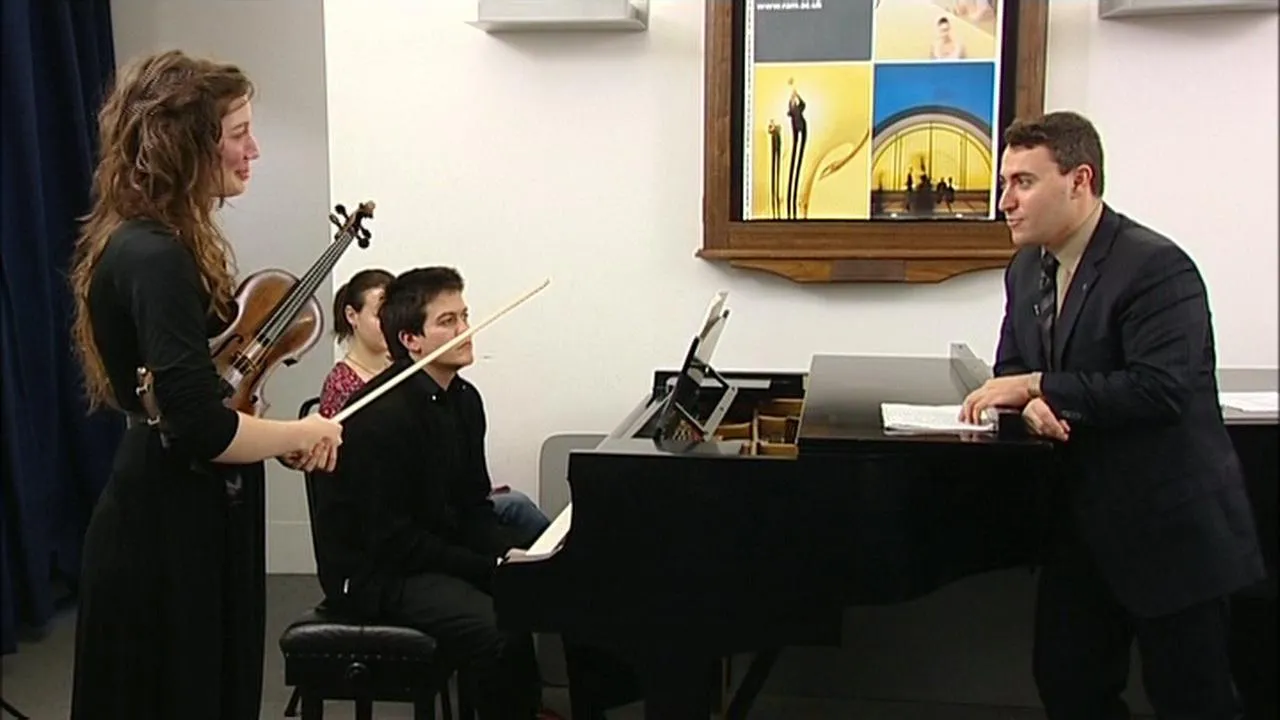
Maxim Vengerov coacht Eloisa-Fleur Thom durch das Sibelius-Konzert und arbeitet an Harmonie, Tempo, Interpretation und dem dramatischen finnischen Charakter hinter der Musik.
Das steckt im Kurs
2 Lektionen (0h 52m) · 1 gratis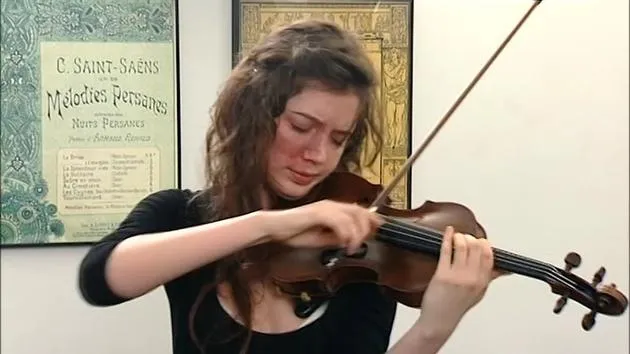
Transkript der Lektion
Music Lesson
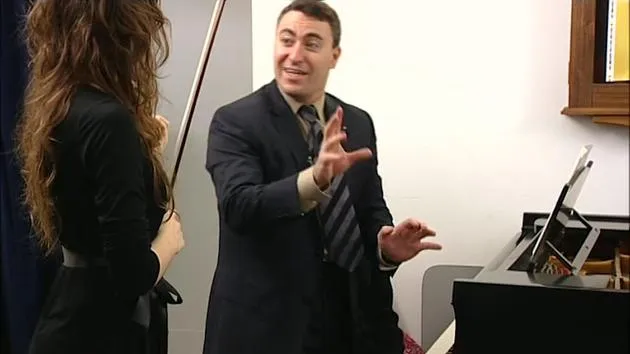
Instructor: Well, Lisa, molto brava. Very good. I really loved also, you know, this. Your feeling for the music is right, and you know what's right. You have a really great feel for this music.
Points for Refinement
Instructor: However, let's talk about a few points that will make your performance even more beautiful and more refined. When we talk about the Sibelius concerto, I think we should not forget this is not a romantic concerto.
Key Insight:
- We have to get to know Sibelius and try to understand his intentions. My feeling is that every time I play a composition, whether it's Beethoven, Tchaikovsky, or Mozart, I try to forget myself and my current state of being.
Artistic Approach
Instructor:
- I was in Brussels yesterday, had a flight, and might be tired. I didn't sleep much, but then the music could be joyful. So I have to be joyful.
- We have to be artists in this way. If we feel happy and jolly, then we play something tragic, like a Shostakovich concerto, we have to become sad, very tragic, even melodramatic at times.
Each composer has a unique character that sometimes does not correspond with our own. We must try to forget ourselves, our feelings, and interpretations as much as possible. The music itself provides the answers through its harmonies and articulations.
Sibelius's Music
Instructor: This is dramatic music.
- If we consider Finland, we see a bold countryside filled with forests, an eternity of natural beauty. If we imagine ourselves as eagles flying and observing everything around us, that spirit embodies the beginning of this music.
Concept:
- When you're an eagle, there's no question of tempo; the world is yours. You play as you feel what you see and embrace the world. That's what this music represents, very generous music.
Execution and Emotion
Instructor:
- You must be generous in your gestures. If you're making a crescendo, take the time to grow into it.
- When you perform a sforzando, do it with the right amount of passion. It's passionate music filled with sorrow, bitterness, and tenderness, not in the Latin sense, but in the bold Finnish way.
Tenderness in this context signifies melancholy, meditation, and a sense of being unlike anyone else in the rest of the world. Sibelius wished to be recognized as a European composer, a German composer, yet he never fully succeeded.
Understanding the Score
Instructor:
- Let's discover what "Dolce" and "espressivo" mean in Sibelius's work.
- It's wonderful how you play; the color is good. Sometimes, you take your time, and this is great. Your instincts are guiding you.
If you feel like taking a slower tempo, why not? You have the world under your wings.
The Role of Performance
Instructor:
- Your performance should be unique compared to your colleagues. If you want to take the slower tempo, please do.
- Let's analyze specific notes, starting with one note.
Notation and Techniques
Instructor:
- This note should be evident. Imagine seeing something unexpected emerge from a cloud, like a folk song.
- It should not be predictable. This is hypnotizing eternity and embodies the essence of "Dolce."
Remember, Sibelius was not Italian, so "Dolce" should reflect that uniqueness.
Dynamic Contrast
Instructor:
- Play with contrasting dynamics; it should not be in tune with the orchestra but rather provide contrast.
- It's like the sun breaking through the clouds, unexpected yet radiant.
Consider playing on the E string for a different color. You can achieve the same color on the A string but ensure it is not overpowering.
Embracing Different Elements
Instructor:
- When you hear an echo, it's time for a color change. This should feel shocking, as if transforming into a different instrument.
- Rather than focusing solely on beauty, it's essential to strategically hold back certain elements, showing your artistry without just showcasing technical skill.
Playing with Intention
Instructor:
- Regarding crescendos in the next few bars, we must follow what the composer intended. It's logical.
- Sing without vibrato to capture the essence more deeply, as how it is written is crucial in interpretation.
Final Touches
Instructor:
- Stay grounded and allow your hand to breathe.
- Play with ease and connection. This should reflect freedom.
You do not have to push; the weight will naturally create the sound.
Conclusion
Instructor:
- Trust your instincts and allow for an organic flow.
- It's essential to maintain focus on the theme and prioritize clarity in your playing.
Remember, the soul of the music lies in these nuances. Play gently, yet passionately, and allow yourself the freedom to explore the emotions within the piece.
2 Lektionen
0 Std. 52 Min. strukturierte Videolektionen
Erweiterte Videofunktionen
Verlangsamen, Passagen loopen, mitlesen
Handy, Tablet & Desktop
Üben, wo du willst
100 % Zufriedenheitsgarantie
30 Tage Geld-zurück-Garantie
Lern deinen Guru kennen
Lern deinen Guru kennen
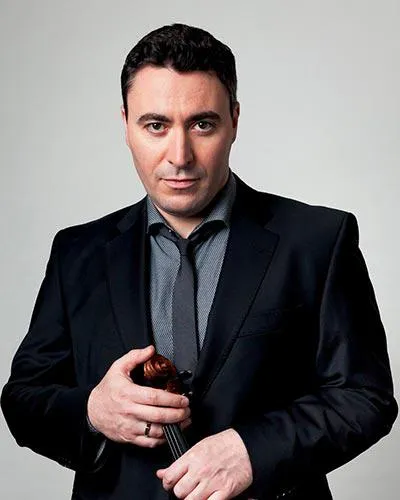
Maxim Vengerov gilt als einer der aufregendsten Geiger der Welt. Sein erstes Konzert gab er im Alter von fünf Jahren und gewann, nach dem Studium bei Galina Tourchaninova und Professor Zakhar Bron, mit zehn Jahren den Ersten Preis beim Junior Wieniawski Competition. 1990, mit fünfzehn Jahren, gewann er den Carl Flesch International Violin Competition und bestätigte damit seinen Ruf als Musiker allerhöchsten Ranges.
Im Mai 2000 unterzeichnete Maxim Vengerov nach einem zehnjährigen Plattenvertrag mit Teldec Classics einen Exklusivvertrag mit EMI Classics. Zu seinen Auszeichnungen und Preisen zählen der Gramophone Young Artist of the Year und der Ritmo (Spanien) Artist of the Year 1994; der Gramophone Record of the Year und Nominierungen für den Grammy Award in den Kategorien Classical Album of the Year und Best Instrumental Soloist with Orchestra 1996; der Edison Award für die Best Concerto Recording 1997; der Gramophone Artist of the Year 2002; sowie sowohl ein Edison Award als auch ein Grammy Award 2004 für die Best Instrumental Soloist Performance (with Orchestra) für seine Einspielung von Brittens Violinkonzert und Waltons Violakonzert.
1997 war Vengerov der erste klassische Musiker, der von UNICEF zum Envoy for Music ernannt wurde. In dieser Rolle hat er benachteiligte Kinder in Uganda, Harlem, Thailand und auf beiden Seiten der ethnischen Teilung des Kosovo getroffen und für sie gespielt – eine Arbeit, die es ihm ermöglicht hat, Kinder weltweit zu inspirieren und zugleich andere dazu zu bewegen, Spenden für UNICEF-unterstützte Programme zu sammeln. Eine weitere Leidenschaft in Vengerovs Leben ist sein Engagement für junge Menschen durch Meisterkurse. Eine solche Veranstaltung wurde von Channel Four Television im Rahmen einer Dokumentation über Vengerov mit dem Titel 'Playing by Heart' aufgezeichnet, die 1999 beim Cannes Television Festival gezeigt wurde. Seit Juni 2005 ist er Professor of Violin an der Royal Academy of Music in London.
Dieselbe Leidenschaft für das Unterrichten durchzieht seine Meisterkurse bei MusicGurus, in denen Vengerov dich in das große Violinrepertoire einführt – von Ravels Tzigane und Sarasates Carmen Fantasy bis zu den Konzerten von Sibelius, Mendelssohn, Britten und Schostakowitsch – und die Technik und Musikalität hinter jeder Phrase mit dir teilt.







