



Analyse, Erklärung und Demonstration mit Maxim Vengerov
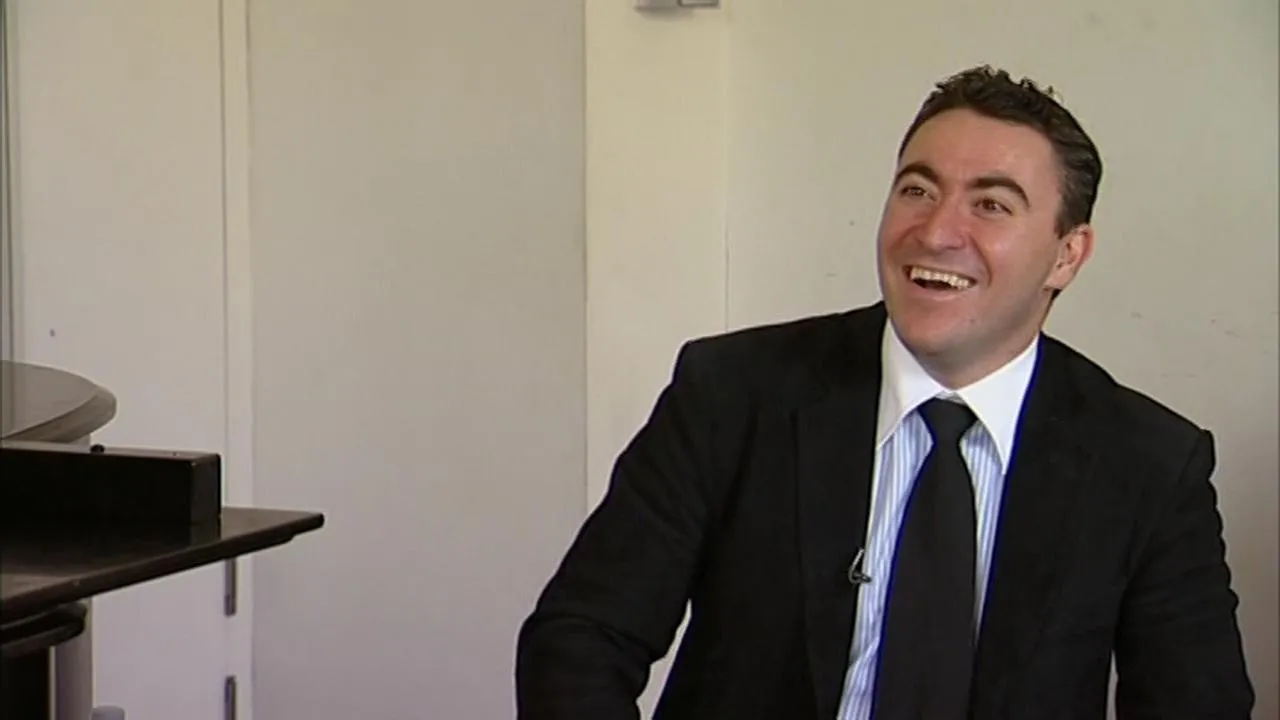
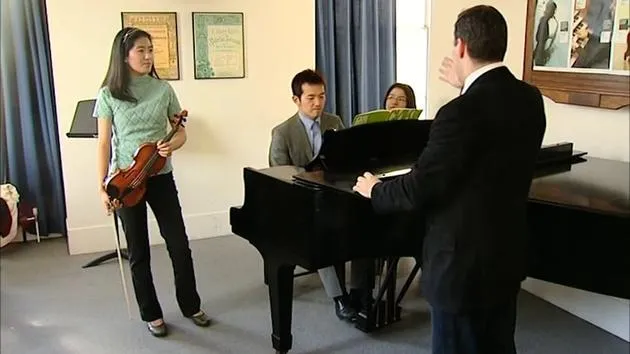
Maxim Vengerov coacht einen Studenten durch die Passacaglia aus Schostakowitschs Violinkonzert Nr. 1 und nutzt deren Geschichte aus der Sowjetzeit, um Tempo, Phrasierung und Emotion zu formen.
Das steckt im Kurs
2 Lektionen (0h 48m) · 1 gratis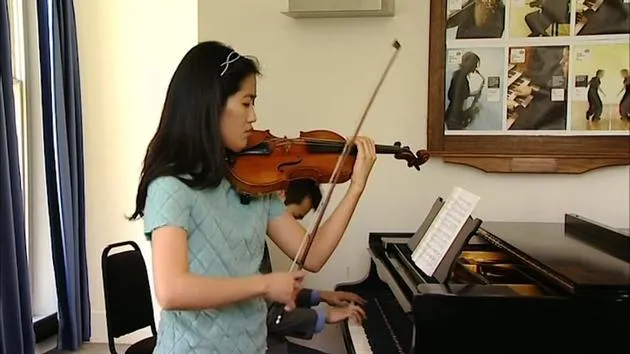
Transkript der Lektion
Music Lesson with Sojin
Instructor: Sojin, wonderful to hear you again. Great. You know, you're playing wonderfully, a beautiful sound.
Historical Context
Instructor: By playing this pasakale, we must understand a little bit of the history behind every sound. There is a story.
-
Shostakovich and Controversy: You know about the controversial politics regarding composers in the Soviet Union. In 1938, the Union of Composers and the government decided there was an article in the newspaper highlighting "formalism in music." They argued against 20th-century composers' new innovations, moving away from traditional harmony and roots.
-
Notable Composers: Victims of this included Shostakovich, Prokofiev, and Khachaturian. After the first performance of Shostakovich's concerto, there were no critiques, no resonance in the newspapers. Even David Oistrakh had to write to the newspaper, stating, "I think this is one of the most important works of the 20th century," expressing surprise at the lack of response.
The Significance of the Pasakale
Instructor: The history shows that Shostakovich's Violin Concerto is one of the greatest creations, not just of the 20th century but in the realm of many great composers. This piece stands alongside the most wonderful works, like those of Beethoven and Brahms.
-
Multidimensional Nature: The pasakale is incredibly multidimensional. Shostakovich gives you, the soloist, this phenomenally written, beautiful harmonic theme that recurs throughout the piece.
-
Understanding Depth: Consider it like entering a beautiful room in a house; you appreciate it but don't realize what's downstairs or up in the roof. Without understanding the foundation, you can't fully appreciate this piece with the right mindset.
Importance of Foundation
Instructor: It's all about priority. Without a solid foundation, the building collapses.
-
Here, in this particular piece, the most critical element is the pasakale. It features a bold, minimalistic theme that recurs multiple times until the cadenza, which suddenly cuts away.
-
Philosophical Insight: There is a philosophical undertone to this: while we enjoy life and make decisions, there are supernatural forces guiding us. We must trust in this light, whatever we call it, appreciating and following it, no matter our struggles or joys.
Performance Insights
Instructor: We are all essential; everything matters here, but it's about prioritizing. When the pasakale comes, it's fate, always there, regardless of the hundreds of themes you might compose.
- Instruments in Harmony: The other instruments, like brass or bassoons, may try to shine, but if they overcome the fate, it will not work. They are attempting to lead, which is a mistake. They should be expressive without losing the connection to the pasakale.
Practical Advice
Instructor: Now, let's try this. Remember, the tempo must remain unbroken.
-
Integration with Accompaniment: As you play, integrate beautifully, but always recognize how the other instruments glide with you. Do not ignore their presence.
-
Danger of Overexpression: It's dangerous to attract too much attention to yourself while playing. However, at home, practice humming the pasakale until its essence lives within you.
The Essence of Music
Instructor: Shostakovich, as with other great composers, used the phenomenon of music to communicate messages beneath conscious awareness. The stronger you recognize the message, the more effectively it'll resonate with the audience.
- Maintaining Focus: Ensure you do not distract from the pasakale. Begin with untouched beauty, connecting to the melodies without any flutter.
Reaching a Tranquil State
Instructor: This pauses hold great significance, like meditation, reaching a state of peace where no thoughts interrupt you.
- Exploring Nothingness: Recognize that you must become more than a violinist; you must become a magician. It's within this silence that listeners experience magic and connection.
Concluding Thoughts
Instructor: Every experience, struggle, and happiness in your life leads you to a point where creation begins anew.
- Building Intensity: As you progress, develop intensity gradually, similar to pacing yourself in a marathon; start simple, then build to an exhilarating finish.
Instructor: Thank you very much! Let's continue exploring this beautiful work together.
2 Lektionen
0 Std. 48 Min. strukturierte Videolektionen
Erweiterte Videofunktionen
Verlangsamen, Passagen loopen, mitlesen
Handy, Tablet & Desktop
Üben, wo du willst
100 % Zufriedenheitsgarantie
30 Tage Geld-zurück-Garantie
Lern deinen Guru kennen
Lern deinen Guru kennen
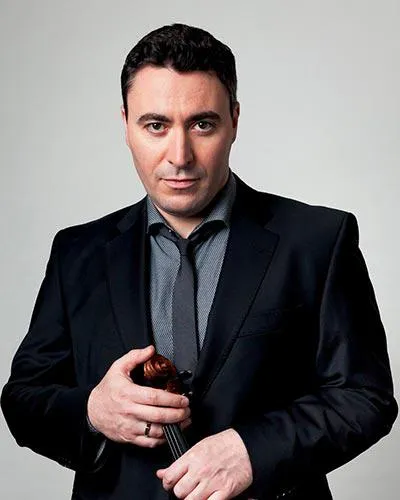
Maxim Vengerov gilt als einer der aufregendsten Geiger der Welt. Sein erstes Konzert gab er im Alter von fünf Jahren und gewann, nach dem Studium bei Galina Tourchaninova und Professor Zakhar Bron, mit zehn Jahren den Ersten Preis beim Junior Wieniawski Competition. 1990, mit fünfzehn Jahren, gewann er den Carl Flesch International Violin Competition und bestätigte damit seinen Ruf als Musiker allerhöchsten Ranges.
Im Mai 2000 unterzeichnete Maxim Vengerov nach einem zehnjährigen Plattenvertrag mit Teldec Classics einen Exklusivvertrag mit EMI Classics. Zu seinen Auszeichnungen und Preisen zählen der Gramophone Young Artist of the Year und der Ritmo (Spanien) Artist of the Year 1994; der Gramophone Record of the Year und Nominierungen für den Grammy Award in den Kategorien Classical Album of the Year und Best Instrumental Soloist with Orchestra 1996; der Edison Award für die Best Concerto Recording 1997; der Gramophone Artist of the Year 2002; sowie sowohl ein Edison Award als auch ein Grammy Award 2004 für die Best Instrumental Soloist Performance (with Orchestra) für seine Einspielung von Brittens Violinkonzert und Waltons Violakonzert.
1997 war Vengerov der erste klassische Musiker, der von UNICEF zum Envoy for Music ernannt wurde. In dieser Rolle hat er benachteiligte Kinder in Uganda, Harlem, Thailand und auf beiden Seiten der ethnischen Teilung des Kosovo getroffen und für sie gespielt – eine Arbeit, die es ihm ermöglicht hat, Kinder weltweit zu inspirieren und zugleich andere dazu zu bewegen, Spenden für UNICEF-unterstützte Programme zu sammeln. Eine weitere Leidenschaft in Vengerovs Leben ist sein Engagement für junge Menschen durch Meisterkurse. Eine solche Veranstaltung wurde von Channel Four Television im Rahmen einer Dokumentation über Vengerov mit dem Titel 'Playing by Heart' aufgezeichnet, die 1999 beim Cannes Television Festival gezeigt wurde. Seit Juni 2005 ist er Professor of Violin an der Royal Academy of Music in London.
Dieselbe Leidenschaft für das Unterrichten durchzieht seine Meisterkurse bei MusicGurus, in denen Vengerov dich in das große Violinrepertoire einführt – von Ravels Tzigane und Sarasates Carmen Fantasy bis zu den Konzerten von Sibelius, Mendelssohn, Britten und Schostakowitsch – und die Technik und Musikalität hinter jeder Phrase mit dir teilt.







