



Analyse, Erklärung und Demonstration mit Maxim Vengerov
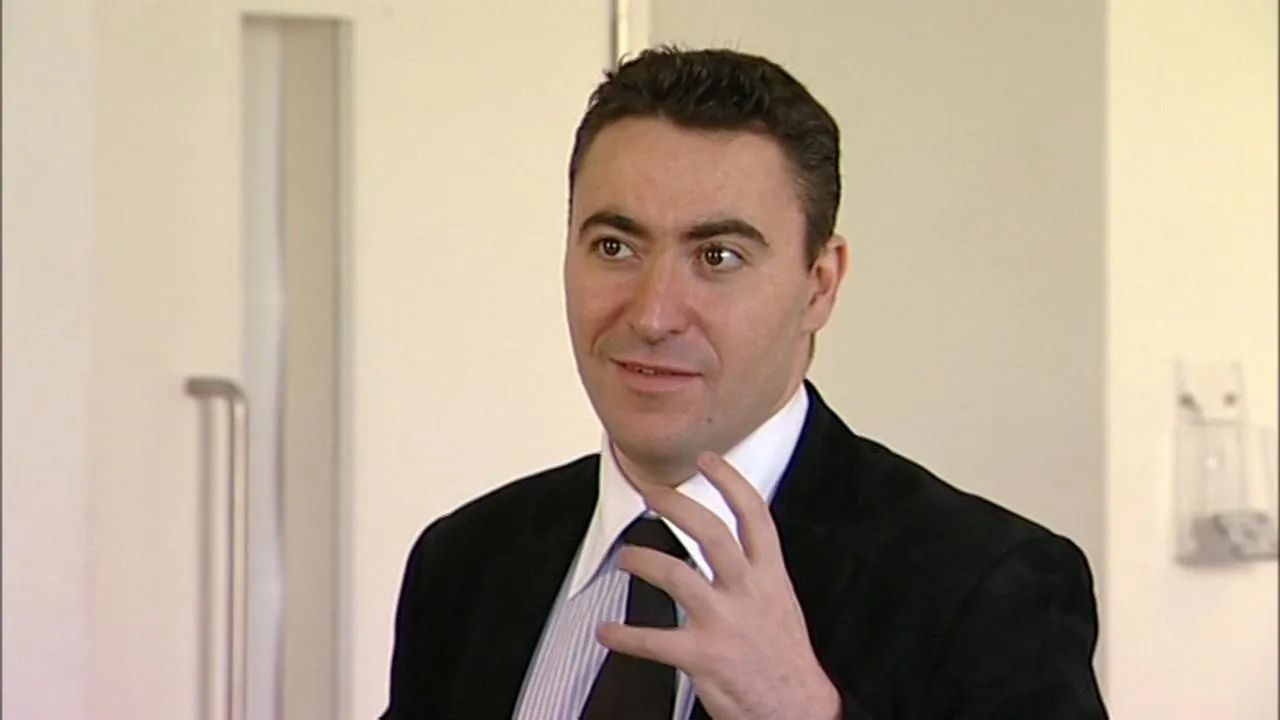
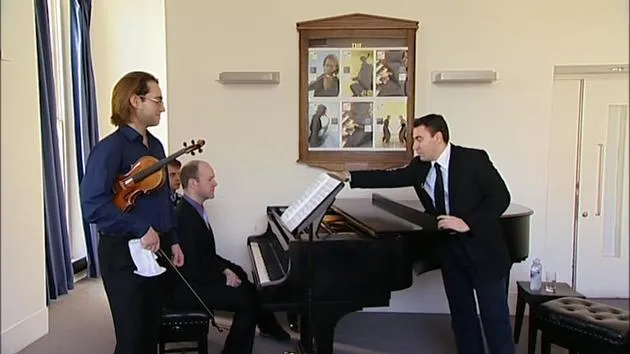
Maxim Vengerov erarbeitet mit seinem Schüler Giovanni Guzzo Brittens Violinkonzert und geht mit Einblicken und Anekdoten auf Harmonie, Tempo, Interpretation und Emotion ein.
Das steckt im Kurs
2 Lektionen (0h 49m) · 1 gratis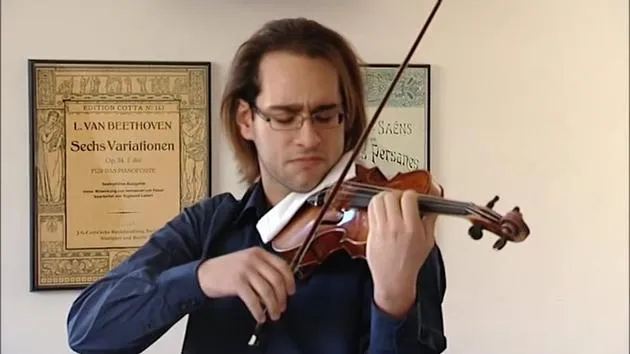
Transkript der Lektion
Giovanni's Lesson on Britten
Introduction
"Great rendition of Britten! I love that, you know, very personal, the way you really take the time and you think about every note that you're playing. That is very important, especially with a work like Britten."
The Nature of Composition
I always tend to think that when the great composer writes for a concerto for violin, he never actually, deep down, writes for the violin itself. Instead, he uses the violin and other instruments to express himself. However, there are certainly compositions, like the Tchaikovsky concerto, where this is really a violinistic piece. This is a work written for the soul of the violin, where the orchestra is primarily in the background.
In contrast, Brahms, Mozart, Beethoven, Britten, and even Shostakovich, the 20th-century composers, used the violin to integrate it into the orchestral form. You have to consider the violin as a part of the symphony, sometimes leading and at other times blending into the orchestra.
The Illusion of Sound
The imaginative possibilities of instruments and repertoire have expanded, allowing composers to write works that are not only emotional but also constructive to create an illusion.
- Key Mindset: You have to try and forget sometimes that you play the violin. Britten used the violin just to express musical sound, integrating it into the orchestra.
- Practical Tip: When you go home, it would be very useful for you to take the score and see what instrument you're playing with. According to their sound and their vibrato, you may need to blend with other instruments.
Playing with Various Instruments
Sometimes, when playing with wind instruments like the clarinet or tuba, the challenge arises because they produce a completely different sound with varied techniques, vibrato, and mental approaches.
- Violin vs. Other Instruments: The familiarity of playing with violins is like being at home, but you should also explore new territory, mystery and discomfort.
- Audience Perception: It is crucial for the audience to feel misled; they should think, "Is this a violin? I can't recognize that!" This is the essential role of the composer, to trick the audience.
The Structure of the Concerto
Another crucial aspect of the concerto is its structure:
- Exposition and Recapitulation: You have to know there is an exposition where you expose the work for the first time. When you come back in the recapitulation, you're no longer able to feel the same way. It's like a reincarnation of the soul.
- Philosophical Approach: Rise above the usual and standard thinking. The first movement starts dreamy, with brilliance and darkness, not sweetness yet. The sweetness comes from within.
Movement Analysis
-
First Movement: Emphasizes the need to become introverted. The music of Britten often comes from inside; the emotions may not always express outwardly but rather remain within.
-
Second Movement: Here, he showcases what the violin can do, an exhibition of the instrument's capabilities.
-
Third Movement: It rises above the first and second movements, leading to the greatest statement of the concerto. There's a surprise waiting at the end that showcases Britten's mastery.
Details to Focus On
-
Percussive Elements: Think about how the composer thinks regarding the theme and accompaniment. This division of organized vs. disorganized feeling contributes to each performance.
-
Vibrato and Harmonies: There should be a reaction to the harmonies; each harmony is a different color. Listen carefully while playing.
-
Intonation: Stay attuned to the harmonies to maintain good intonation without relying solely on mechanical perfection.
Practicing Tips
- Maintaining Momentum: Do not interrupt with vibrato; every vibration of the soul should be continuous.
- Exaggeration and Practice: In practicing, sometimes you may need to exaggerate movements to achieve the desired outcome naturally.
Conclusion
"Giovanni, you deliver great quality! Every note should sound like a well-crafted masterpiece, reflecting your hard work in practice. Use your body and instrument intuitively, and allow your music to thrive."
"I wish we had a little more time for that."
2 Lektionen
0 Std. 49 Min. strukturierte Videolektionen
Erweiterte Videofunktionen
Verlangsamen, Passagen loopen, mitlesen
Handy, Tablet & Desktop
Üben, wo du willst
100 % Zufriedenheitsgarantie
30 Tage Geld-zurück-Garantie
Lern deinen Guru kennen
Lern deinen Guru kennen
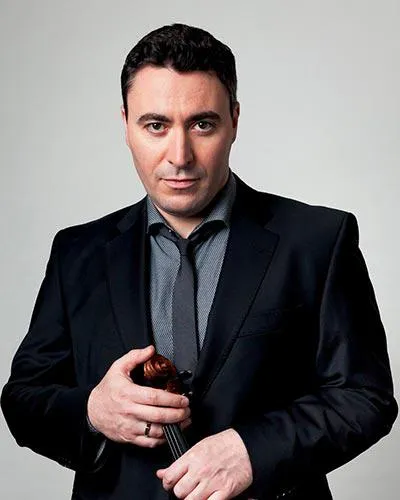
Maxim Vengerov gilt als einer der aufregendsten Geiger der Welt. Sein erstes Konzert gab er im Alter von fünf Jahren und gewann, nach dem Studium bei Galina Tourchaninova und Professor Zakhar Bron, mit zehn Jahren den Ersten Preis beim Junior Wieniawski Competition. 1990, mit fünfzehn Jahren, gewann er den Carl Flesch International Violin Competition und bestätigte damit seinen Ruf als Musiker allerhöchsten Ranges.
Im Mai 2000 unterzeichnete Maxim Vengerov nach einem zehnjährigen Plattenvertrag mit Teldec Classics einen Exklusivvertrag mit EMI Classics. Zu seinen Auszeichnungen und Preisen zählen der Gramophone Young Artist of the Year und der Ritmo (Spanien) Artist of the Year 1994; der Gramophone Record of the Year und Nominierungen für den Grammy Award in den Kategorien Classical Album of the Year und Best Instrumental Soloist with Orchestra 1996; der Edison Award für die Best Concerto Recording 1997; der Gramophone Artist of the Year 2002; sowie sowohl ein Edison Award als auch ein Grammy Award 2004 für die Best Instrumental Soloist Performance (with Orchestra) für seine Einspielung von Brittens Violinkonzert und Waltons Violakonzert.
1997 war Vengerov der erste klassische Musiker, der von UNICEF zum Envoy for Music ernannt wurde. In dieser Rolle hat er benachteiligte Kinder in Uganda, Harlem, Thailand und auf beiden Seiten der ethnischen Teilung des Kosovo getroffen und für sie gespielt – eine Arbeit, die es ihm ermöglicht hat, Kinder weltweit zu inspirieren und zugleich andere dazu zu bewegen, Spenden für UNICEF-unterstützte Programme zu sammeln. Eine weitere Leidenschaft in Vengerovs Leben ist sein Engagement für junge Menschen durch Meisterkurse. Eine solche Veranstaltung wurde von Channel Four Television im Rahmen einer Dokumentation über Vengerov mit dem Titel 'Playing by Heart' aufgezeichnet, die 1999 beim Cannes Television Festival gezeigt wurde. Seit Juni 2005 ist er Professor of Violin an der Royal Academy of Music in London.
Dieselbe Leidenschaft für das Unterrichten durchzieht seine Meisterkurse bei MusicGurus, in denen Vengerov dich in das große Violinrepertoire einführt – von Ravels Tzigane und Sarasates Carmen Fantasy bis zu den Konzerten von Sibelius, Mendelssohn, Britten und Schostakowitsch – und die Technik und Musikalität hinter jeder Phrase mit dir teilt.







