



Arpeggien / gebrochene Akkorde - Debut Grade
Mit
Aamir YaqubWie du gebrochene Akkorde am Klavier spielst, die 1., 3. und 5. jedes Akkords auseinandergezogen, mit einfachem Fingersatz für die linke und rechte Hand, der dich auf schwierigere Tonarten vorbereitet.
Das steckt im Kurs
12 Lektionen (0h 56m) · 1 gratis
Transkript der Lektion
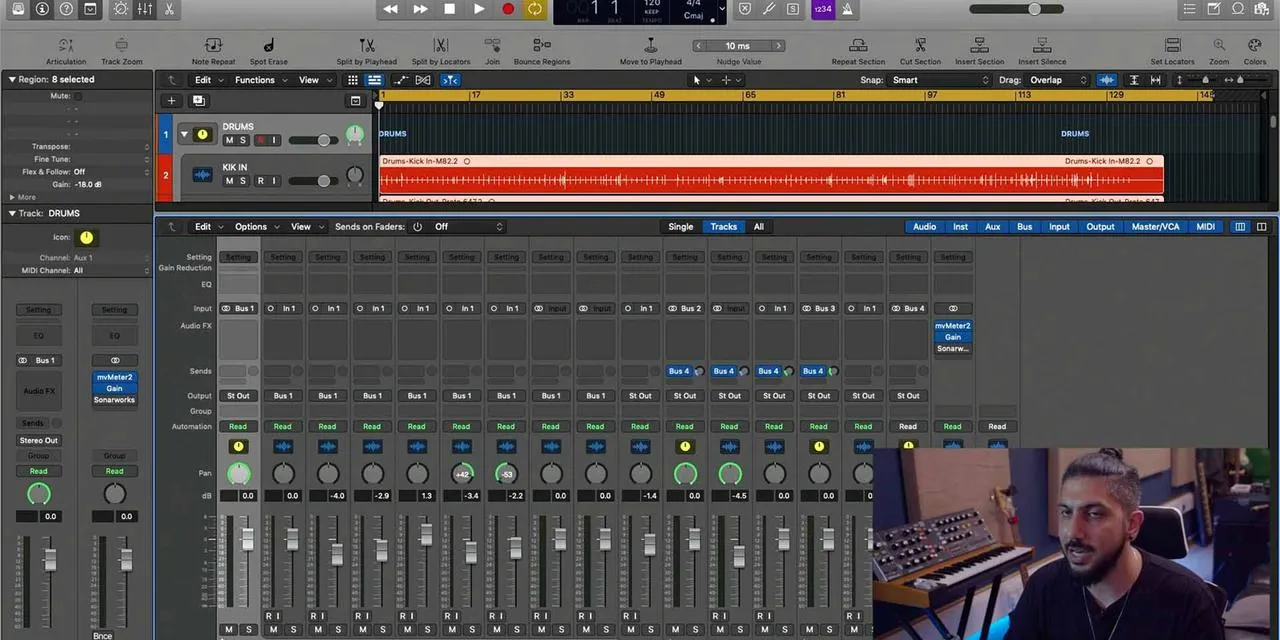
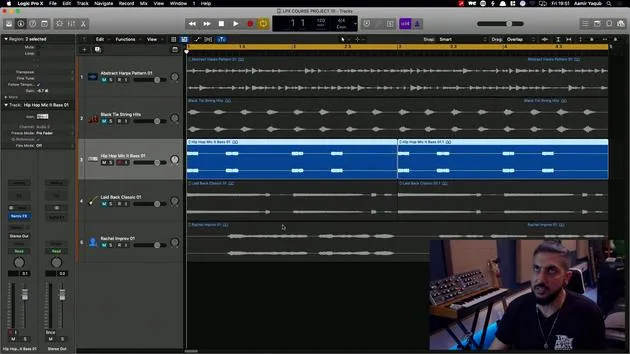
Music Lesson: Working with Logic Sampler
Selecting Sounds
- Let's start by working with some drums.
- I'm going to drag a sound here, but I won't drop it onto the audio track like usual.
- Instead, I'm going to drag it to Quick Sampler Original.
Opening the Sampler
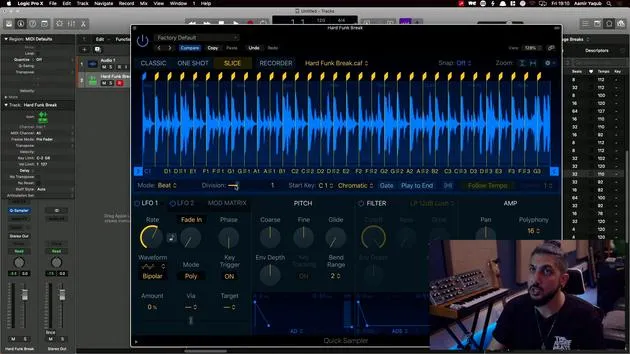
- This action opens the sampler interface.
- Here, I can choose different modes within the sampler:
- Classic Mode: Retriggers the sample.
- One Shot Mode
- Slice Mode: This is what we'll focus on now.
- Recording Mode: To record directly into the sampler.
Slice Mode
- Let's examine Slice Mode.
- My audio sample has been sliced into segments based on transients (sharp peaks in the sound).
- You can adjust sensitivity using the slider for different chop results.
Keyboard Mapping
- The slices are mapped across my keyboard.
- When I use musical typing, I can trigger different slices based on the transients.
Beat Divisions
- Beat Divisions divides samples into beats according to the tempo.
- For instance, I could have slices for one beat each, which is useful for already defined tempos.
- This allows for pattern re-triggering within my arrangement page.
Additional Options
- In the sampler, I have options to:
- Add LFOs
- Adjust pitch (coarse/semitones and fine/sense)
- Use filters
- Modify amplitude and polyphony.
Working with Slices
- I can trigger individual slices or consolidate them.
- Instead of using a drum machine, I can creatively manipulate drum samples.
- For instance, let's experiment with a lower tempo of 100 BPM.
Quantization
- If I play something imprecisely, I can use quantization to align notes to the nearest 16th note.
- This tracks as MIDI data triggered by my sampler.
Adding Instruments
- Next, I'll find a consistent hi-hat sound.
- I can manipulate slices in the sampler to create new sounds.
Adjusting Velocity
- Using the velocity tool, I can adjust the dynamics of the hits for better sound quality.
Introducing Vocals
- Now, let's work with a vocal sample.
- I'll drag it to Quick Sampler Optimized.
- The system will optimize based on the sound dropped into it.
Filtering and Pitch Adjustment
- I will set the polyphony to mono, apply a filter, and pitch it down by an octave for creativity.
Notes on Pitch and Tempo
- When adjusting pitch:
- Playing a higher note speeds up the tempo.
- A lower note slows it down.
- This is essential to keep in mind while working with sampler instruments.
Final Thoughts
- Starting with an unrecognizable sound can lead to unique sonic creations.
- Always remember to apply effects, such as reverb, adjusting the wet amount to stylize your audio.
This concludes our exploration of using the Logic Sampler for creative music production!
12 Lektionen
0 Std. 56 Min. strukturierte Videolektionen
Erweiterte Videofunktionen
Verlangsamen, Passagen loopen, mitlesen
Handy, Tablet & Desktop
Üben, wo du willst
100 % Zufriedenheitsgarantie
30 Tage Geld-zurück-Garantie
Lern deinen Guru kennen
Lern deinen Guru kennen
Aamir Yaqub ist ein in London ansässiger Musikproduzent und Toningenieur. Er hat mit einigen der größten Namen der Musik gearbeitet, darunter Alicia Keys, David Guetta, Rihanna, Sia und will.i.am, und fördert außerdem unabhängige Künstler.
In seinen Kursen vermittelt er seinen kompletten Logic-Pro-Workflow – von der Oberfläche und dem Aufnehmen über Beatmaking, Synthese und MIDI-Effekte bis zum Mixing und Finalisieren eines Tracks.







