



Nr. 10 Analyse, Erklärung und Demonstration mit Joanna McGregor
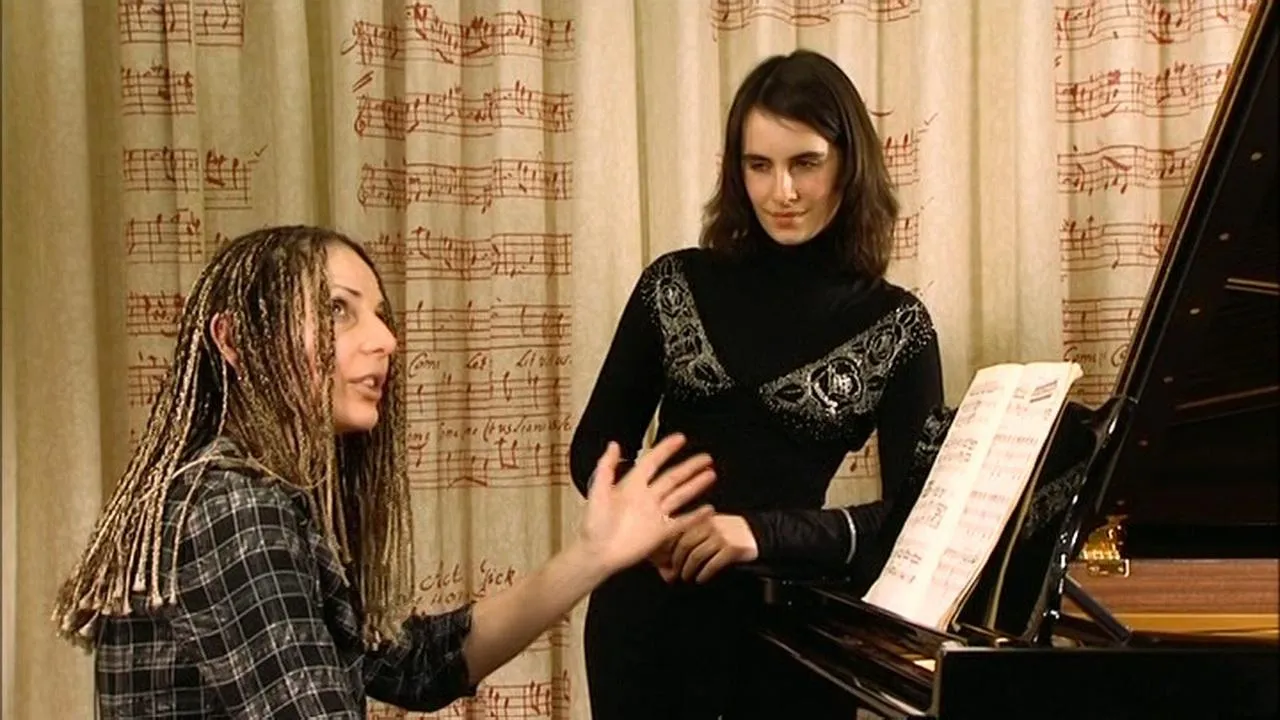
Das steckt im Kurs
8 Lektionen (2h 24m) · 1 gratis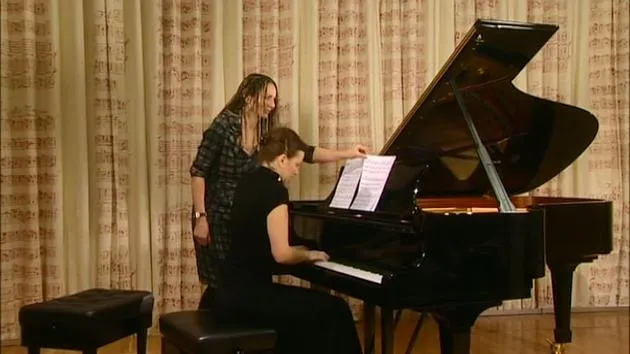
01. Interpretation von Nr. 1, 2, 3
Gratis-Lektion2:42
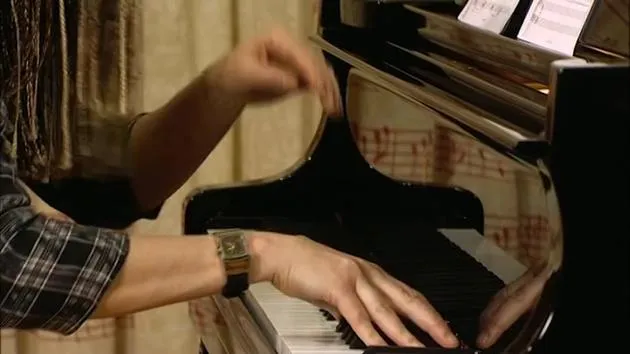
02. Analyse, Erklärung und Demonstration der Nr. 1, 2 und 3 mit Joanna McGregor
33:10
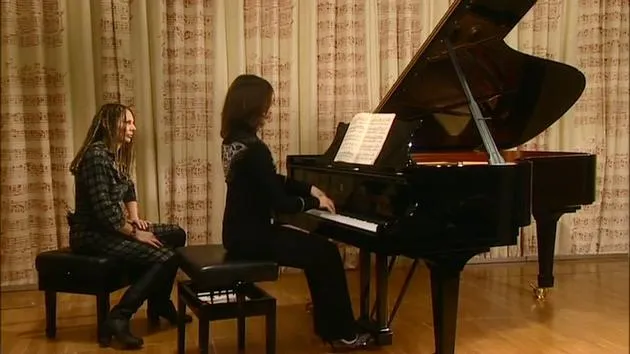
03. Aufführung Nr. 4, 13
7:29
04. Analyse, Erläuterung und Demonstration der Nr. 4 und 13 mit Joanna McGregor
32:43
05. Aufführung von Nr. 10
8:43
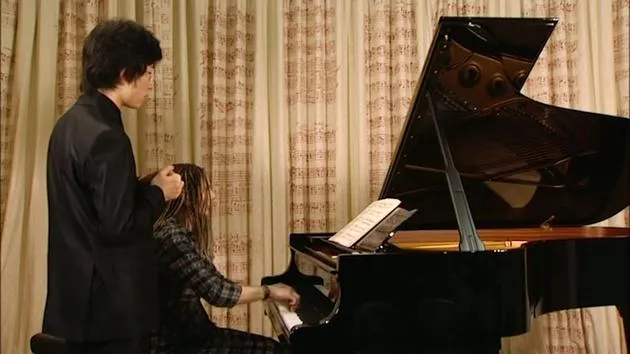
06. Nr. 10 Analyse, Erklärung und Demonstration mit Joanna McGregor
Du bist hier27:52
07. Darbietung von Nr. 11
7:34
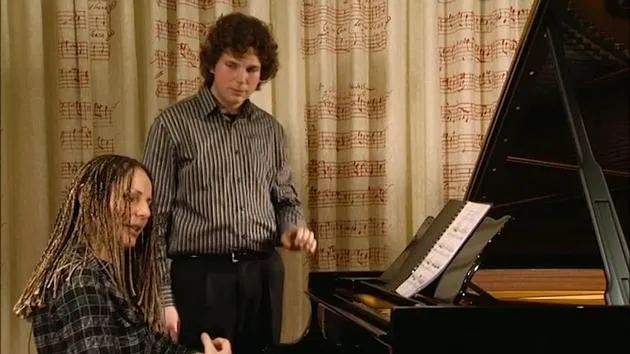
08. Nr. 11: Analyse, Erklärung und Demonstration mit Joanna McGregor
23:53
Transkript der Lektion
Music Lesson
Instructor: How do you feel? I was thinking halfway through, you must be very tired, because, I mean, just doing it, you know, once is enough. It's very good. You play it very, very well. Very, very well. So I think you play it extremely well.
Feedback on Sound and Technique:
- I don't have any sort of major criticism or anything, but I am going to make some suggestions about your whole sound at the piano.
- Now, this isn't a very easy piano to make a big sound.
- I felt your sound was a little tight and constricted, and I was watching how you play.
Suggestions for Improvement:
- One of the things you might do now, you've got a piece and you've got great command of the notes and the technique and everything.
- You might think about the largeness of the sound that you're making.
- I notice your opening was like that, but it is marked forte. You need to have a slightly bigger sound at times.
- What I feel is that you're very accurate; you're playing highly accurately. However, one of the things you sacrificed is volume in order to achieve that accuracy.
Playing Technique:
- I can see that you're physically making the shapes, but try to:
- Concentrate on the sound.
- If necessary, drop the speed a bit and focus on the sound I'm talking about.
- When you play this opening, try and feel as though you're swinging.
Encouragement:
- All of this should be quite loose and free in order to get the sound to flow out.
- Shake the sound out rather than having to force it.
- Just keep it relaxed, this here. That's it. That's a good sound.
Working with Dynamics:
- Now, with these, the way Messian's divided them, don't play them individually.
- I need to hear more of the fours and the twos and the threes.
- Drop the staccato slightly and focus on picking it up naturally.
Returning to Original Speed:
- I wonder if we can go back to your original speed while keeping some of that depth of sound.
- Try not to overemphasize every single note.
- It should project a ferocious sound and writing style.
Personal Preference:
- I'd actually prefer something that sounds more vibrant.
- I like that sound because it conveys seriousness in the playing.
- It's more work for you, but if you concentrate on keeping relaxed, it shouldn't feel so hard.
Playing with Phrasing:
- When you have big phrases, think of a huge phrase mark above each thing.
- Try to maintain long lines rather than playing each note individually.
Messian's Masterclass:
- I do remember seeing Messian and his wife give a masterclass on this.
- They emphasized these chords should shine and have a romantic sound.
Using Pedal:
- Don't play so fast that it's merely digital, think of it as written by Rachmaninoff.
- Use pedal underneath to make it sound more luminous.
Practicing Difficult Sections:
- For the difficult middle section, think a little bit jazzier.
- Focus on rhythm; don't worry about speed.
Tips for Practicing:
- Show me how you practice this passage. What would you do?
- Practice slowly and softly.
- You need to make more of the grace notes; they are important.
Rhythm and Phrasing:
- It's essential to allow the detail to come out rather than just hammering through the notes.
- Explore the contrasts in the music to keep it lively and interesting.
Final Thoughts:
- When programming this movement for recitals, think about how it will be received by the audience.
- If it's too dense and complex, consider pairing it with quieter pieces to help the audience digest it.
- Recommendation: Don't play this as an encore; it needs to be presented thoughtfully.
Conclusion:
- Well done, thank you!
8 Lektionen
2 Std. 24 Min. strukturierte Videolektionen
Erweiterte Videofunktionen
Verlangsamen, Passagen loopen, mitlesen
Handy, Tablet & Desktop
Üben, wo du willst
100 % Zufriedenheitsgarantie
30 Tage Geld-zurück-Garantie
Lern deinen Guru kennen

Lern deinen Guru kennen
Joanna MacGregor ist eine der vielseitigsten und innovativsten Musikerinnen der Gegenwart, mit einer Karriere, die Genres verbindet und sich einer einfachen Einordnung entzieht. Sie ist in über sechzig Ländern aufgetreten, mit vielen der großen Orchester der Welt (darunter die New Yorker Philharmoniker, die Londoner und Sydney Symphony Orchestras, der Niederländische Rundfunk, die Osloer Philharmoniker und das Chicago Symphony Orchestra) und unter namhaften Dirigenten wie Boulez, Davis und Rattle. Dabei hat sie mehrere wegweisende Kompositionen uraufgeführt, mit führenden Jazz- und Pop-Künstlern vom südafrikanischen Jazz bis zur avantgardistischen Elektronik zusammengearbeitet und Multimedia-Projekte konzipiert, die international getourt sind.
Joanna gab 2002 ihr Debüt als Dirigentin und leitet regelmäßig ihre eigenen Orchesterprojekte. Sie pflegte als Dirigentin und Interpretin eine enge künstlerische Partnerschaft mit der Britten Sinfonia, mit der sie durch Südamerika tourte und das gefeierte Projekt Moondog/Art of Fugue schuf – eine radikale Neubearbeitung von Bachs spätem Meisterwerk neben der Musik des berühmten New Yorker Straßenmusikers der 1950er Jahre, veröffentlicht als 'Sidewalk Dances'.
Ihr Album 'Play' auf ihrem eigenen Label SoundCircus erhielt eine Nominierung für den Mercury Prize, und ihre Lehrbücher 'Piano World' wurden als 'des neuen Jahrtausends würdig' gefeiert. Sie ist außerdem künstlerische Leiterin des Bath International Music Festival.
In diesem Kurs führt sie dich durch Messiaens monumentale 'Vingt Regards sur L'Enfant-Jesus' und teilt die Einsicht, Technik und interpretatorische Fantasie, die du brauchst, um eines der großen Werke des Klavierrepertoires zum Leben zu erwecken.







