



Tatiana's Letter Scene - Schülervortrag und Analyse von Joan Rodgers
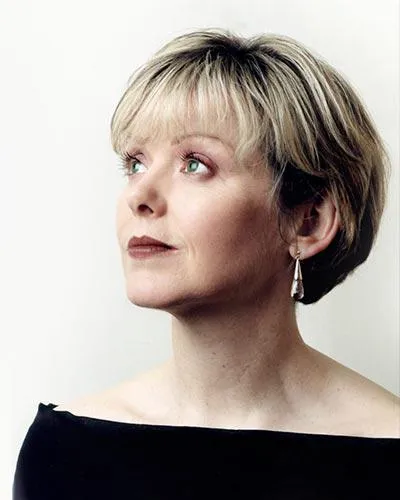
Mit
Joan Rodgers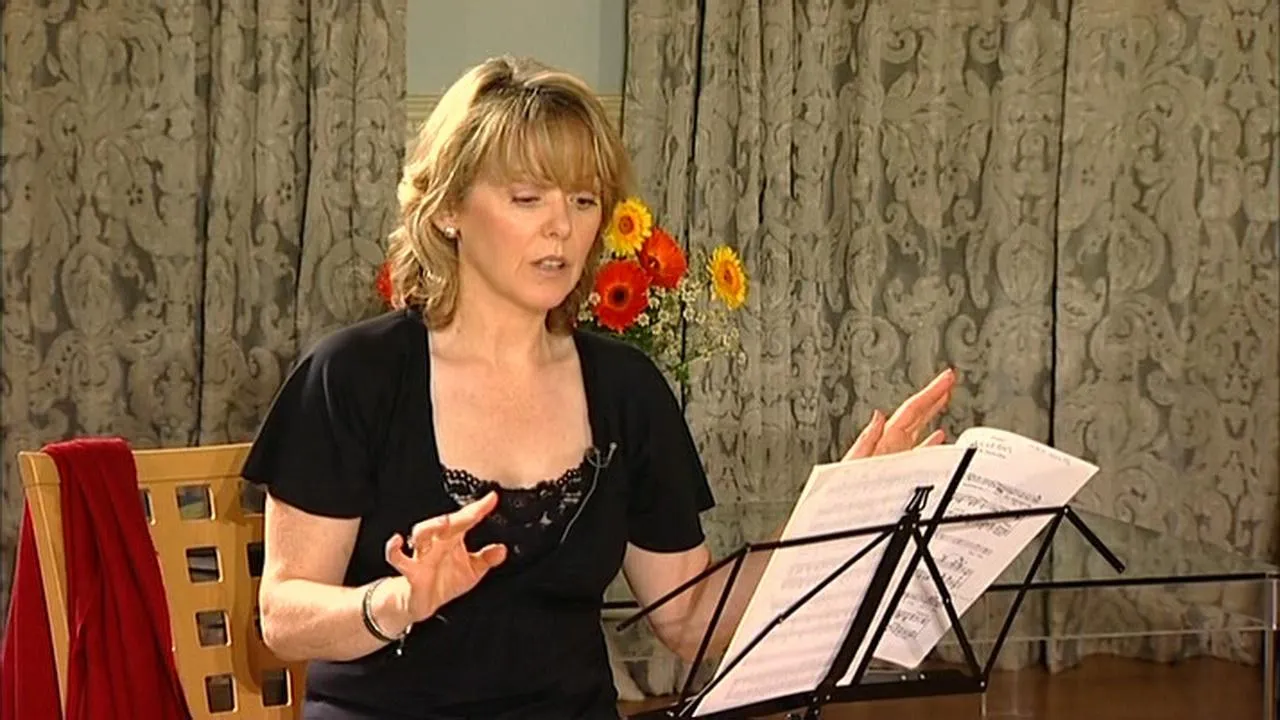
Das steckt im Kurs
7 Lektionen (2h 7m) · 1 gratis
01. Tatiana's Letter Scene - Schülervortrag und Analyse von Joan Rodgers
Du bist hier43:32
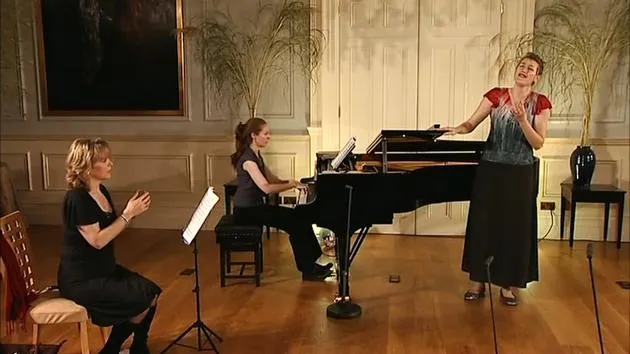
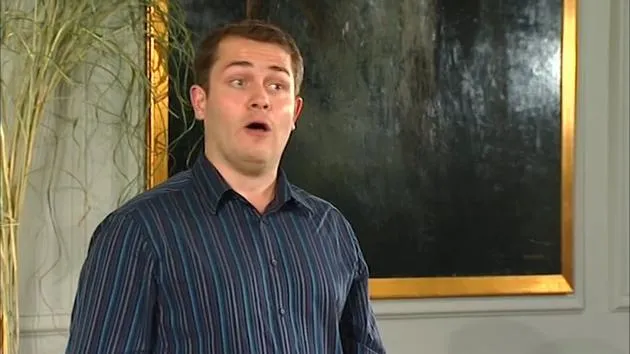
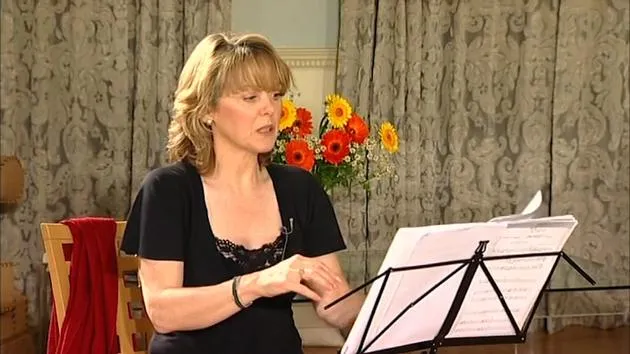
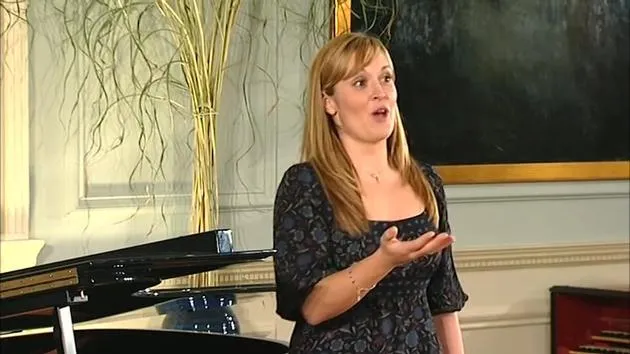
Transkript der Lektion
Music Lesson
Introduction
I thought that was great the way you did that. At that point, Tatiana is taking on the joie de vivre of Olga because she really hopes that something might come of this. I thought that was very good.
Performance Feedback
- Vigor: You got the vigor it needs, and the Russian is pretty good.
- Legato: I would make "cocknatch, cocknacho" a bit more legato because it's very serious. She's thinking all the way through this. Keep it legato.
No, no, at this point, I love it! As I said at the beginning, I loved your vigor and energy. It's almost as if she's just floating on top of the orchestra with little interjections.
Quote: "She's just sort of making her interjections into it."
Absolutely, legato! You know, it's not a wordy language. Occasionally it is, but I think you're breathing too late. You need to start singing it earlier.
Word Massaging
I can't explain it, but it just isn't legato. You have to massage the words more; they sound a bit stiff. I want you to feel like you don't need to be so rigid. It's a bit... I'm being a bit cruel, but just relax.
I don't know why you're going your "vam yavam" and then, alas, a bit more E. I want you to really not think of this as a language with loads of awkward consonants, because it's not.
Vocal Techniques
- Experiment with Vowels: Just try singing on an R for a while, or just on the vowels without the consonants. There are more vowels there than you think.
- Adagio Again: "Oui and oui." I'm not in control of my feelings, it could have gone another fifth higher. Let it go.
That was better, but don't hold! I think you're trying to control it. We all try to control these things, but sometimes it's good not to, especially with Tchaikovsky. He writes so beautifully.
Building Confidence
Think: "Let fate decide." This is a bit more solid.
- That was great! The apex was fantastic, and this is the moment where she's bolder, declaring herself.
- You can make your notes less stiff; it's recit, really, and it allows you to express yourself in a more relaxed manner.
Quote: "Just go from there."
Now you need a new mood, this is great. It's almost as if she's musing and thinking, "With time, who knows, he might start to like me more."
Light and Lyrical
I want to feel that it's a conversation with herself, not just about delivering it. Just keep it very light and lyrical.
Then you need to focus on picking up the aria again. But during that, she's just thinking, "I might be a really good wife and a marvelous mother." So there are moments where you take the aria and then take these utterances.
Breath Control
- Danger Moment: There's a real danger moment in this piece because you have to keep your breath low.
- You were doing well, but then you started compressing it. You need space!
Tip: "If you give yourself space, you will be in charge here."
Maintaining Flow
- Breath Management: Sometimes you can get away without a breath; keep it calm and economical to avoid overstuffing.
- Just think of the whole phrase, not each note.
Stay heart, stay heart. Use that rhythm; tease her with it:
- "Sigdamic taishti." More teasing!
Final Thoughts
- Energy & Color: Olga is the polar opposite of Tatiana, she's the breath of fresh air saying, "Come on, Tanya, snap out of it!"
- Make sure the text enlivens and energizes the performance; it's about putting her character into it.
Conclusion
This is lovely; it suits you vocally really well. Remember, Tchaikovsky writes wonderfully for voices. Honor him with the legato he gives you, and make sure that the Russian language flows naturally.
7 Lektionen
2 Std. 7 Min. strukturierte Videolektionen
Erweiterte Videofunktionen
Verlangsamen, Passagen loopen, mitlesen
Handy, Tablet & Desktop
Üben, wo du willst
100 % Zufriedenheitsgarantie
30 Tage Geld-zurück-Garantie
Lern deinen Guru kennen
Lern deinen Guru kennen
Joan Rodgers ist mit Liederabenden in ganz Europa und den USA aufgetreten, darunter in London, Paris, Wien, Amsterdam, Moskau und New York, und im Konzert mit Dirigenten wie Solti, Barenboim, Mehta, Rattle, Harnoncourt, Mackerras, Ashkenazy und Salonen. Sie ist häufiger Gast bei den BBC Proms. Zu ihren Opernengagements gehörten regelmäßige Auftritte am Royal Opera House, an der English National Opera, in Glyndebourne und an anderen führenden Häusern in Großbritannien, Europa und den USA.
Zu Joan Rodgers' zahlreichen Einspielungen zählen die Mozart-Da-Ponte-Trilogie mit Daniel Barenboim und den Berliner Philharmonikern, The Turn of the Screw (Virgin), Soloalben von Tschaikowski, Mozart und Wolf (Hyperion), The Creation (Philips), Rachmaninow-Lieder mit Howard Shelley (Chandos) sowie eine Hyperion-CD mit Liedern von Prokofjew, Mussorgski, Schostakowitsch und Britten. Sie erhielt den Royal Philharmonic Society Award als Singer of the Year 1997 sowie den Evening Standard Award 1997 für eine herausragende Opernleistung. Joan Rodgers wurde in der New Year's Honours List 2001 mit dem CBE ausgezeichnet.
In ihrer Singing Masterclass stellt Joan all diese Bühnen- und Studioerfahrung direkt in den Dienst der Studierenden und arbeitet eng an Technik, Sprache, Interpretation und Bühnenpräsenz. Du wirst hören, wie ein großes Lied oder eine große Arie Zeile für Zeile aufgebaut ist, und lernen, dieselbe Kunstfertigkeit und Detailtreue in deinen eigenen Gesang einzubringen.







