



Triolen-Phrasen: nur Snare
Lesson time: (7min 1sec)
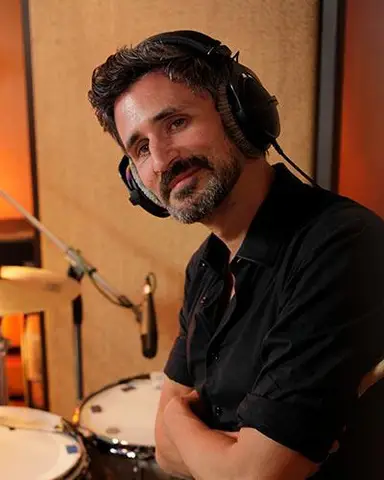
Alex Reeves wechselt von geraden Sechzehnteln zu Triolen und spielt sie im Handwechsel auf der Snare, damit du den Unterschied zwischen der Zwei- und der Dreiteilung des Beats spürst.
Course preview
This lesson is part of the course Fills In Time: Schlagzeug-Fills und Timing-Gefühl in 15 Lektionen
Watch a preview of the full course below.
Lesson transcript:
Lesson Eight: Playing Triplets
In this lesson, we're going to be looking at playing triplets.
Introduction
To start off, we'll focus on the snare drum only. Here we are in the middle of the room with a snare drum alone, so we can concentrate on the task at hand without the temptation of the bass drum, toms, and cymbals.
Getting Started with Triplets
Before you play the exercises, spend a little time getting used to playing triplets to a pulse.
- You'll be playing all of these hand to hand:
- Right, left, right, left, etc.
Eighth Note Triplets
With the eighth note triplets:
- The lead hand will land on the 1 and the 3.
- The following hand will land on the 2 and the 4.
Sixteenth Note Triplets
Before you play the sixteenth note triplets, lock your lead hand onto the click playing eighth note triplets like this:
- When you move to the sixteenth note triplets, count:
- 1 e & a 2 e & a 3 e & a 4 e & a
- 1 triplet 2, triplet 3, triplet 4
- triplet 1, triplet 2, triplet 3, triplet 4
- triplet 1 and 2, 3 and 4.
Once you're relatively comfortable with this, move on to the exercises. These are designed to help you change between a straight rhythm and triplets.
Moving to the Kit
Only when you're comfortable with the basic ideas on a snare drum should you move to the kit. Here, I demonstrate a couple of the exercises with some interpretations added.
- These are some basic ideas, but there are many. Try as many as you can in your own practice time.
- Remember, use your imagination and you'll come up with a sound of your own.
Importance of 128 Time
Playing in 128 time is fundamental to understanding triplets. Here, I play a 128 groove with some of my own ideas.
- The rest of the track was written and added after the drums were recorded.
Happy practicing!
About the instructor
Alex ist ein freischaffender Musiker, der live und im Studio mit ganz unterschiedlichen Künstlern wie Dizzee Rascal, Unkle, Bat for Lashes, Guy Garvey und Elbow aufgetreten ist. Er hat bei allen großen britischen Festivals Headline-Slots gespielt, mit Fernsehauftritten auf der Pyramid Stage von Glastonbury, der Oxygen Main Stage und bei T In The Park. Zu seinen internationalen TV-Auftritten zählen außerdem Live on MTV, die Jools Holland Hootenanny und The BBC Electric Proms mit Dizzee Rascal. Auf der Bühne hat Alex mit Künstlern gespielt, die weltweit Nummer-eins-Singles und -Alben hatten, darunter Boy George, The Jones Girls und Johnny Hates Jazz. Alex war zudem Musical Director für Cocknbullkid von Island Records, produzierte ein Album für Lotte Mullan und trat live mit dem Mercury-nominierten Rapper Ty, der amerikanischen Blueslegende Earl Thomas und dem Singer-Songwriter Ezio auf. Alex hat in allen großen Studios Londons aufgenommen, darunter Abbey Road, Angel, Air und Rak, und betreibt sein eigenes privates Schlagzeugstudio im Fortress-Komplex im Osten Londons. Zu den Aufnahme-Highlights aus der Drum Fortress zählen die Top-5-Single Shine mit den Lovefreekz, Breathe von Wretch 32, UNKLEs Zusammenarbeit mit Nick Cave und der Beat für die Single Nasty des amerikanischen Rappers Nas. Er hat außerdem Schlagzeug und Percussion für große TV-Werbespots von Unternehmen wie McDonalds, X-Box und Toyota gespielt, Beats für Computerspiele wie Sega Rally 2 und Shellshock 2 geliefert und auf vielen TV- und Filmsoundtracks mitgewirkt, darunter der große Kinofilm Brideshead Revisited. Alex schreibt regelmäßig eine Lehrkolumne für das Magazin Drummer, hat ein Buch mit begleitender DVD verfasst und eine Sample-CD mit Funk-Breaks der 1960er aufgenommen. In seinem MusicGurus-Kurs Fills In Time destilliert er all diese Studio- und Bühnenerfahrung in 15 kurze Lektionen, die dein Timing-Gefühl schärfen und ein Vokabular an Drum-Fills aufbauen, das du direkt in dein eigenes Spiel übernehmen kannst. Und ja – er ruft immer noch jede Woche seine Mama an. read more