



Die Bedeutung des Atems
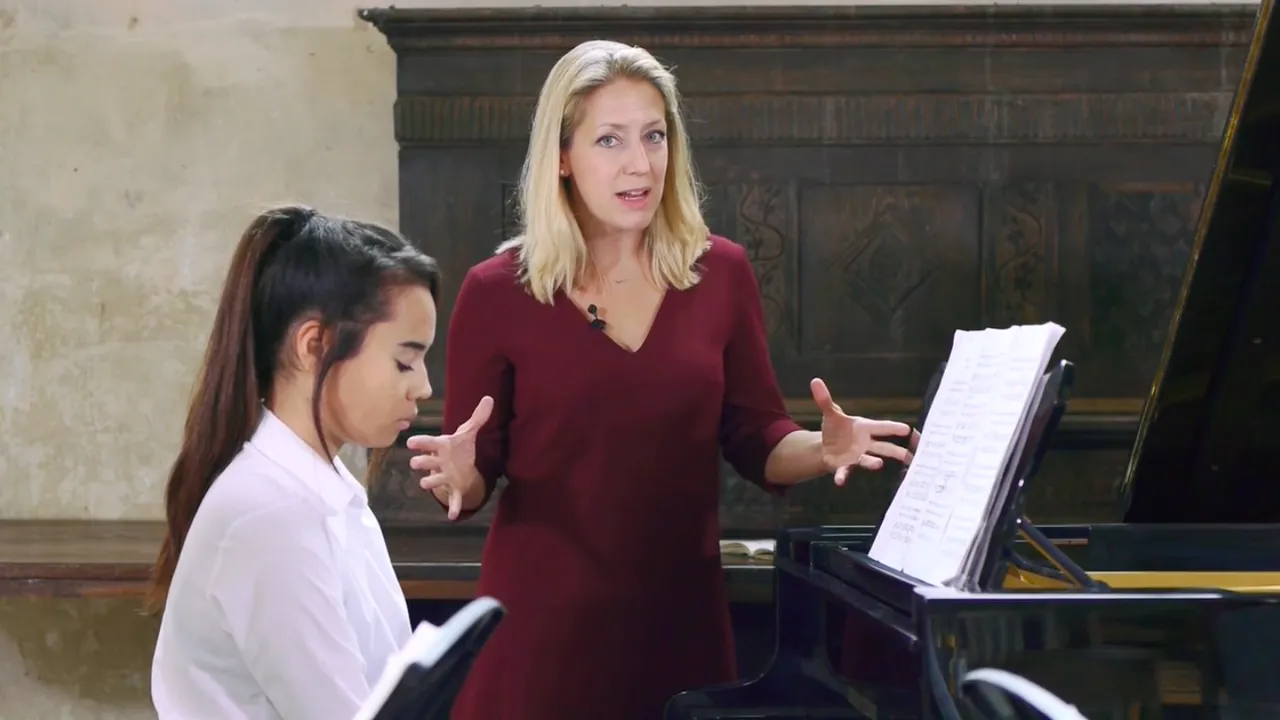
Annabel erkundet, wie Ensembles lernen können, ihren Atem zu nutzen, um die Einheit innerhalb des Ensembles wirklich zu festigen
Das steckt im Kurs
8 Lektionen (0h 25m) · 1 gratis
01. Vorstellung von Annabel und die Weiterentwicklung einer bestehenden Kammergruppe
Gratis-Lektion1:45
02. Der vollständige Sound (das unsichtbare Bandmitglied)
3:28
03. Körpersprache
3:44
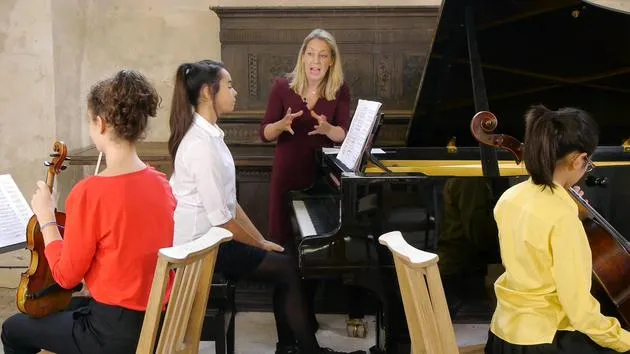
04. Die Bedeutung des Atems
Du bist hier3:28
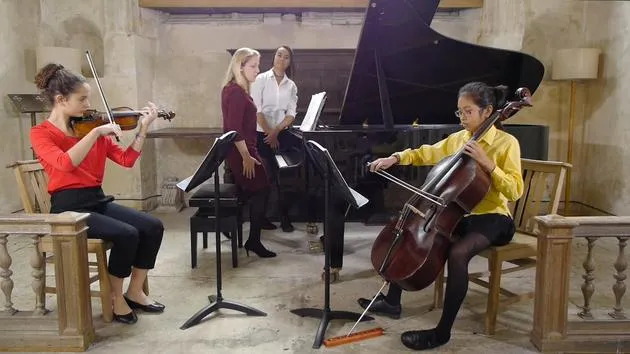
05. Folge dem Anführer! Ein lustiges Spiel
4:00
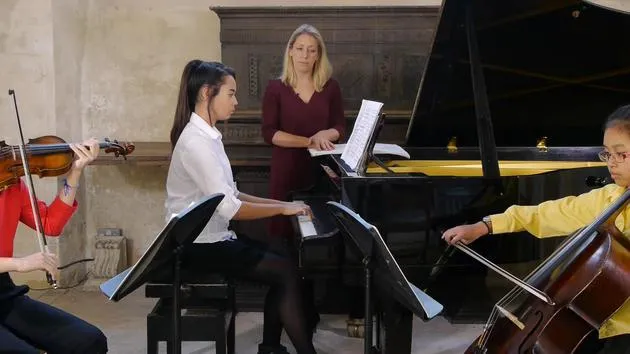
06. Die Partitur studieren
4:05
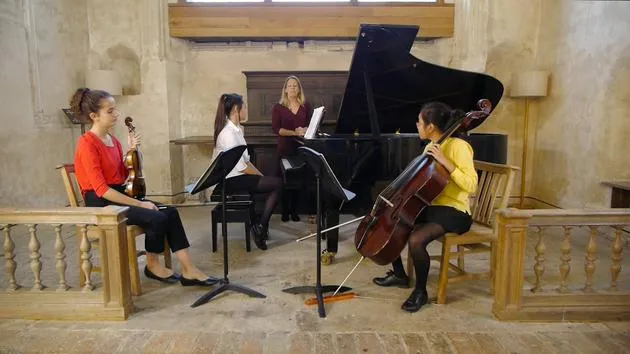
07. Ein musikalisches Gespräch und das Pareto-Prinzip
2:44
08. Jenseits des Proberaums
2:14
Transkript der Lektion
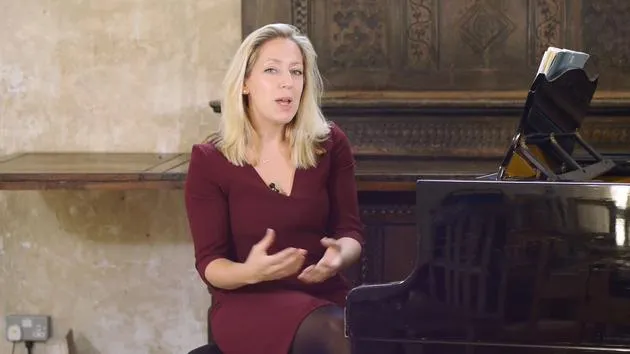
The Importance of Breath in Music
Here we're going to talk about breath. Breath is incredibly important. It's probably the first thing that you do in life, and it's the last thing you do in life.
Types of Breath
You have different types of breath:
- Short, sharp breaths when you're getting anxious.
- Slow, deep breaths when you're feeling the music in a more emotive way.
For me, breath is the common ground between a chamber group.
The Piano Trio
As a piano trio, this concept can work with any instrumentation. It's particularly interesting because the piano is a percussive instrument. Here, I'm talking about the anticipation of sound.
- When the pianist plays a note, it sounds almost immediately.
- With a string player, there's a slight delay.
- With wind players, it will take even longer, they have to produce the breath into the reed or down the tube of the instrument.
- The triangle in an orchestra, however, will sound straight on the beat.
Thus, we need to find common ground, and that's the breath.
Unconventional Piano Trio
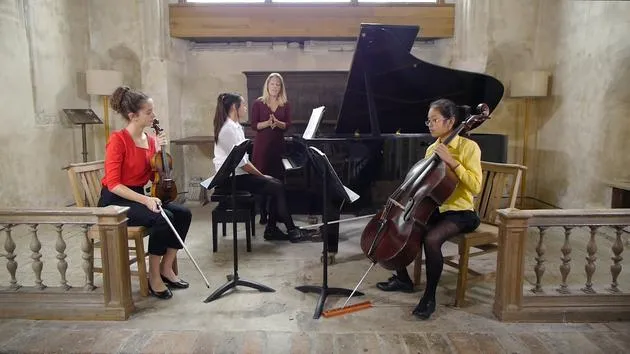
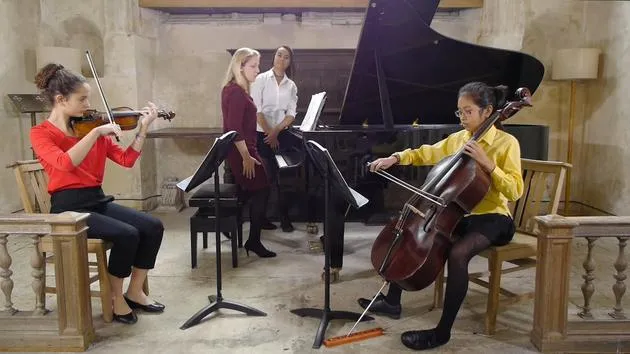
I've created an unconventional piano trio. We've completely lost our peripheral vision and eye contact, but hopefully, we will achieve compatibility of breath.
I'm going to ask these fabulous musicians to play the beginning, and they will follow. Emily is going to take the lead slightly and will make them play the beginning just with her breath.
Experimenting with Breath
Beautiful.
You can even take it a step further and experiment with different types of breath.
- Emily, you can take a short, sharp breath to convey anxiety or a more tense sound.
- Alternatively, you might want a big, fat breath for a kind of mysterioso feel.
Anything you want!
Excellent! That was the short, sharp one.
You can, of course, experiment in numerous ways. If you are a wind group, then you want to be breathing in relatively the same places related to the phrase.
Conclusion
The essence of this step or idea is learning to be aware, opening the ears and being conscious of breath.
This awareness relates back to posture and the communication and awareness within the group.
8 Lektionen
0 Std. 25 Min. strukturierte Videolektionen
Erweiterte Videofunktionen
Verlangsamen, Passagen loopen, mitlesen
Handy, Tablet & Desktop
Üben, wo du willst
100 % Zufriedenheitsgarantie
30 Tage Geld-zurück-Garantie
Lern deinen Guru kennen

Lern deinen Guru kennen
Annabel Thwaite gilt als eine der vielseitigsten und charismatischsten Pianistinnen Großbritanniens und genießt eine facettenreiche Laufbahn als Solistin, Kammermusikerin, Aufnahmekünstlerin, Pädagogin und Prüferin. Sie hat alle bedeutenden Begleitpreise gewonnen, darunter die renommierten Kathleen Ferrier, Gold Medal und Richard Tauber Piano Prizes. Sie hat mit namhaften Künstlern wie Roberto Alagna, Bryn Terfel, David Kempster und "Only Men Aloud!" zusammengearbeitet.
Annabel hat für Universal records mit dem "Scottish Tenor" aufgenommen, dessen Album für einen Classical Brit Award nominiert war und regelmäßig auf Classic FM gespielt wird. Zweimal war sie Begleiterin beim Festival of Welsh Male choirs; ihre Auftritte in der Royal Albert Hall wurden von Sain aufgezeichnet und auf S4C ausgestrahlt. Sie ist außerdem Session-Pianistin für Filme und hat in den Abbey Road Studios die Musik zum Film "Awake", zur BBC-Jane-Austen-Serie "Emma", zu "The Secret Diaries of Miss Anne Lister" aufgenommen und ist zuletzt sowohl bei Blue Peter als auch bei "The Rob Brydon Show" aufgetreten.
"...zweifellos unterstützt von den offensichtlich brillanten Klavierbegleitungen von Annabel Thwaite... überaus genussvoll."
In ihren MusicGurus-Kursen – Learn Christmas Classics on Piano, Learn Classical Favourites on Piano und Growing Chamber Groups and Small Ensembles – teilt Annabel die Musikalität, die hinter dieser vielseitigen Laufbahn steht. Du lernst, geliebte Weihnachts- und klassische Stücke am Klavier zum Leben zu erwecken, deinen Anschlag und deine Phrasierung zu entwickeln und – gestützt auf ihre preisgekrönte Erfahrung als Begleiterin – zu entdecken, wie man beim gemeinsamen Musizieren mit anderen Musikern in Kammergruppen und kleinen Ensembles zuhört, führt und zusammenspielt.







