Dominant Sieben Arpeggios

Mit
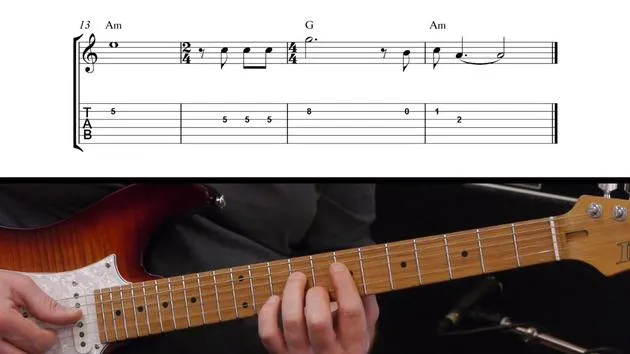
Frank DollFrank Doll zeigt das Dominantseptakkord-Arpeggio von G auf dem Griffbrett - aufgebaut aus Terz, Quinte und kleiner Septime - und wie du es anwendest.
Das steckt im Kurs
13 Lektionen (1h 39m) · 1 gratis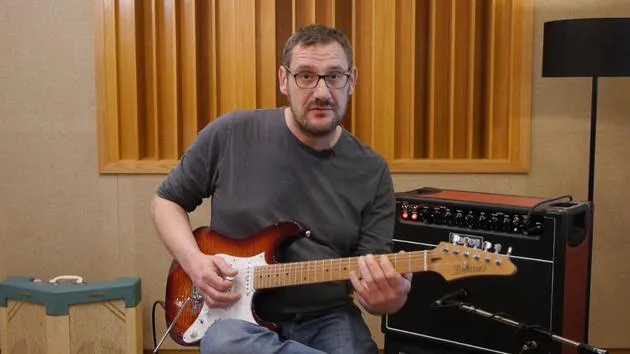
01. Sekunden und Quarten
Gratis-Lektion16:40
02. Harmonisation mit Dreiklängen
4:28
03. Sexten
7:36
04. Major Sieben Arpeggios
7:14
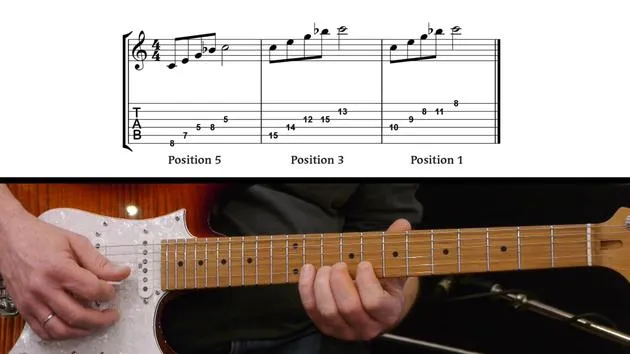
05. Dominant Sieben Arpeggios
Du bist hier9:24
06. Moll Sieben Arpeggios
4:43
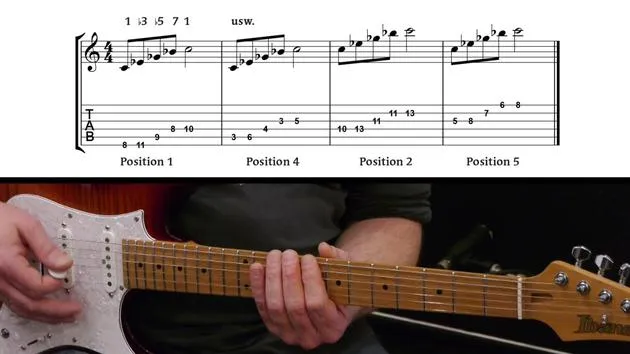
07. Moll7b5 Arpeggios
3:02
08. Übungen zu den Vierklängen
4:16
09. Drop3 Voicings
7:22
10. Übungen zu den Drop3 Voicings
11:45
11. Drop 2 Voicings
8:33
12. Übungen zu den Drop2 Voicings
8:58
13. Vermindert Sieben Akkorde
5:36
Transkript der Lektion
Quinte Glyniseptim Grunton Arpeggio
Introduction
In this lesson, we will explore the dominant seventh arpeggio of G, including its components and applications in various musical contexts.
Dominant Seventh Arpeggio Breakdown
- The dominant seventh of G is:
- F (the seventh)
- A (the major third)
- D (the fifth)
Components
- The quint (fifth) is diminished.
- This leads us to the seventh (F), which is a lowered tone that progresses downwards.
Finger Positioning
- Use the following method to position your fingers:
- Klein finger (pinky) on the appropriate fret.
- Follow with Grunton positioning for analog placement.
Important Positions
- 15th Position:
- Incorporate:
- Terz (third)
- Quinte (fifth)
- Kleine Septime (minor seventh)
- Incorporate:
Practical Applications
- The dominant seventh chords are crucial in:
- Jazz
- Blues
- Pop music
Blues Improvisation
- Utilize the dominant septa scheme or a combination with energetic rhythmic patterns:
- Example Pattern: Blues big Leitungs pattern.
Conclusion
Focus on mastering the dominant 7 arpeggio through various exercises, from Gilliant VVS to practical applications in blues, improving your overall proficiency on the guitar.
Suggested Practice
- Incorporate Yeti modes and explore the styles influenced by Thai Ashbetter and Liktun.
Stay consistent, and happy playing!
13 Lektionen
1 Std. 39 Min. strukturierte Videolektionen
Erweiterte Videofunktionen
Verlangsamen, Passagen loopen, mitlesen
Handy, Tablet & Desktop
Üben, wo du willst
100 % Zufriedenheitsgarantie
30 Tage Geld-zurück-Garantie
Lern deinen Guru kennen
Lern deinen Guru kennen
Frank Doll, geboren 1972, studierte am Konservatorium Regensburg, bevor er an der Universität Regensburg Musikwissenschaft, Germanistik und Sprachwissenschaft belegte. Von der Gitarre erneut angezogen, absolvierte er anschließend eine Ausbildung am Munich Guitar Institute (MGI). Seit 1998 ist er als Instrumentallehrer tätig, neben unzähligen Auftritten im In- und Ausland in Rock, Pop, Musical und Unterhaltungsmusik. Derzeit unterrichtet er im Musikzweig der Edith-Stein-Realschule in Parsberg und leitet seit 2006 die Musikwerkstatt Frauenberg. Auf MusicGurus erschließen seine deutschsprachigen Kurse Griffbrett Theorie das Griffbrett der Gitarre systematisch – Intervalle, Akkordformen, modale Lagen und angewandte Theorie – für Spieler, die den Hals verstehen und nicht nur Formen auswendig lernen wollen.