



Analysis, explanation, demonstration by Steven Isserlis
With
Steven Isserlis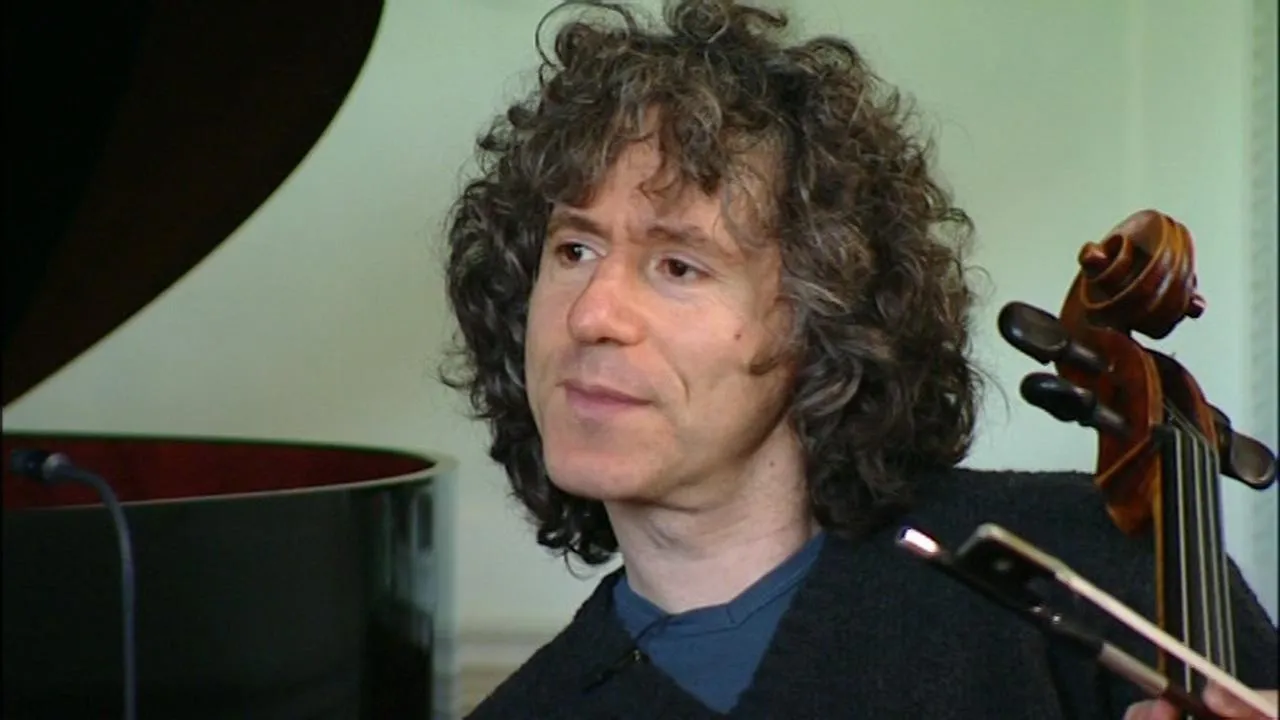
What's in the course
2 lessons (1h 15m) · 1 free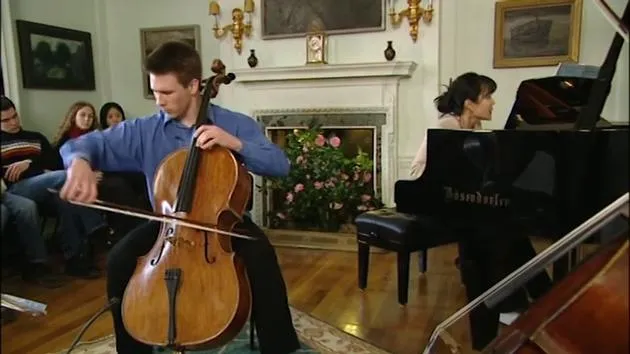
Lesson transcript
Music Lesson
Discussion on Color and Dynamics
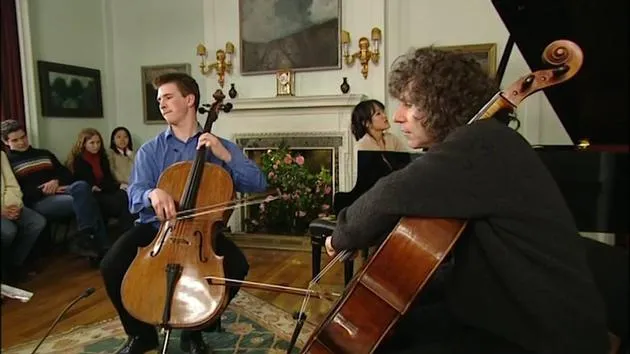
"Goody. I think you could pull your colors much further apart when you're being very active. I think in terms of color, in terms of dynamic, and in terms of tempo."
- Active Passages:
There are passages that really want to move forward, transitioning into new realms. - Beautiful Melodies:
Some sections are designed to relax; however, you're never really relaxing.
Challenges in Balance
"I know it's a difficult piece for balance. There's one bar in the slow movement where the piano has 62 notes and the cello has four."
- One must be very careful that all these notes in the piano let the cello through.
Pianissmo and Courage
"Having said that, I do think your pianissimos have gone missing a bit. You just got to have the courage to do nothing at some points."
- Impact of Contrast:
When it's really impassioned, it's much more exciting if there are contrasting moments of stillness.
Atmosphere of the Introduction
"What do you think about the introduction? What's the atmosphere?"
- Searching and meditative, looking for something.
- "I thought you started that way, but by bar three, you were already in quite a panic about whether you were going to find it."
Crescendo Significance
"What's the significance of this? Why does he crescendo to this?"
- It may suggest a bit of hope.
- "But I mean, it's just a suggestion, not a statement."
Relaxation and Emotions
"Relax, relax. Switch off your vibrator, boy. It's not expressing anything."
- Vibrato should be used to express emotion; it should not be an automatic part of your sound.
Tempo Considerations
"Why are you going faster? I suppose because I feel it's going somewhere."
- Feel for Change:
Has it changed harmonically?
Finding the Right Key
"Do you find it there? What key is that? Is that what you've been looking for?"
- "You've been lost, and suddenly you get this announcement. And then the piano goes."
Discussion on Phrasing
"I mean, this piece is full of bells, I think."
- "Remember how the piece started. This question about an E flat. And now this E flat announces that you're gonna go home."
Final Thoughts
"Take time, if anything, on that. Relax there."
- Rising Tension:
"This isn't tense. I want to hear all that story happening."
Conclusion
"Good. Very good. Well, I'm funny. It's."
2 lessons
1h 15m of structured video lessons
Advanced video features
Slow down, loop a passage, follow along
Mobile, tablet & desktop
Practise wherever you are
100% satisfaction guarantee
30-day money-back guarantee
Meet your guru
Meet your guru
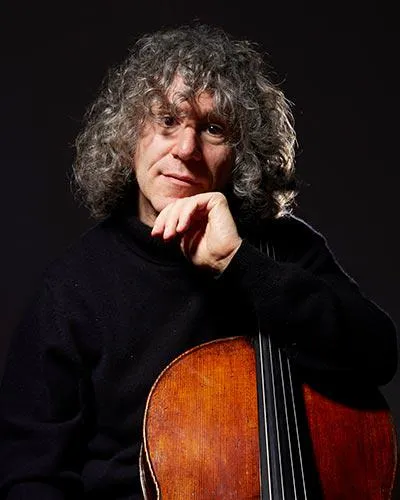
Steven Isserlis is a cellist whose passion for music transcends conventional divisions, acclaimed worldwide for his musicality and technique alike. He is also one of the most generous teachers in the cello world: he gives masterclasses regularly all over the globe, and has long been Artistic Director of the masterclass and chamber music seminar IMS Prussia Cove. Learning from him means getting inside that rare blend of scholarship, imagination and sheer joy in the music.
He is equally at home drawing the audience into his circle of friends for chamber music or in recital; delving into the historical archives to emerge with a forgotten gem; or on the concert platform with some of the world's most prestigious orchestras and conductors. British-born, Isserlis takes a strong interest in authentic performance, playing with many of the foremost period instrument orchestras. Recent seasons have seen him perform all Beethoven's works for cello with fortepianist Robert Levin both in Boston and at London's Wigmore Hall, and perform the Dvorak Cello Concerto with the Orchestra of the Age of Enlightenment under Sir Simon Rattle.
Schumann is a particular passion: he performed Schumann's Cello Concerto on a major tour of Germany, spearheaded a Schumann project in Japan, and performed in an evening of words and music dedicated to the story of Schumann and Brahms - with a script written by Isserlis himself - in London and New York.
Writing and playing for children is another major interest. His first book, a children's history of the lives of six great composers, Why Beethoven Threw the Stew, was published by Faber and Faber in October 2001, and a sequel, Why Handel Waggled his Wig, followed in 2006.
With an award-winning discography, Isserlis' recordings reflect his diverse interests in repertoire; his release of the complete Solo Cello Suites by Bach on the Hyperion label was met with the highest critical acclaim and won many awards. Awarded a CBE in 1998 in recognition of his services to music, he has received many other honours, including in 2000 the Schumann Prize of the City of Zwickau (Schumann's birthplace).







