


Analysis, explanation, demonstration with Maxim Vengerov
With
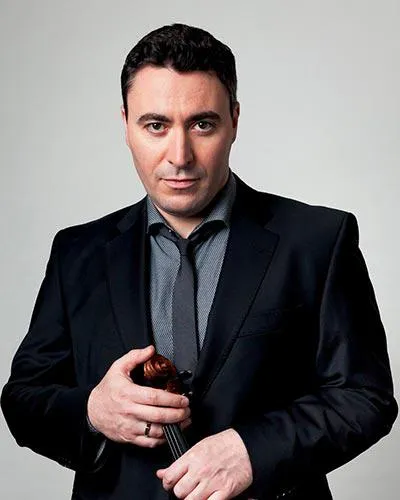
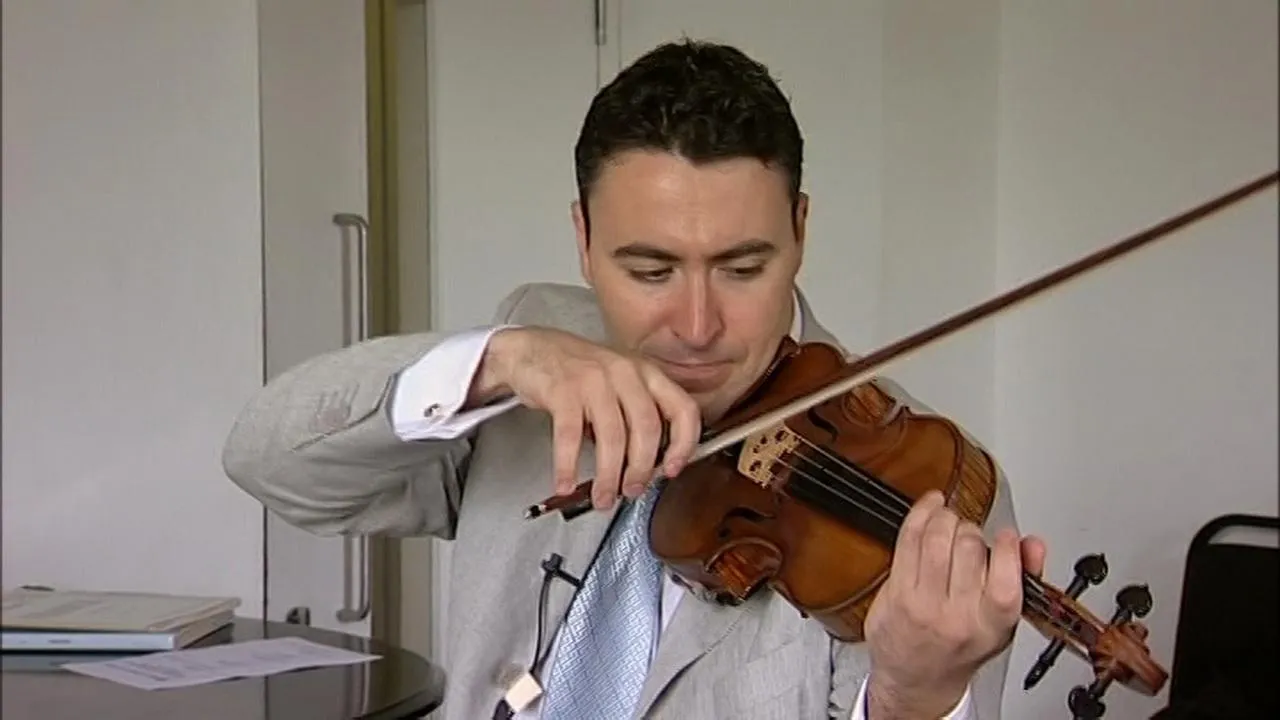
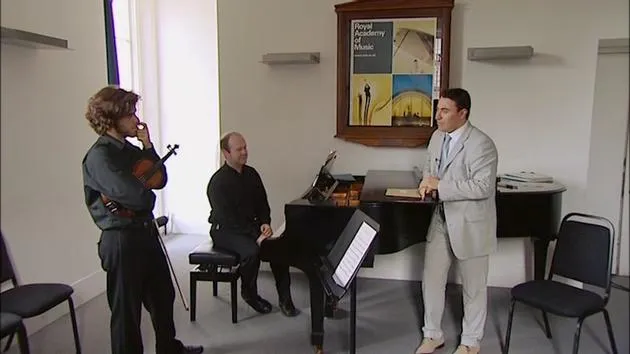
Maxim VengerovMaxim Vengerov works with his student Pedro on Ravel's 'Tzigane', exploring its harmony, tempo, interpretation and the story behind the music with insight and humour.
What's in the course
2 lessons (0h 45m) · 1 free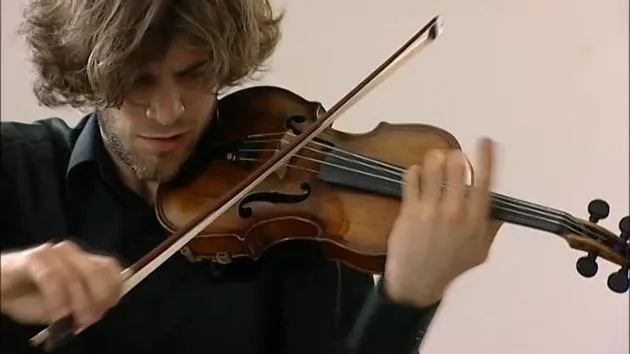
Lesson transcript
Music Lesson: Analyzing Ravel's "Tzigane"
Introduction
Pedro, wonderful, great performance. I like it. I like it very much. I like the spirit that you deliver in "Tzigane." As you know, the story goes back to when Ravel heard Jelly D'Aranyi, a wonderful violinist, in a concert in London. She really dazzled him with her incredible ability. I think she was also incredibly beautiful. He was inspired to write something for violin solo, a piece like "Tzigane."
The Story Behind "Tzigane"
After the concert that Jelly had given, Ravel asked her to exhibit some of the tricks that the violin can do when they went to the restaurant. Until 2:00 in the morning, she was playing for him and explaining what the violin can do and cannot do. So he was getting familiar with the instrument and its nature, but he was really inspired by the spirit of this incredible charismatic woman.
As a result, we have this beautiful "Tzigane," which is a concert piece. For me, this piece does have the spirit of "Tzigane," but we shouldn't approach it like one of the pieces we would hear a Tzigane playing in a restaurant or on the street for tips. A serious approach to the piece is crucial. Ravel was an incredible composer who had, first of all, a structured framework; he was very organized in his music.
To play this wonderful "Tzigane" without any structure would be quite wrong.
Analyzing the Piece
So, I would like you to perform a little analysis. Let's analyze together what this piece is all about.
-
The First Cadenza: This is separated into a few sections. First of all, there is a "Tzigane" alone and then two "Tzigane" sections with double stops. That's very important. When he starts this monologue, it carries a powerful message.
- G String's Power: He wanted to show that the most powerful string in the violin is the G string. You can play in the first position, but you can also play in the higher positions where you get the strength. The gypsies are very strong; they have strength from within. This character gives the piece an extroverted feel, but sometimes it goes inward, and that's where the conflict appears.
-
Introducing Yourself: This monologue should present who you are. It's important to say, "Here I am. My name is [insert name]."
-
Building the Theme:
- It should feel like a visit card introducing yourself, saying, "I come from Hungary."
- You can say, "And that is my friend, although we don't really get along. We grew up in the same village together."
-
Musical Points: The harmonic points, when in D minor, are repetitive but always accelerating. This represents who we are.
Performing the Cadenza
Let's try it! I don't know if you have analyzed it, but there is a particular rhythm, a kind of rubato that is already written.
-
Tempo Awareness:
- It is labeled "lento quasi cadenza."
- You have to know how long it is all about and then you can improvise, stretch, or shrink the rhythm. The basic frame must be there.
-
Ravel's Precision: Ravel was very particular in his works about what he wrote, including markings for dynamics like piano and forte.
- For instance, when he writes "espressivo," it's crucial to play it as he intended.
- "Tempo rubato" means that it begins more strictly and then it can loosen.
Interpretation Tips
-
Managing Expression: If you play without understanding the nuances, you lose a lot.
-
Acting in Poses: We need to act in the poses. This is essential music.
-
Be Explosive: Think about the bow and don't put all the strength at once.
-
Tempo Counts:
- Let's count together: Lento, lento, two, three.
- Take a slightly slower tempo to build the character.
Character and Expression
Pedro, remember that this is how the music starts.
-
The character begins short at the 32 mark.
-
Address your friend in the music, but with modesty.
-
Continue with the original markings and don't create anything new, as that may diminish the essence of the piece.
-
Gypsy Intonation: Utilize gypsy intonation, play with real dynamics, and leave the accents where appropriate.
Finding Your Voice
As you play, you should tell a story.
- Imagine the gypsy in his village practicing retakes.
- Don't rush; rhythmically explore the notes.
- Remember, for every note you play, you are paid.
Key Takeaways
- Keep in mind the detailed notations Ravel has provided.
- For every bar and phrase, feel the music rather than forcing musicality.
- Build up to the intensity in the variations, and convey the conflict and discontent within the song.
Conclusion
Finally, explore every note as if elaborating on a detailed narrative.
Thank you very much!
2 lessons
0h 45m of structured video lessons
Advanced video features
Slow down, loop a passage, follow along
Mobile, tablet & desktop
Practise wherever you are
100% satisfaction guarantee
30-day money-back guarantee
Meet your guru
Meet your guru
Maxim Vengerov is recognised as one of the world's most exciting violinists. He gave his first recital at the age of five and, after studying with Galina Tourchaninova and Professor Zakhar Bron, went on to win First Prize in the Junior Wieniawski Competition at the age of ten. In 1990, aged fifteen, he won the Carl Flesch International Violin Competition, confirming his reputation as a musician of the very highest order.
In May 2000, following a ten-year recording contract with Teldec Classics, Maxim Vengerov signed an exclusive contract with EMI Classics. His awards and prizes have included Gramophone Young Artist of the Year and Ritmo (Spain) Artist of the Year in 1994; Gramophone Record of the Year and Grammy Award nominations for Classical Album of the Year and Best Instrumental Soloist with Orchestra in 1996; the Edison Award for Best Concerto Recording in 1997; Gramophone Artist of the Year in 2002; and both an Edison Award and a Grammy Award in 2004 for Best Instrumental Soloist Performance (with Orchestra) for his recording of the Britten Violin Concerto and the Walton Viola Concerto.
In 1997 Vengerov was the first classical musician to be appointed Envoy for Music by UNICEF. In this role he has met and performed for disadvantaged children in Uganda, Harlem, Thailand, and on both sides of the Kosovan ethnic divide - work that has allowed him both to inspire children worldwide and to inspire others to raise funds for UNICEF-assisted programmes. Another passion of Vengerov's life is his involvement with young people through giving masterclasses. One such event was recorded by Channel Four Television as part of a documentary on Vengerov called 'Playing by Heart', shown at the Cannes Television Festival in 1999. Since June 2005 he has been Professor of Violin at the Royal Academy of Music, London.
That same teaching passion runs through his MusicGurus masterclasses, where Vengerov takes you inside the great violin repertoire - from Ravel's Tzigane and Sarasate's Carmen Fantasy to the concertos of Sibelius, Mendelssohn, Britten and Shostakovich - sharing the technique and musicianship behind every phrase.