



Analysis, explanation, demonstration with Maxim Vengerov
With
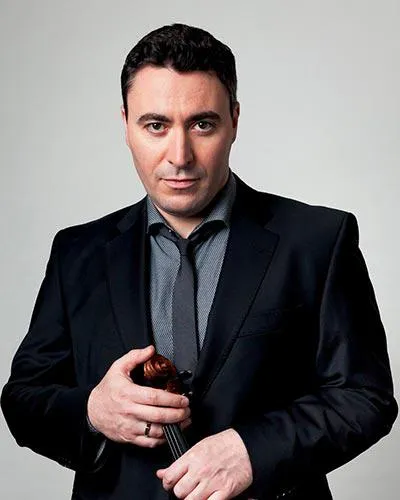
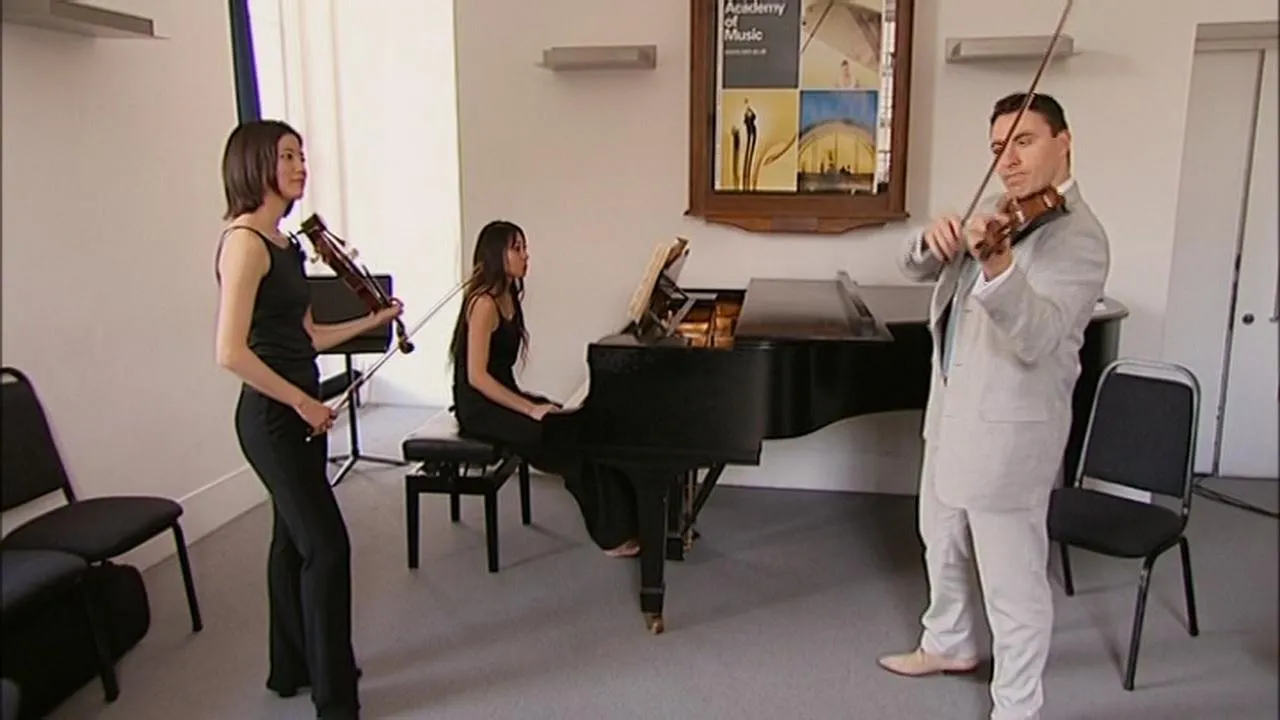
Maxim VengerovMaxim Vengerov coaches a student through the Mendelssohn Violin Concerto, working on both musical interpretation - harmony, tempo, emotion - and technique.
What's in the course
2 lessons (0h 48m) · 1 free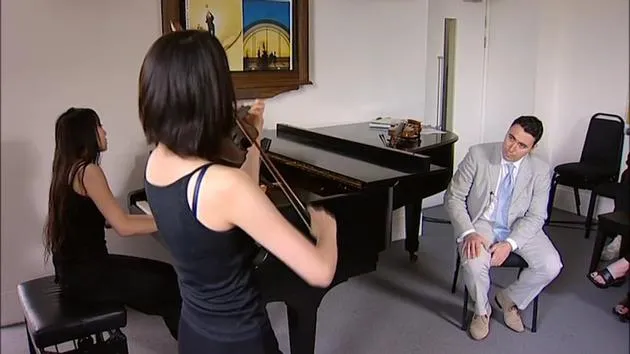
Lesson transcript
Music Lesson: Mendelssohn Concerto
Introduction
First of all, I'd love to praise you for your wonderful musicality. I see great potential in creating truly wonderful music from the Mendelssohn Concerto. You play with great charisma, energy, and dramatic flair, and I would like to maintain that.
However, there are some aspects that I would like us to explore and complement in your playing. We will discuss this on two different levels:
- Musical Level
- Technical Level
Musical Interpretation
In other words, we need to understand how we can choose the right techniques based on what the music requires, especially for a piece like Mendelssohn, which necessitates a deep personal attitude and vision. I want you to express your feelings about this music and find your own affinity for it.
You need to be more sensitive to this music, and I want you to share your thoughts on it.
Technical Aspects
Now, let's try to touch briefly on the technical point of view.
-
Energy Flow: I felt that your energy doesn't flow through your body while playing. The violin and the human body must become one. You may know the incredible painter Chagall; he depicts a violinist flying with the violin. That's the ideal moment I want you to achieve when you start playing. It's about creating that illusion where the violin seems to take flight, which is one of the miraculous moments in music.
-
Breathing: Firstly, your breathing needs attention. It seems a bit rushed, so:
- Relax: Lower your shoulders and ensure that no muscles are tense before you start playing.
- Pay attention to any tension in your right shoulder and neck as you strive for emotional effects in the music. Try to achieve dramatic expressions without forcing it.
-
Momentum: You can choose two paths:
- You can push through when feeling tired, which is dangerous.
- Alternatively, you could carry on and break the momentum when necessary.
Remember, we are not talking about sports; we're discussing how to achieve maximum results with minimal effort.
Starting from Nothingness
Now, let me give you an example from what I just played. You can play absolutely relaxed, only the muscles needed to hold the violin should be engaged.
-
Visualization: Imagine starting from 'nothingness.' Why? Because all great things begin from nothingness. This relaxed state, like a meditative one, allows your soul to shine through in your music.
-
Building Energy: This magical beginning of the Mendelssohn concert requires purity and intention; the energy can build within you. Each note should reflect this accumulation of energy and emotion.
Vibrato and Expression
I want the music to start from within, and I want you to sing with the same vibrato. If you aim to vibrate more, do it gradually, avoid shocking the audience. For example, you played a note beautifully, but remember that one note can spoil the overall effect if the vibrato is too abrupt.
-
Experiment Without Vibrato: Let's try the beginning without vibrato first. You'll find the beauty will emerge.
-
Listening: Listen to your sound. Perhaps you might notice a sandy quality to it. I mean, sand is lovely on a beach but not when you need clear air. Focus on your attack and be completely relaxed with your right hand; let the bow hang loosely.
-
Crescendo Technique: If you want to create a crescendo, rely on the speed of the bow rather than pressure.
Sensitivity to Sound
I want you to be very sensitive to your ears, as this is delicate music. Listen for the piano and let's begin very slowly.
-
Attack and Color: Focus on your attack, keeping it relaxed. Build each phrase without interruptions and create long, flowing lines.
-
Body Positioning: While playing, remember your position. If you shift weight too much, it could be dangerous. Maintain an earthy connection with the ground while allowing your upper body to remain free.
Movement and Flow
Let's continue with longer phrases, building them without interruption. If you stop, particularly avoid square shapes in your movements. Instead, keep everything in circles.
-
Accents: Make your accents softer; think about melodic singing without abrupt stop-and-starts.
-
Intonation: Pay special attention to the intonation. Tension can ruin your intonation, so relax every muscle that isn't needed.
Connecting Ideas
When introducing different themes, use different colors. Each harmony presents a unique color, much like bringing a different flower from your garden.
- Interpretation: When presenting music, don't over-explain; simply bring it to life, allowing your audience to enjoy the moment without excessive detail.
Remember, music is about creating a magical experience, presenting layers of emotion and color.
Conclusion
You should always take a lyrical approach to your interpretation. Think about how to balance dialogue within your playing, especially in a concerto setting. Mendelssohn's work is about emotional depth, and ensuring that you don't present the same colors for different themes is crucial.
Please practice these points and share your visions with me. Let's explore this beauty together!
2 lessons
0h 48m of structured video lessons
Advanced video features
Slow down, loop a passage, follow along
Mobile, tablet & desktop
Practise wherever you are
100% satisfaction guarantee
30-day money-back guarantee
Meet your guru
Meet your guru
Maxim Vengerov is recognised as one of the world's most exciting violinists. He gave his first recital at the age of five and, after studying with Galina Tourchaninova and Professor Zakhar Bron, went on to win First Prize in the Junior Wieniawski Competition at the age of ten. In 1990, aged fifteen, he won the Carl Flesch International Violin Competition, confirming his reputation as a musician of the very highest order.
In May 2000, following a ten-year recording contract with Teldec Classics, Maxim Vengerov signed an exclusive contract with EMI Classics. His awards and prizes have included Gramophone Young Artist of the Year and Ritmo (Spain) Artist of the Year in 1994; Gramophone Record of the Year and Grammy Award nominations for Classical Album of the Year and Best Instrumental Soloist with Orchestra in 1996; the Edison Award for Best Concerto Recording in 1997; Gramophone Artist of the Year in 2002; and both an Edison Award and a Grammy Award in 2004 for Best Instrumental Soloist Performance (with Orchestra) for his recording of the Britten Violin Concerto and the Walton Viola Concerto.
In 1997 Vengerov was the first classical musician to be appointed Envoy for Music by UNICEF. In this role he has met and performed for disadvantaged children in Uganda, Harlem, Thailand, and on both sides of the Kosovan ethnic divide - work that has allowed him both to inspire children worldwide and to inspire others to raise funds for UNICEF-assisted programmes. Another passion of Vengerov's life is his involvement with young people through giving masterclasses. One such event was recorded by Channel Four Television as part of a documentary on Vengerov called 'Playing by Heart', shown at the Cannes Television Festival in 1999. Since June 2005 he has been Professor of Violin at the Royal Academy of Music, London.
That same teaching passion runs through his MusicGurus masterclasses, where Vengerov takes you inside the great violin repertoire - from Ravel's Tzigane and Sarasate's Carmen Fantasy to the concertos of Sibelius, Mendelssohn, Britten and Shostakovich - sharing the technique and musicianship behind every phrase.







