



Adding more parts to the mix - percussive elements

Lesson time: (4min 33sec)
Course preview
This lesson is part of the course Mixing for Film & TV score
Watch a preview of the full course below.
Lesson transcript:
Finalizing Live Recordings and Mixing Process
So now we have our two main live recordings in place. I'm just going to add in the last lot of elements.
Adding Extra Audio Files
Okay, so there are some extra audio files here, which I just need to find. They haven't actually been in a session yet. Right. So, I've just imported the last bit of extra audio, which is basically stuff that's come from a sequencer or been recorded in various other studios.
Here, we can see we've got:
- A bass guitar
- A few bits of percussion
Routing Audio
So, I'm just gonna route them to the music bus. I'll go through it track by track and see what stem they want to end up on. This isn't brilliantly labeled, so let's just find out what this is.
We have:
- A bell
- A few other percussive elements
- Toms
- Tic Tacs
All this blue stuff here will be sent to our percussion bus, and all these red things down here can go to our drones bus because they're more pad-like or droney sounds.
Quick Listening and Balancing
Okay, so let's have a quick listen and balance all that in one by one. I'm just going to get a nice little balance going here.
Note: This is something that will obviously take a bit longer when you really do the mixing. I'm just doing it very roughly now, but normally, I would take my time. I would also add compression and EQ to each sound if they need it.
Generally, in film mixing, I use a lot less compression because we want the material to have quite a lot of dynamics and to be quite open sounding.
Unless I want something to sound really compressed, I usually give it space to breathe.
Using Reverb for Percussion
Now, for percussive sounds, I normally use slightly shorter reverb. So, on my percussion bus, I actually have a short reverb here. I'm just gonna put a little bit of that onto each channel and generally proceed with the mixing.
Starting the Mixing Process
I just wanted to show this quickly. Now, we have all the sounds in here, and everything's routed to the right stems and outputs.
We can really start the mixing process properly. As I mentioned earlier, we will:
- Add EQ
- Use compression
- Balance everything up nicely
- Start doing some rides
Essentially, we will craft the mix from here.
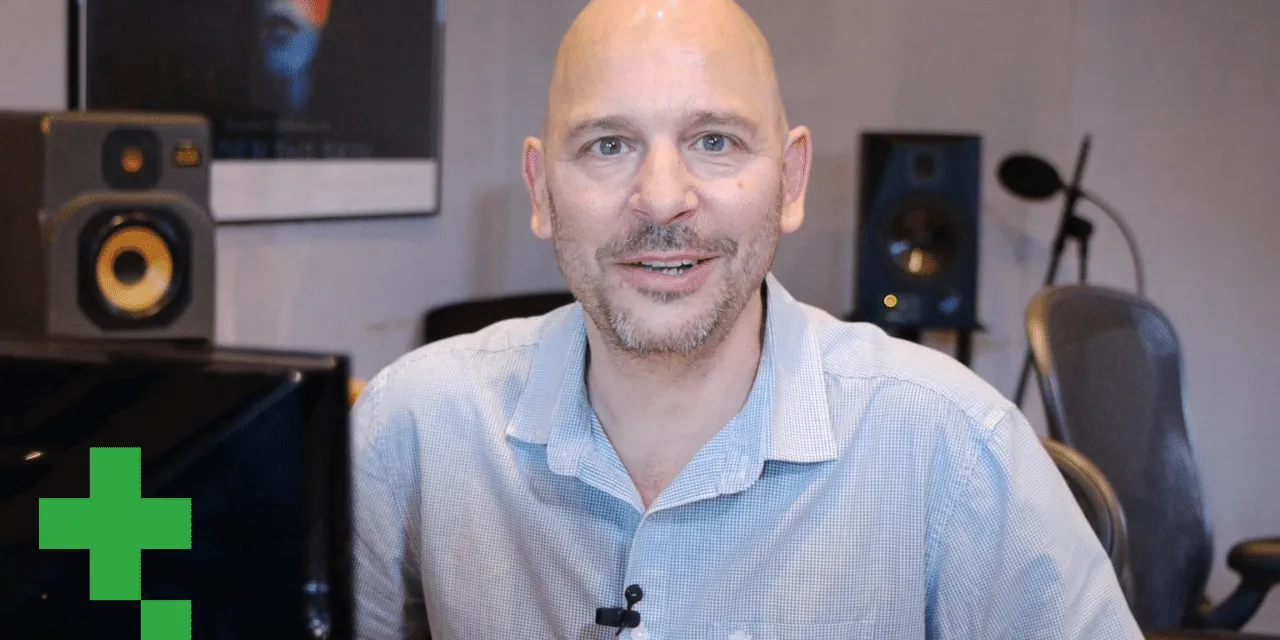
About the instructor
In the early nineties, Goetz Botzenhardt trained at Swanyard Recording Studios, assisting top producers like Flood, Alan Moulder and Tom Lord-Alge, and cut his teeth recording and mixing the dance and Acid Jazz bands of the 90s - Incognito, Galliano, Soul II Soul and many others.At Swanyard he met Rollo Armstrong and the two quickly formed a creative partnership, leading to many big dance records and remixes and, soon after, to recording and mixing the first two acclaimed Faithless albums and Dido's multi-platinum 'No Angel'.Ranging across genres, he recorded and mixed the Sugababes' debut album 'One Touch', including their first hit 'Overload', and has mixed for The Cardigans, Bjork, The Cinematic Orchestra, Craig David, the Pet Shop Boys and Hikaru Utada, one of Japan's most successful artists.More recently he expanded into film and TV, working extensively with composers Christian Henson, Martin Phipps and Anne Nikitin, and mixing Daniel Pemberton's Golden Globe-nominated score for 'Steve Jobs', directed by Danny Boyle. Away from film he produced Tanita Tikaram's 'Closer to the People', mixed tracks for Sigala, Ella Eyre, Breton, Planet Funk and Tito Jackson, and in 2016 mixed Peabo Bryson's album with Jimmy Jam and Terry Lewis. A full list of his work is on his discography and filmography pages at goetz-botzenhardt.com.Goetz works from his own studio and mix room, built around an SSL E4044 console, Adam 5.1 surround monitoring, a 48-channel Pro Tools HDX system and choice outboard gear. In his courses he takes you inside that room to show how he mixes across two very different worlds: in Mixing for Film & TV Score, how he balances and shapes orchestral and hybrid scores to serve the picture; and in Mixing Commercial Pop Music, how he builds punchy, radio-ready pop mixes from the multitrack up. read more