



Choisir les bons accords
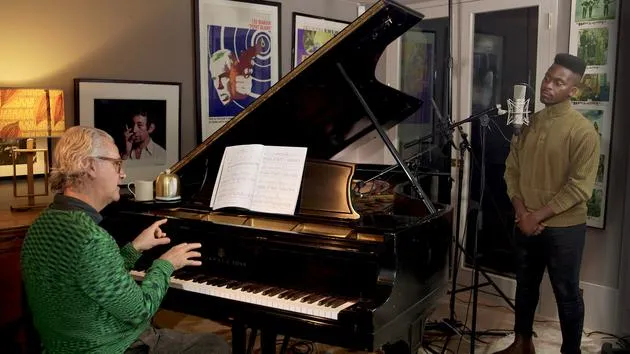
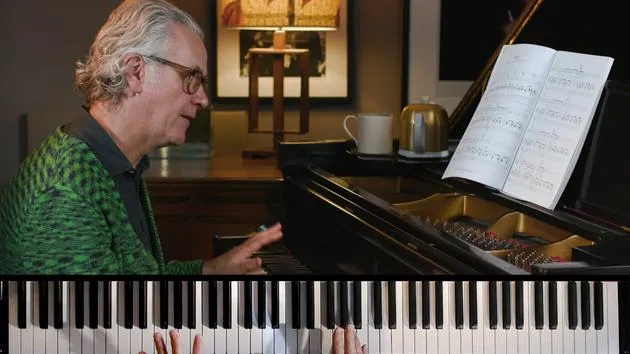
Guy Chambers retrace comment il a trouvé les accords d''Angels' de Robbie Williams, en choisissant une harmonie qui soutient la mélodie et les paroles pour créer l'ambiance de la chanson.
Le contenu du cours
18 leçons (1h 33min) · 1 gratuites

Transcription de la leçon
Music Lesson: Crafting a Song
Introduction
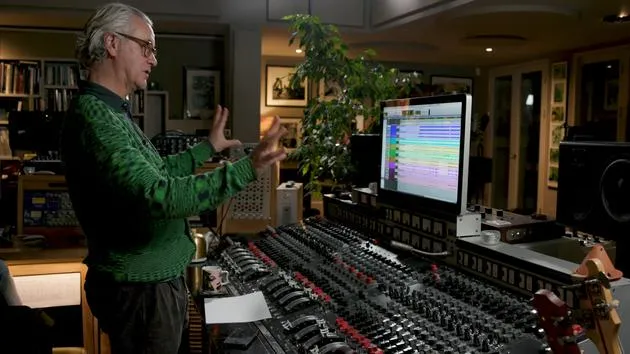
So the song started by Rob walking in my studio, which was actually in the bedroom of my flat at that time. He began singing this melody to me with the words:
"I sit and wait, does an angel contemplate my faith?"
I was thinking, What key is that in? So, I'm sort of on the piano doing this,
"The place is where we go, oh, it's he."
I think I might have said to him, "Stop, that's brilliant. Can you start that again?"
Collaboration Begins
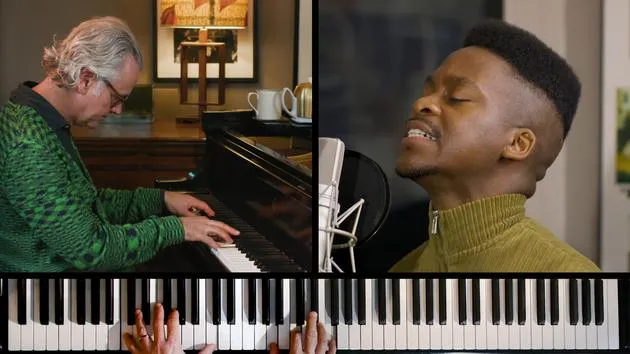
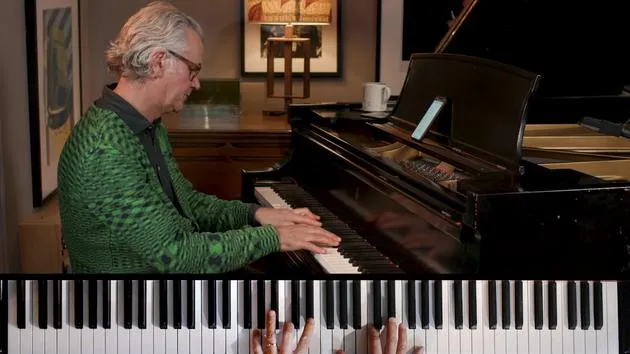
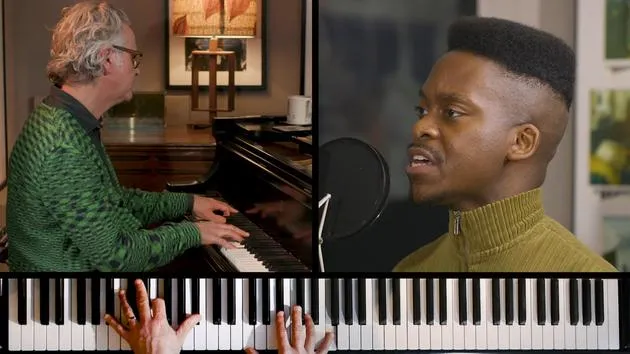
So he started again, and when he did, I played these chords with him:
"I sit and wait, does an angel contemplate my faith?"
Because I'd heard the melody once, I had an idea of where the chords should work with that melody:
- The places where we go when we're grey and old
"So stop singing."
And then you can, of course, carry on sticking to those chords. I've been told that's what happens if you stick to the same chords. It kind of works with the melody, but because the melody is quite similar to the one before, the harmony needs to move.
Creating a Musical Journey
The music needs to change to create a journey that takes you to the chorus. That's why I shifted from E, A, B to F sharp minor discord. This then takes you to a completely different place: C sharp minor.
When I'm lying in my bed, thoughts running through my head, and I feel that love is dead, I'm loving angels instead. As you could hear there, after the F sharp minor, A, C sharp minor, it goes to D, which is, you know, somewhere completely different.
This is nice because it sort of triggers in my mind that something exciting is going to happen.
The Lyrics' Impact
What's really cool about the lyrics of this song is that because Rob came up with all these lyrics for this verse,
"I'm loving angels instead,"
at the end of the verse, it sort of already branded the song. I was like, Oh, wow. That sums up the whole song in like 12 lines.
I was immediately really excited by it. There's the title there, Angels. It was like, Wow. I remember thinking that at the time.
Chorus Development
Then, when we came to where it should go for the chorus, I wanted to pick a chord that hadn't been used in the verse.
Going back to the verse chords, we've used:
- E
- A
- B
- F sharp minor
- C sharp minor
- D
The only other chord we haven't used is G sharp minor, which, for a chorus, makes me feel uneasy. If I started the chorus with that chord, it feels like we're in a bridge because it feels unsettling.
For the beginning of a chorus, you want a release, like:
"Oh, she offers me protection,
A lot of love and affection,
Whether I'm right or wrong."
Then it continues to:
"And down the waterfall,
Wherever it may take me,
I know that life won't break me.
When I come to call, she won't forsake me,
I'm loving angels instead."
Melodic Leap
In terms of the melody, it's unusual because it goes from just an E triad. But the next note it hits is a whole ninth away from the first note. It's ninth notes:
1, 2, 3, 4, 5, 6, 7, 8, 9.
That's a big leap, and quite unusual. I remember when we came up with it. It was a bit like, Wow, that's... I think maybe even Rob said, "I'm not sure if I can sing that."
I reassured him, You can definitely sing it. Just go for it, it'll be fine. He was very unsure about his voice in those early days, but having such a big jump like that makes the chorus super dramatic.
Influences and Inspiration
I often get asked where the idea for the song came from. The song that comes to mind is Hey Jude. I mean, Hey Jude has a similar feel in the piano:
"Hey Jude, don't make it bad."
It has a comparable piano feeling. That leap is quite significant, and I think in the back of my mind I was thinking we should have a similar kind of jump up.
But when you're writing a song, you're not necessarily thinking all these thoughts; they're sort of in your subconscious. They just jump up, and you're in the moment.
18 leçons
1h 33m de leçons vidéo structurées
Fonctions vidéo avancées
Ralentissez, bouclez un passage, suivez la partition
Mobile, tablette et ordinateur
Pratiquez où vous voulez
Satisfaction garantie à 100 %
Garantie remboursement 30 jours
Rencontrez votre guru

Rencontrez votre guru
Guy Chambers est l'un des auteurs-compositeurs vivants les plus à succès du Royaume-Uni.
Il est l'auteur des chansons que l'on connaît de la radio, du cinéma et de la piste de danse. Des chansons que l'on connaît de nos fêtes et de nos mariages. Des chansons que la moitié du monde peut chanter note pour note. Des chansons qui nous ramènent dans le temps là où nous étions. Des chansons qui nous emportent au-delà du quotidien, là où nous aimerions être ; 'Angels' ; 'Let Me Entertain You' ; 'Strong' ; 'No Regrets' ; 'Millennium' ; 'Rock DJ' ; 'Feel', pour n'en citer que quelques-unes.
"Guy a été la première personne du métier à me prendre au sérieux", dit son partenaire d'écriture de longue date Robbie Williams. "La première personne à voir l'artiste que je savais pouvoir devenir".
La liste de ses autres collaborateurs se lit comme la royauté de la musique pop. Au fil des ans, Guy a écrit et produit pour Diana Ross, Tom Jones, Tina Turner (dont la reprise brûlante de 'Feel' doit vraiment être entendue pour être crue), Kylie Minogue, James Blunt, Scissor Sisters, Rufus Wainwright et Mark Ronson, parmi bien d'autres.
Il se pousse sans cesse, cherchant de nouvelles entreprises créatives, dont l'une fut de créer un opéra folk pour enfants d'après la nouvelle d'Oscar Wilde 'The Selfish Giant', qu'il a dédié à sa défunte mère, Pat. Le spectacle a été créé au Vaudeville Theatre du West End de Londres en 2018.
En 2019, Guy a publié son premier album de piano solo, 'Go Gentle Into the Light', un recueil de quelques-unes des chansons les plus aimées qu'il a écrites avec Robbie Williams, le single 'The Road To Mandalay' dépassant les 6 millions d'écoutes.
Il a produit l'album officiel du BBC Children in Need 'Got it Covered', avec des stars telles qu'Olivia Colman, Jodie Whittaker et Helena Bonham Carter, qui a atteint la première place des charts britanniques.
Guy et Robbie Williams se sont associés à Chris Heath pour composer la musique et les paroles de l'adaptation musicale par la RSC du best-seller de David Walliams 'The Boy in the Dress', créée sous les acclamations de critiques cinq étoiles (The Independent, What's On Stage) au Royal Shakespeare Theatre, à Stratford-Upon-Avon.
Guy a produit le plus récent album numéro 1 au Royaume-Uni de Robbie Williams, 'The Christmas Present', et a coécrit le single 'Time for Change'.
Il vit avec son épouse Emma et leurs quatre enfants à Camden et dans le Sussex, où il savoure "le bon vin, la bonne cuisine, le cinéma et à peu près tout ce qui est français".
"Et l'écriture de chansons, bien sûr".







