



Pour commencer
Avec
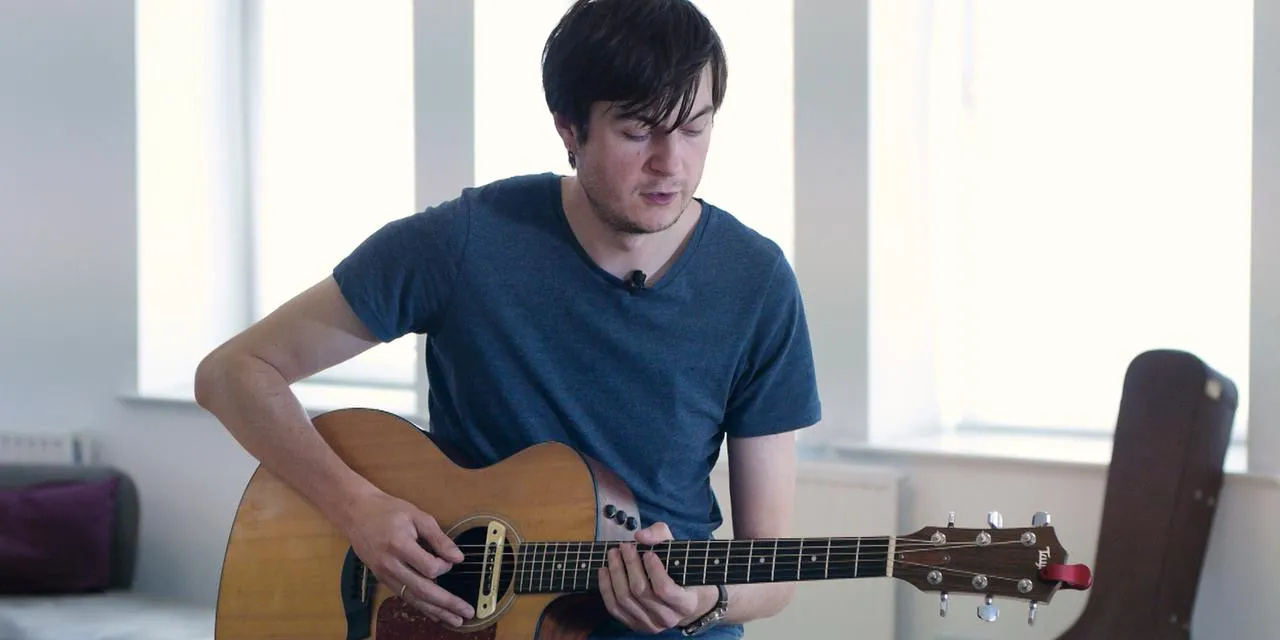
James BarrattJames Barratt aborde les bases pour les débutants : les parties de la guitare, comment la tenir confortablement, le placement de la main gauche et comment tenir un médiator.
Le contenu du cours
14 leçons (2h 12min) · 1 gratuites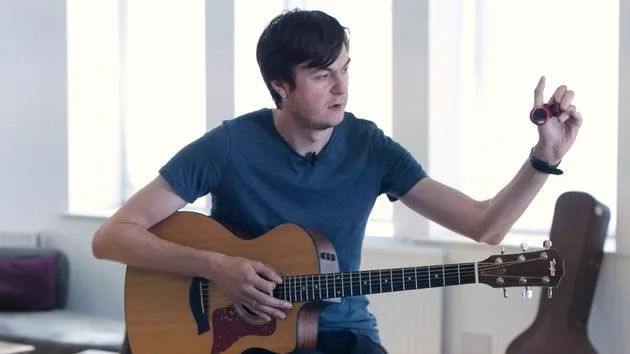
01. Accordage
13:34
02. Pour commencer
Tu es ici9:58
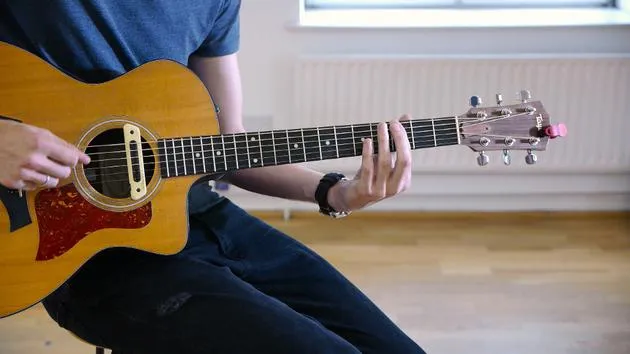
03. Technique de base
9:01
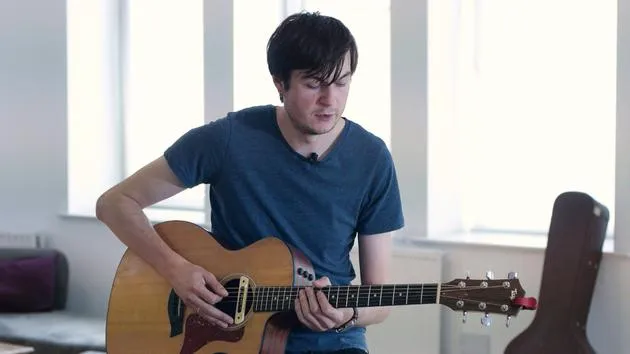
04. Accords ouverts
6:24
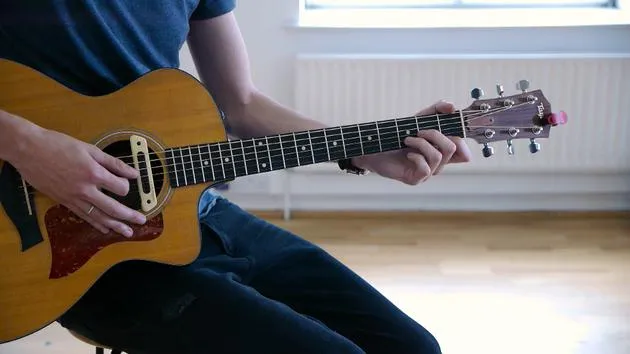
05. Progressions d'accords
7:57
06. Le rythme et la main droite
11:56
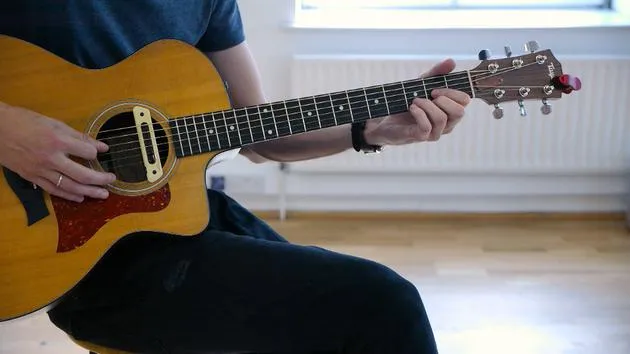
07. REM - Everybody Hurts
9:01
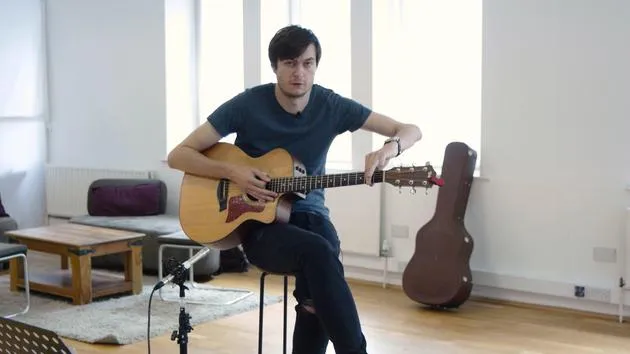
08. Bryan Adams - Run To You
3:23
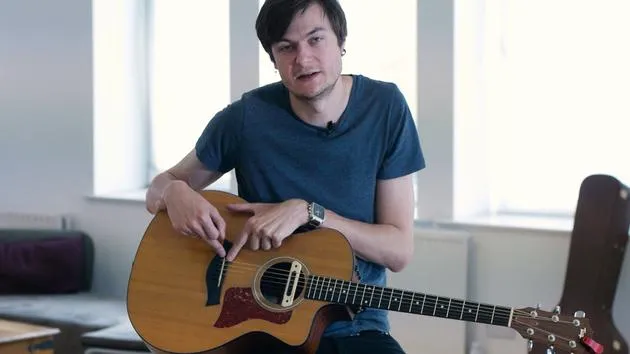
09. Palm muting
3:16
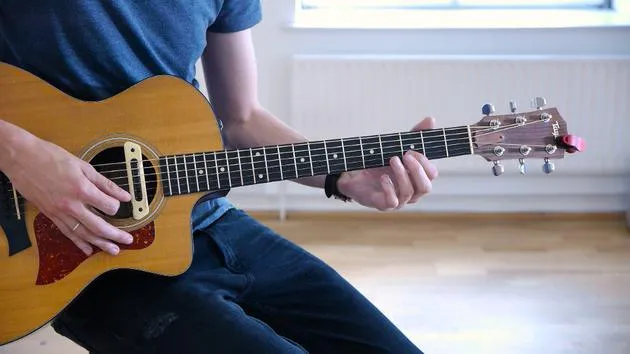
10. Legato
8:47
11. Michael Jackson - Beat It
5:23
12. Bending
15:36
13. Accords barrés
11:35
14. Récapitulatif - AC/DC Back In Black
16:56
Transcription de la leçon
Guitar Parts and Proper Holding Technique
Introduction
Hi, guys! Today's lesson is going to be about the parts of the guitar and how to correctly and comfortably hold it. Understanding the individual components of the guitar is essential, and many people struggle with positioning.
Parts of the Guitar
Let's go through the individual parts of the guitar:
-
Body: This general area, whether you have an acoustic or an electric guitar, is known as the body.
-
Scratch Plate: This little part here is the scratch plate. You may or may not have one of these.
-
Bridge: The bridge is a very good place for our right hand to reside. We'll discuss this later.
-
Bridge Pins: On an acoustic guitar, we have pins known as bridge pins, which keep the strings in place.
-
Strings: The guitar obviously has strings.
-
Pickup: On electric guitars, you may have one or more pickups.
-
Volume and Tone Controls: If you have an electric guitar, you may also have some volume and tone controls for your individual pickups.
-
Fretboard: The long area along here is the fretboard, with the metal bars known as the frets.
-
Neck: The back of the fretboard is called the neck.
-
Headstock: The entire area here is known as the headstock.
-
Tuning Pegs: As mentioned in the previous lesson, we have the tuning pegs to tune the guitar.
How to Hold the Guitar
Positioning the Guitar
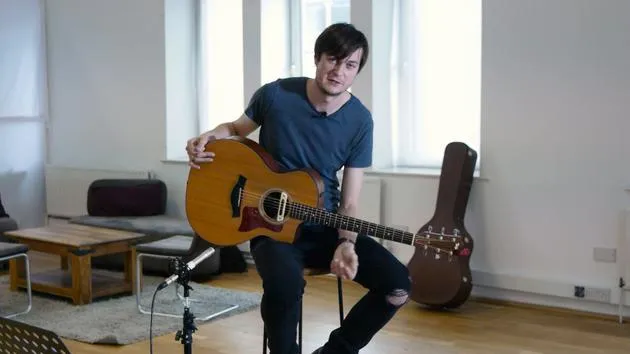
You can see that the shape of the underside of the guitar fits comfortably over one of your legs. You can experiment with which leg you place the guitar on, there's no right or wrong way; it's personal preference.
-
Right Leg: I prefer to have it on my right leg, which is generally popular among right-handed players.
-
Left Leg: Many classical players prefer their guitar on the left leg.
Guitar Angle
If you're a right-handed player, ensure the neck of the guitar is parallel to the floor or slightly angled upward.
- Avoid pointing the guitar down towards the floor, as this limits the reach of your left hand and can harm your posture.
Right Hand Position
-
The right shoulder and arm should sit over the shoulder of the guitar.
-
A great position for your right hand, for 99% of your playing, is on the bridge. We will explore specific points on this later.
Left Hand Position
-
Avoid resting your left hand on your leg as it pulls the guitar down.
-
Keep your left hand, your fretting hand, off your leg and ensure your elbow is relaxed at your side. Many learners tend to pull their elbow too close, which restricts hand movement.
-
Thumb Position: Your thumb should be fairly straight on the back of the neck, as if attempting to leave a thumbprint in the middle or upper part.
-
Maintain a gap under your fretting hand to avoid restricting movement.
Finger Positioning
For your left hand, we label the fingers as follows:
-
1: Index
-
2: Middle
-
3: Ring
-
4: Little
-
The thumb is simply known as T.
For your right hand (for fingerstyle playing):
-
P: Thumb
-
I: Index
-
M: Middle
-
A: Ring
-
C: Little
So, we abbreviate this as P, I, M, A, C (pimac).
Using a Pick
If you're using a plectrum, hold it with your left hand.
-
Grip: Place your thumb at the back of the pick, so the tip points towards the bottom of your thumb, and grip it with your first finger, curling it slightly.
-
You don't need to hold it too tightly; just enough to avoid dropping it. Adjust how much tip is shown based on the application, more for strumming, less for accuracy.
Choosing a Pick
When choosing a pick, consider these factors:
-
Variety: Go to a store and grab a variety of picks, as they come in different shapes, sizes, and gauges (thickness).
-
Gauge: Thicker picks have less give, while thinner picks are more flexible. Players often settle on a pick that works for the majority of their playing.
-
Experimentation: Start with medium gauge picks; try out a few different types and see which ones you like the best.
Conclusion
When starting out on guitar, it's crucial to have a comfortable grip, posture, and understanding of the instrument. Keep experimenting with different picks and hand positions to find what works best for you! Happy playing!
14 leçons
2h 12m de leçons vidéo structurées
Fonctions vidéo avancées
Ralentissez, bouclez un passage, suivez la partition
Mobile, tablette et ordinateur
Pratiquez où vous voulez
Satisfaction garantie à 100 %
Garantie remboursement 30 jours
Rencontrez votre guru
Rencontrez votre guru
James mène une carrière fructueuse de musicien à plein temps depuis l'obtention de son diplôme à l'Academy of Contemporary Music en 2007. Il a ensuite travaillé avec des artistes et producteurs de Stereophonics, Ronnie Dunn, Scissor Sisters et bien d'autres. Il compose également de la musique pour la télévision et le cinéma, comme la publicité télévisée 'Music Pieces' de Sony Walkman et la bande-annonce du film Albatross.
Il se décrit comme une sorte de puriste, un musicien pour musiciens, et cette approche de son art a attiré l'attention de grandes entreprises et de producteurs télé. On peut entendre James dans des émissions comme 'Geordie Shore' et même dans des publicités pour la British Heart Foundation, grâce à sa polyvalence naturelle d'artiste. Comme il le dit : « Le meilleur compliment, et le plus fréquent, que l'on me fait lors des sessions pour des clients, c'est que je joue ce qui est "juste" pour la musique. Souvent, tout tient à la simplicité. »
« James, c'est du sérieux. Excellent musicien, son remarquable, et je n'hésiterais pas une seconde à le recommander pour n'importe quel projet. Continue comme ça, James ! » - Joey Sykes (Meredith Brooks / Will Champlin / The Babys)
Dans Foundations of Rock Guitar Technique, James te transmet exactement cette philosophie et te montre comment bâtir une technique de guitare rock solide et musicale et jouer ce qui est "juste" pour la chanson.







