



2. Échauffement
Avec
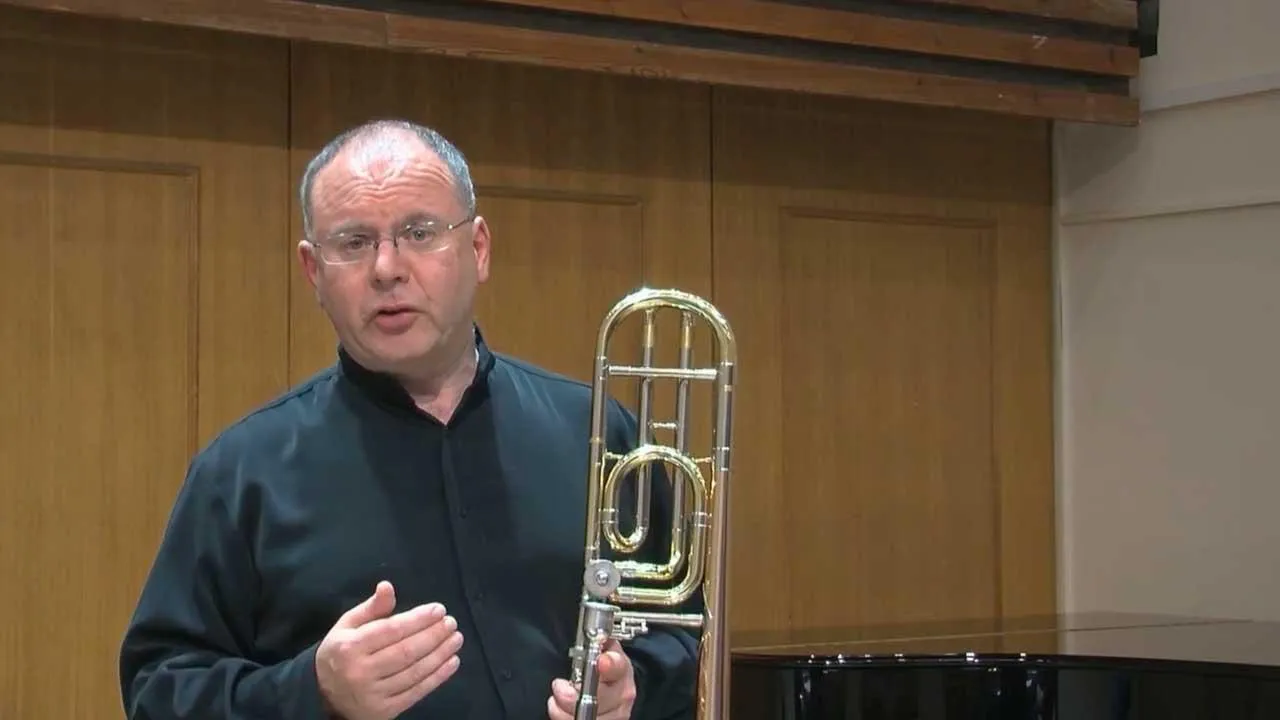
Peter GanePeter et Chris expliquent comment associer correctement les muscles abdominaux et la technique de la langue pour obtenir des notes à la qualité de son homogène.
Le contenu du cours
10 leçons (1h 33min) · 1 gratuites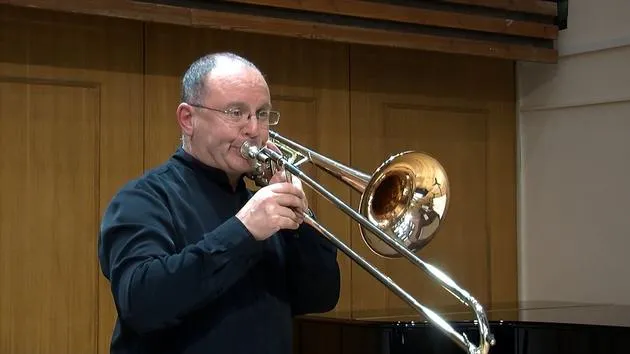
Transcription de la leçon
Circuit Training Unit 2: Warming Up the Motor
Introduction
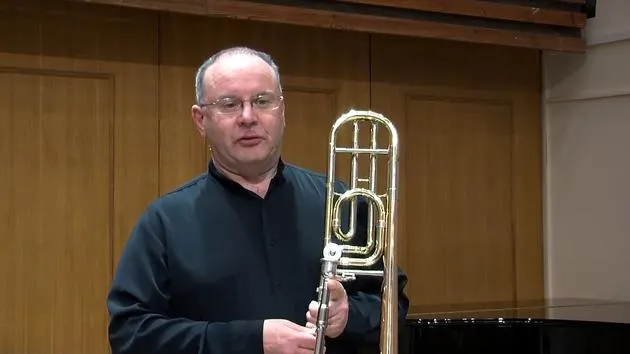
Hello and welcome to Circuit Training Unit 2. Today, we will focus on warming up the motor.
Key Principles
When playing separate notes, we really concentrate on getting the abdominal muscles working well so each note has weight and identity.
Demonstration
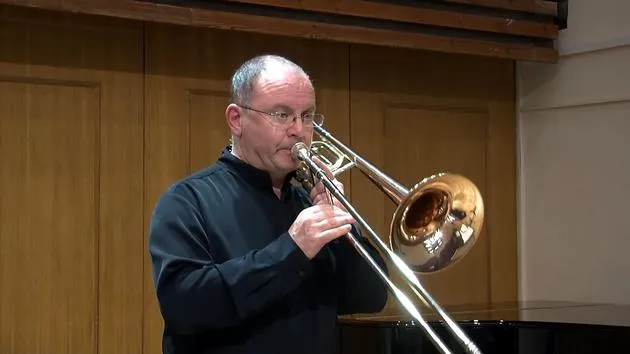
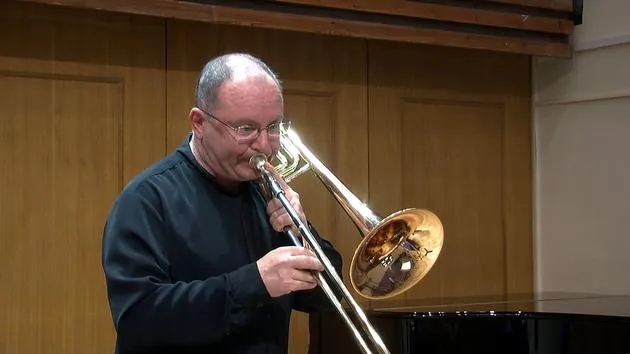
Chris, could you demonstrate the following?
- Figure One: Just with tummy pushes, no tongue.
- Figure Two: Half without tongue and the rest with tongue.
The tummy pushes create the body of the note.
- Notice how I'm pushing out, rather like sighing, and not sucking in.
- I'm also being careful not to use my embouchure and tongue to create a purring effect.
- Additionally, I'm trying to keep the corners of my embouchure set with no air pockets.
Useful Exercises
Another useful exercise is to practice panting like a dog:
- For low register notes: A slow pant like a big dog.
- For middle register notes: A slightly faster pant like a medium-sized dog.
- For high register notes: A faster pant like a little dog.
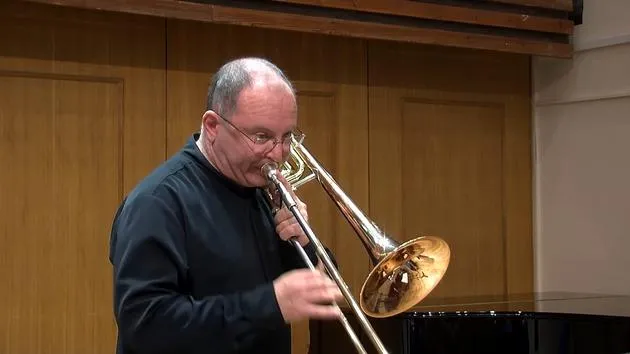
Now, I will play figure two:
- First half without tongue, second half with tongue.
Having a free and well-supported low register is a fundamental building block.
Support Techniques
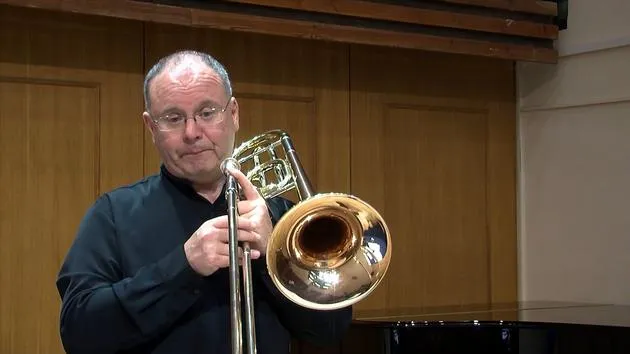
Chris, could you demonstrate how you support loads in the low register?
To acquire the tone in the low register, I'm using body resonance, that is, opening the throat like an actor or a singer, and not over-opening the aperture.
- If I over-open my aperture, the note dips down below the pitch, making it very hard to focus.
To find out for yourself just where the embouchure should be, try a basic glissando from Bb to F:
- Here, I coordinated the lowering of the jaw, the opening of the aperture, relaxing the lips a little bit forward, and allowing my body resonance to produce the note without over-opening to maintain focus.
Cheek puffing can also add limited benefit to your low register.
However, be cautious:
- There is a serious side effect: your embouchure virtually completely collapses, so try to avoid this one.
Chris, moving forward, your Bb to F glissando.
A good way to encourage the low notes and develop the low register is to practice playing the false harmonics.
- Chris, could you show us how you approach figure 2, the moving on section?
Yep. As I referred before, I'm:
- Coordinating the lowering of the jaw, moving the lips slightly forward, and pushing the instrument very slightly away from me.
That's excellent.
Having a full and well-supported lower distance also acts as a springboard for the high register.
- Chris, could you expand on this by playing maybe, say, exercise seven?
Tone Quality
Before I do, I want to emphasize the importance of getting a good tone throughout the register.
- Try to avoid pinching with the embouchure and throat.
To help this, you can do a little buzzing exercise to highlight the importance of the abdominal support:
- Try resting the mouthpiece on the top lip and half buzz, half play up two octaves.
This simulates the abdominal support I'm going to use in this next exercise in Unit 2.
Summary
In Warming Up the Motor, we have covered:
- Tummy pushes, both with and without tongue.
- Morning yawns exercises, including supporting low register notes.
- False harmonics and expanding your range to consolidate.
Play the complete unit once again.
And don't forget, all we have talked about can be found in Circuit Training, Volume 2.
10 leçons
1h 33m de leçons vidéo structurées
Fonctions vidéo avancées
Ralentissez, bouclez un passage, suivez la partition
Mobile, tablette et ordinateur
Pratiquez où vous voulez
Satisfaction garantie à 100 %
Garantie remboursement 30 jours
Rencontrez votre guru
Rencontrez votre guru
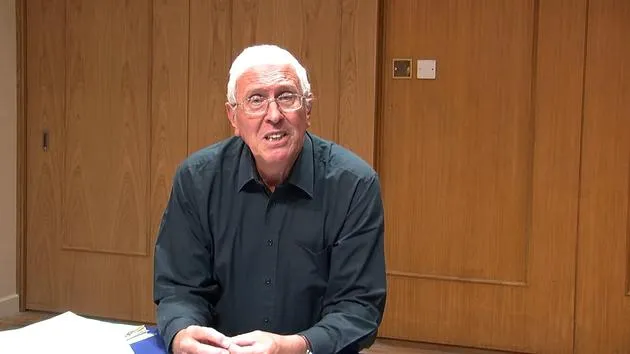
Peter Gane est l'un des grands spécialistes des cuivres et trombonistes de Grande-Bretagne. À 19 ans, il devient membre du London Symphony Orchestra. Il devient professeur à la Guildhall School en 1971 et l'est toujours aujourd'hui. Élu Fellow de la Guildhall School en 1981, il a été responsable du département des vents, cuivres et percussions de 1988 à 2008. Il est conseiller artistique du Combret Music Festival, en Aveyron, en France.
Fondateur et ancien président de la British Trombone Association, Peter est un pédagogue reconnu. Il entretient une longue collaboration avec le National Youth Orchestra of Great Britain et l'European Union Youth Orchestra, où il est professeur de trombone depuis 1977 et 1984 respectivement.
En tant que professeur, spécialiste des cuivres et chef d'orchestre, il a donné des masterclasses et des ateliers dans de nombreux conservatoires européens et auprès de groupes professionnels en Allemagne, en France, au Danemark, en Suède, en Norvège, en Espagne, aux Pays-Bas, en Autriche, en Italie et aux États-Unis. En 1996, sa réputation internationale a été confirmée par la remise du Neill Humfeld Award pour l'excellence dans l'enseignement du trombone par l'International Trombone Association.
Parmi les publications de Peter figurent : The Good Brass Guide, Trombone Books 1 & 2, publié par Trinity Guildhall ; Circuit Training for Trombone, volumes 1 and 2, Slide Systems, Five Games, Guildhall 125, World in Motion, Mansion House Fanfare, tous publiés par Warwick Music ; How Trombonists Do It, publié par Brass Wind ; et Brass Medals, publié par l'Associated Board.
C'est précisément cette approche du Circuit Training que Peter partage ici avec toi : des exercices ciblés et reproductibles qui développent la précision de la coulisse, le contrôle du souffle, la souplesse et la sonorité dont tu as besoin pour prendre véritablement le trombone en main, quel que soit ton niveau.







