



Elegir los acordes adecuados
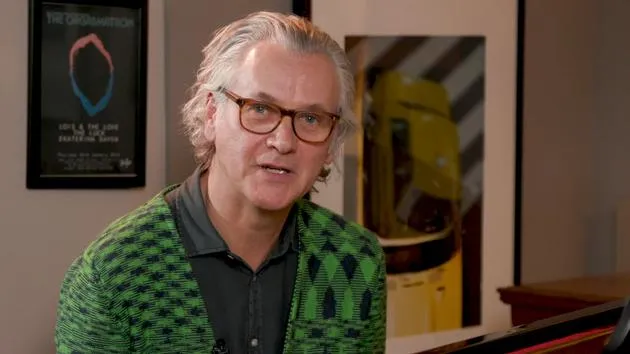
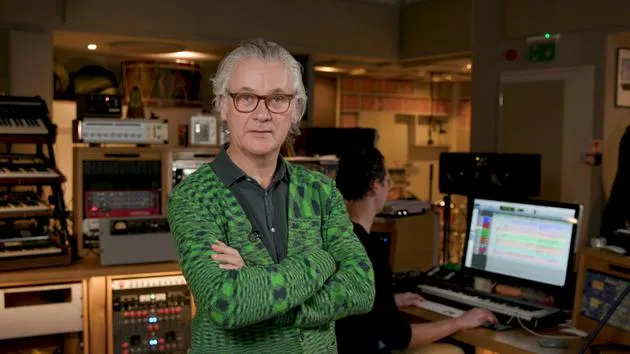
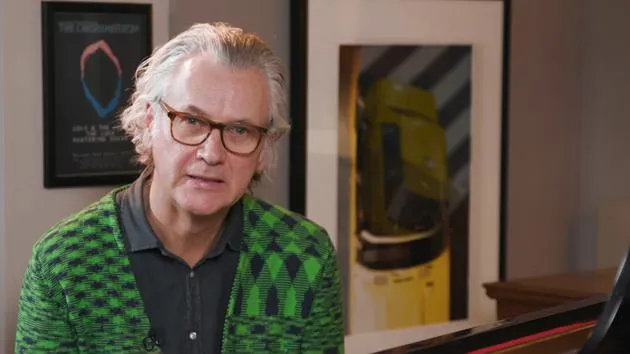
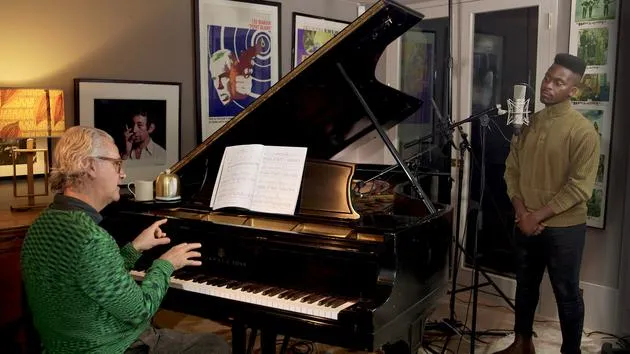
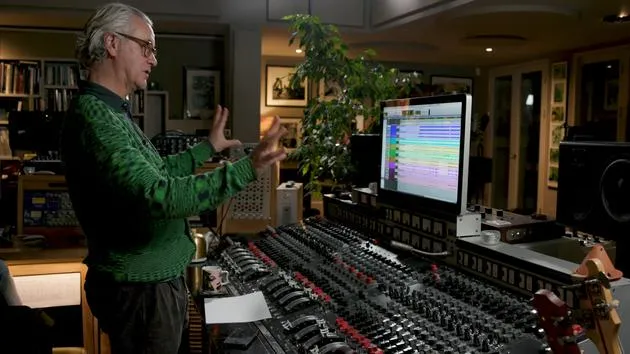
Guy Chambers rememora cómo encontró los acordes de 'Angels' de Robbie Williams, eligiendo una armonía que apoya la melodía y la letra para crear el ambiente de la canción.
Qué incluye el curso
18 lecciones (1h 33m) · 1 gratis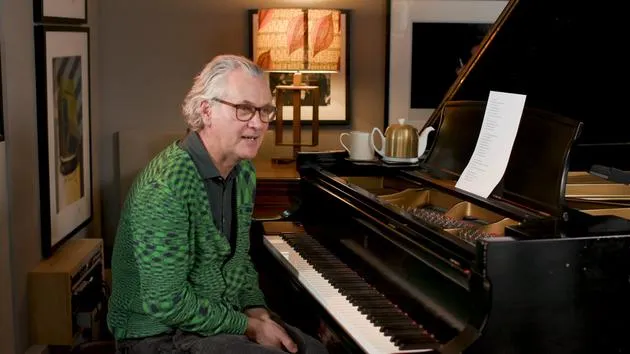

Transcripción de la lección
Music Lesson: Crafting a Song
Introduction
So the song started by Rob walking in my studio, which was actually in the bedroom of my flat at that time. He began singing this melody to me with the words:
"I sit and wait, does an angel contemplate my faith?"
I was thinking, What key is that in? So, I'm sort of on the piano doing this,
"The place is where we go, oh, it's he."
I think I might have said to him, "Stop, that's brilliant. Can you start that again?"
Collaboration Begins
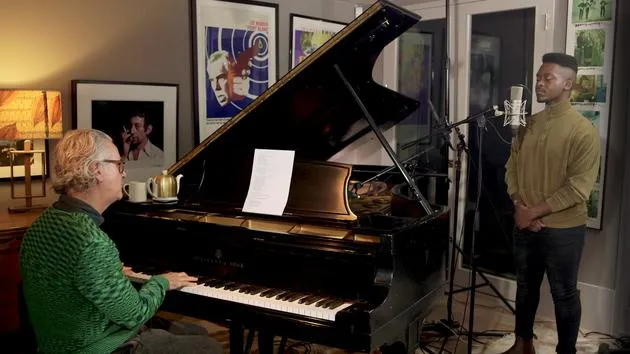
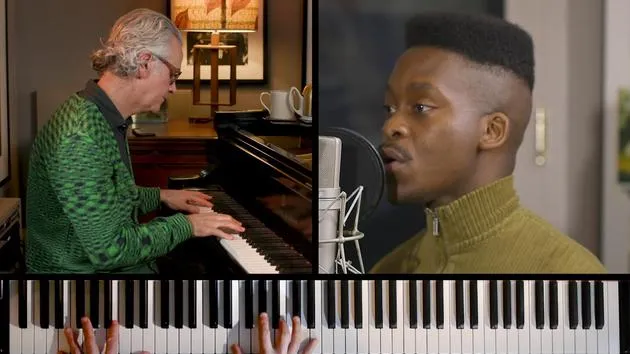
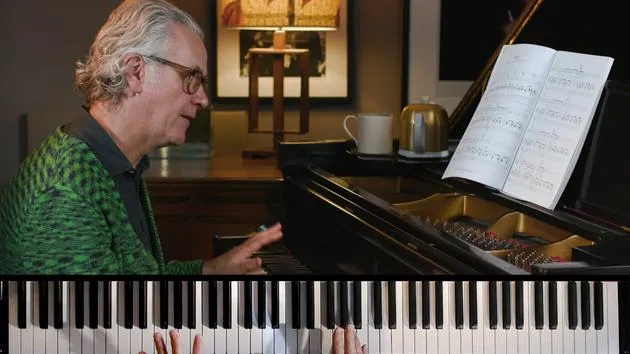
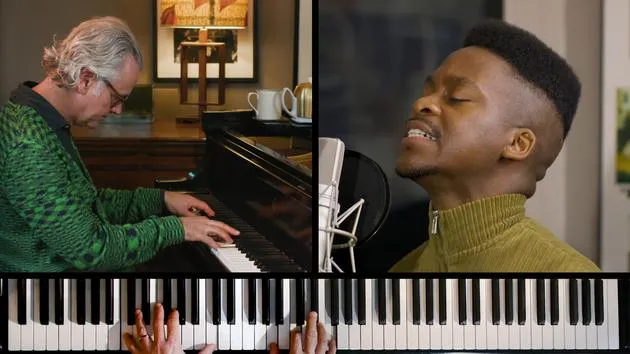
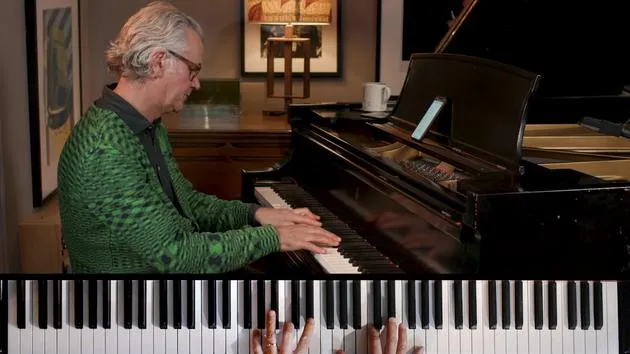
So he started again, and when he did, I played these chords with him:
"I sit and wait, does an angel contemplate my faith?"
Because I'd heard the melody once, I had an idea of where the chords should work with that melody:
- The places where we go when we're grey and old
"So stop singing."
And then you can, of course, carry on sticking to those chords. I've been told that's what happens if you stick to the same chords. It kind of works with the melody, but because the melody is quite similar to the one before, the harmony needs to move.
Creating a Musical Journey
The music needs to change to create a journey that takes you to the chorus. That's why I shifted from E, A, B to F sharp minor discord. This then takes you to a completely different place: C sharp minor.
When I'm lying in my bed, thoughts running through my head, and I feel that love is dead, I'm loving angels instead. As you could hear there, after the F sharp minor, A, C sharp minor, it goes to D, which is, you know, somewhere completely different.
This is nice because it sort of triggers in my mind that something exciting is going to happen.
The Lyrics' Impact
What's really cool about the lyrics of this song is that because Rob came up with all these lyrics for this verse,
"I'm loving angels instead,"
at the end of the verse, it sort of already branded the song. I was like, Oh, wow. That sums up the whole song in like 12 lines.
I was immediately really excited by it. There's the title there, Angels. It was like, Wow. I remember thinking that at the time.
Chorus Development
Then, when we came to where it should go for the chorus, I wanted to pick a chord that hadn't been used in the verse.
Going back to the verse chords, we've used:
- E
- A
- B
- F sharp minor
- C sharp minor
- D
The only other chord we haven't used is G sharp minor, which, for a chorus, makes me feel uneasy. If I started the chorus with that chord, it feels like we're in a bridge because it feels unsettling.
For the beginning of a chorus, you want a release, like:
"Oh, she offers me protection,
A lot of love and affection,
Whether I'm right or wrong."
Then it continues to:
"And down the waterfall,
Wherever it may take me,
I know that life won't break me.
When I come to call, she won't forsake me,
I'm loving angels instead."
Melodic Leap
In terms of the melody, it's unusual because it goes from just an E triad. But the next note it hits is a whole ninth away from the first note. It's ninth notes:
1, 2, 3, 4, 5, 6, 7, 8, 9.
That's a big leap, and quite unusual. I remember when we came up with it. It was a bit like, Wow, that's... I think maybe even Rob said, "I'm not sure if I can sing that."
I reassured him, You can definitely sing it. Just go for it, it'll be fine. He was very unsure about his voice in those early days, but having such a big jump like that makes the chorus super dramatic.
Influences and Inspiration
I often get asked where the idea for the song came from. The song that comes to mind is Hey Jude. I mean, Hey Jude has a similar feel in the piano:
"Hey Jude, don't make it bad."
It has a comparable piano feeling. That leap is quite significant, and I think in the back of my mind I was thinking we should have a similar kind of jump up.
But when you're writing a song, you're not necessarily thinking all these thoughts; they're sort of in your subconscious. They just jump up, and you're in the moment.
18 lecciones
1h 33m de lecciones en vídeo estructuradas
Funciones de vídeo avanzadas
Ralentiza, repite un pasaje, sigue la partitura
Móvil, tablet y ordenador
Practica donde quieras
Garantía de satisfacción 100%
30 días de garantía de devolución
Conoce a tu gurú

Conoce a tu gurú
Guy Chambers es uno de los compositores vivos de mayor éxito del Reino Unido.
Es el autor de las canciones que conocemos de la radio, del cine y de la pista de baile. Canciones que conocemos de nuestras fiestas y nuestras bodas. Canciones que medio mundo puede cantar nota por nota. Canciones que nos transportan en el tiempo a donde solíamos estar. Canciones que nos llevan más allá de lo cotidiano, hacia donde desearíamos estar; 'Angels'; 'Let Me Entertain You'; 'Strong'; 'No Regrets'; 'Millennium'; 'Rock DJ'; 'Feel', por nombrar solo algunas.
"Guy fue la primera persona del negocio que me tomó en serio", dice su compañero de composición de toda la vida Robbie Williams. "La primera persona que supo ver al artista en que yo sabía que podía convertirme".
La lista de sus demás colaboradores se lee como la realeza de la música pop. A lo largo de los años Guy ha escrito y producido para Diana Ross, Tom Jones, Tina Turner (cuya abrasadora versión de 'Feel' hay que oírla para creerla), Kylie Minogue, James Blunt, Scissor Sisters, Rufus Wainwright y Mark Ronson, entre muchos otros.
Se exige constantemente a sí mismo, buscando nuevos empeños creativos, uno de los cuales fue crear una ópera folk infantil basada en el relato corto de Oscar Wilde 'The Selfish Giant', que dedicó a su difunta madre, Pat. El espectáculo se estrenó en el Vaudeville Theatre del West End de Londres en 2018.
En 2019 Guy publicó su álbum debut de piano en solitario, 'Go Gentle Into the Light', una colección de algunas de las canciones más queridas que él y Robbie Williams han escrito juntos, con el sencillo 'The Road To Mandalay' alcanzando más de 6 millones de reproducciones.
Produjo el álbum oficial del BBC Children in Need 'Got it Covered', con estrellas como Olivia Colman, Jodie Whittaker y Helena Bonham Carter, que alcanzó el número 1 en las listas del Reino Unido.
Guy y Robbie Williams se unieron a Chris Heath para componer la música y las letras de la adaptación musical de la RSC del superventas de David Walliams 'The Boy in the Dress', que se estrenó con críticas de cinco estrellas (The Independent, What's On Stage) en el Royal Shakespeare Theatre, en Stratford-Upon-Avon.
Guy ha producido el álbum más reciente número 1 en el Reino Unido de Robbie Williams, 'The Christmas Present', y coescribió el sencillo 'Time for Change'.
Vive con su esposa Emma y sus cuatro hijos en Camden y en Sussex, donde disfruta de "el buen vino, la buena comida, el cine y prácticamente todo lo francés".
"Y de escribir canciones, por supuesto".







