



Entender los bends con válvula
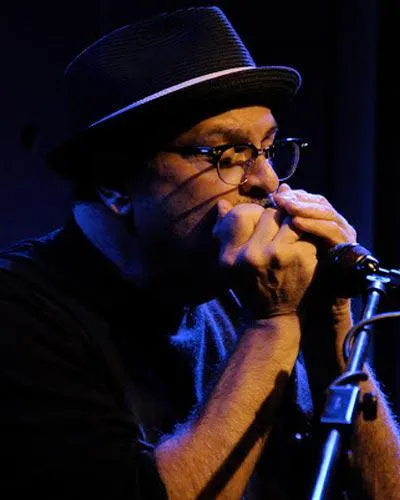
Con
PT Gazell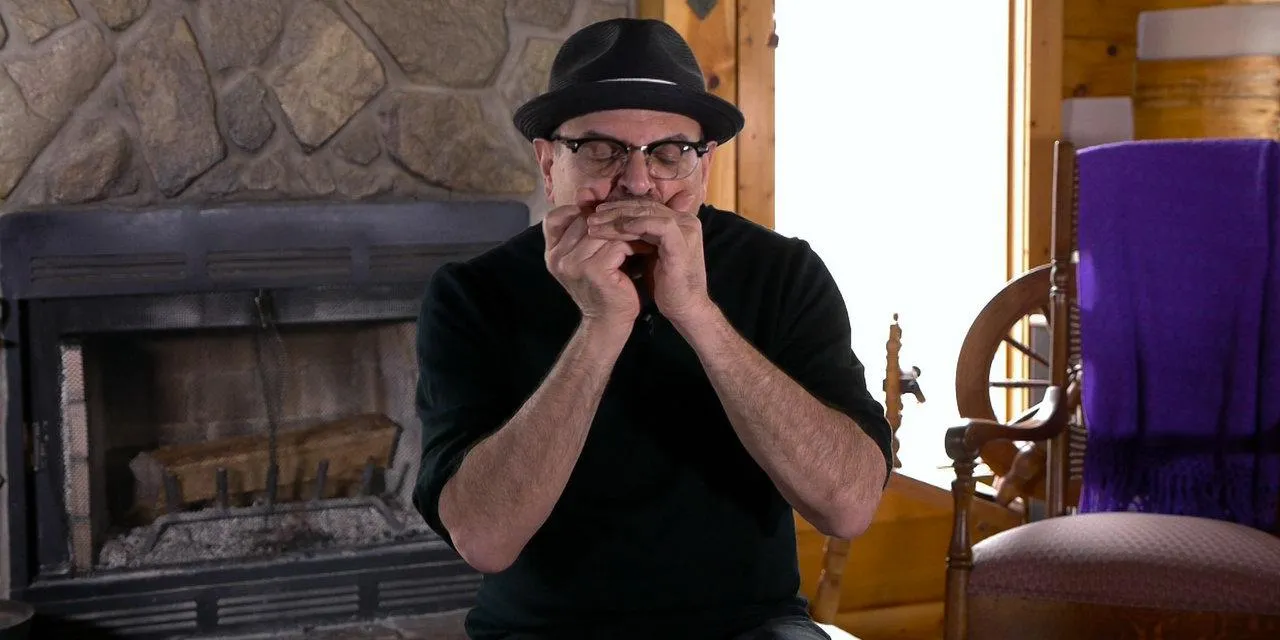
Qué incluye el curso
10 lecciones (0h 50m) · 1 gratis
01. Cómo enfocar y afinar nuestra técnica de bending
5:35
02. Entender los bends con válvula
Estás aquí4:59
03. Otro ejercicio de bending con media válvula
5:09
04. 3 ejercicios de bending con válvula
4:45
05. Usar bends con y sin pistones para explorar todo el instrumento
3:54
06. Usar un valve blow bend dentro de una melodía (My Romance)
6:05
07. Aprovechar la emoción extra que aporta el método Gazell
6:59
08. La menor en 5ª posición como alternativa a la menor en 3ª posición
5:07
09. Aprende el tema de la canción “Sugar” en 5.ª posición menor
3:40
10. Aprender un solo para “Sugar” y cómo tocar la canción completa
4:11
Transcripción de la lección
Lesson 2: Getting Our Heads Around Valved Bends
Hi, everybody. Welcome back.
Introduction
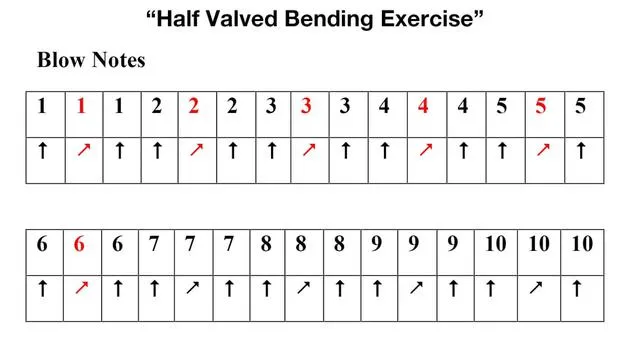
This is lesson two, entitled Getting Our Heads Around Valved Bends. I want to start with a simple blow bend exercise at the top of the harmonica that you can do. This will help you get a feel for what I'm looking for when we go to do valve bends.
Blow Bends vs. Valved Bends
To reiterate, valved bends more closely emulate what we do when we perform conventional blow bending at the top of the harmonica. And that's what this exercise is, that's all it does.
- Look at your PDF. It goes from holes 8, 9, and 10.
- We're warbling back and forth between the unbent note and the bent note.
Listen to how even I'm doing those and how my pitch is so correct. That's what you should be looking to achieve.
Concentration of Air Stream
Now, moving on from there, when we do a blow bend, as we discussed in the last lesson, it requires a very concentrated, very narrow stream of air. This helps us manipulate those little short reeds at the top of the harmonica.
Key Point: Valved bends need that same kind of refined focus because we're only manipulating one reed. We don't have both reeds engaged; it's not a double reed bend. When we use a valved bend, we're only using one reed because we've shut off the other reed with the valve.
Example of Air Stream
Here's another way to think about it, a great example:
- If I hold my hand out this far and open my mouth wide, then blow as hard as I can, I don't feel much air hitting my palm.
- But if I close my mouth down and blow in a more concentrated stream, I feel lots of air there.
That's a great way to think about valved bends in general, as well as conventional blow bends at the top of the harmonica.
Applying Valved Bends
Let's start to think about using valved bends and where they show up on the harmonica. This will help the entire instrument make a little more sense logically.
- All the notes show up in all three octaves, which you didn't have before.
Exercise: Blow Bends
Let's go to holes 8 and 9 and do our blow bends, conventional, non-valve blow bends.
Now, if we simply drop down to holes 5 and 6 and use the valve bend, guess what? It's the same notes an octave lower!
Here's your non-conventional:
- Here are your conventional non-valve blow bends on holes 8 and 9.
Now let's go down and do them on 5 and 6. Guess what? They also show up on hole number 2!
You can get all four of those notes on hole 2 by going from a 2 blow to a 2 blow bend, and then using the draw bend and the regular note on 2 to get those same notes.
Conclusion
As you can see, the whole instrument now starts to make more sense. Even though on a Richter-tuned harmonica, where all three octaves are tuned differently (unlike a piano or a chromatic harmonica), the notes are there.
We can start to use the instrument more fully, in my opinion, because all the notes show up in all three octaves. I think it's very cool.
We'll be back with another lesson shortly.
10 lecciones
0h 50m de lecciones en vídeo estructuradas
Funciones de vídeo avanzadas
Ralentiza, repite un pasaje, sigue la partitura
Móvil, tablet y ordenador
Practica donde quieras
Garantía de satisfacción 100%
30 días de garantía de devolución
Conoce a tu gurú
Conoce a tu gurú
PT Gazell se ha ganado su posición como maestro de la armónica diatónica. Tras años como codiciado músico de acompañamiento y de sesión para algunos de los más grandes de Nashville, PT descubrió el half-valving y su música literalmente alcanzó nuevas cotas.
Ningún otro intérprete combina su fraseo, su estilo melódico, su elección de temas y sus habilidades de improvisación como él lo hace: en definitiva, es un estilo completamente suyo. Usando su propio instrumento signature, la diatónica Gazell Method fabricada por Seydel, PT demuestra que la armónica es capaz de mucho más de lo que la mayoría creemos.
¡Disfrútalo!
En sus cursos, PT enseña el half-valving directamente desde la fuente, para que puedas empezar con el Gazell Method, dominar los bends valvulados e incorporarlos a tus propias canciones.







