



Sousaphon mit Nat McIntosh
Nat McIntosh von der Youngblood Brass Band über die Rolle des Sousaphons in einer Brass Band sowie die drei Regeln, nach denen seiner Meinung nach jeder Sousaphonspieler leben sollte.

Das steckt im Kurs
20 Lektionen (3h 4m) · 2 gratis
Transkript der Lektion
Welcome to Nat's Rules
Greetings, Internet sousaphone brass band enthusiasts!
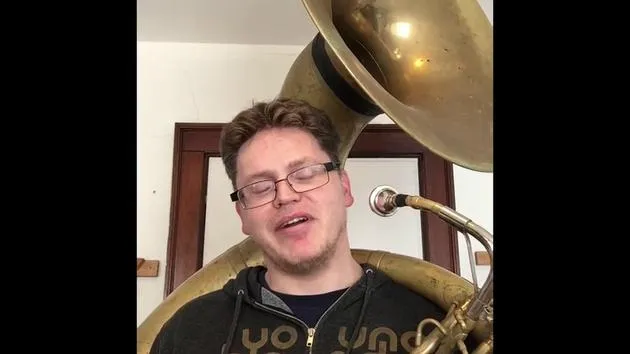
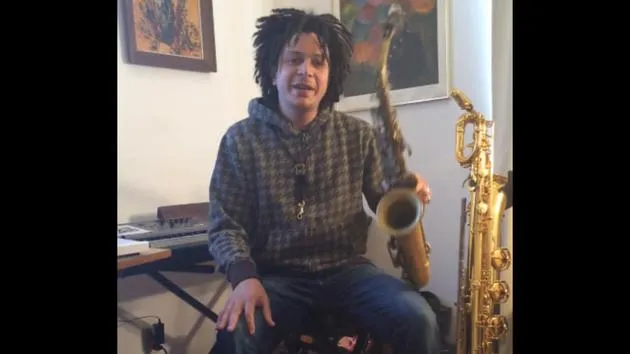
My name is Nat Macintosh, and welcome to Nat's Rules, starring Nat MacIntosh and Nat McIntosh joint. I am, of course, the sousaphone player with the Youngblood Brass Band. Today, I want to take this opportunity to show you what these videos will be like in the future.
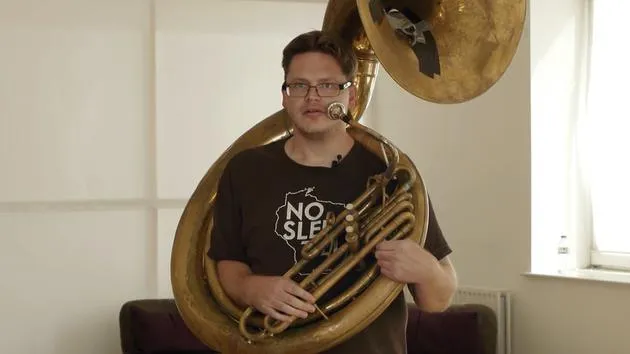
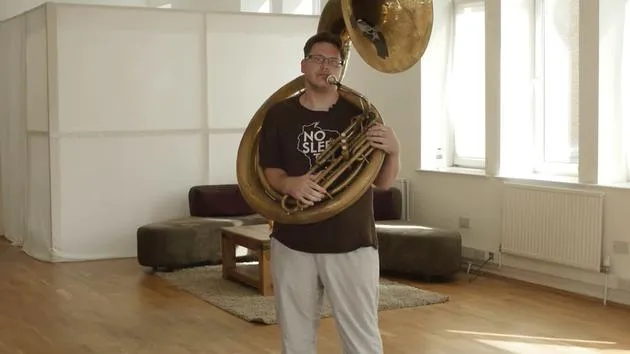
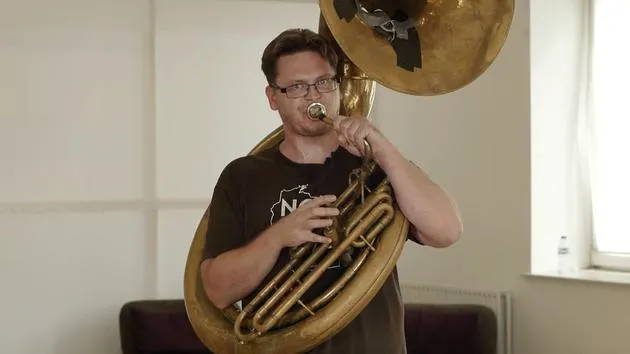
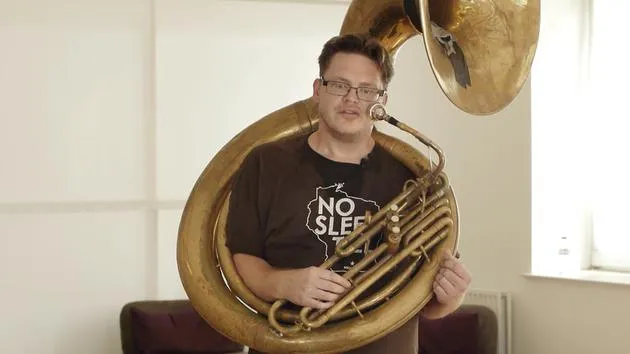
I'm not going to do a lot of playing today, partly because I have trouble playing and talking at the same time. It's a weird thing. I can play and sing all day long, but switching back and forth between playing and talking doesn't work for me. It's dumb. So, I'm holding a sousaphone so that you will know that it is, in fact, me. I can hold up my ID and today's newspaper if you would like, but I'm not going to do that.
Let's Dive In
Without further ado, we're going to talk about the brass band sousaphone roll and how it's different from what you do with any other kind of roll. It's important to note that it differs from your classical tuba gig in almost every way; it bears very little resemblance.
We're going to use a simple "more important than, less important than" structure for today, okay?
Nat's Rule Number One
Rhythm is more important than notes.
And that's the absolute key in brass band. Think about it this way:
- If you miss a note, that's one tiny little blip in time that everyone, the audience, you, and the rest of the band, wants to forget.
- All you have to do is move on and correct yourself for the whole world to forget that it ever happened. Everybody's on your team.
However, if you start thinking about the notes as being more important than the rhythms, you'll throw off your whole band. The worst thing you can do is detract from the groove rather than adding to it.
As a brass band sousaphonist, you need to think about this like a drummer. Everything needs to be in some sort of meter from now on. This includes:
- All of your warm-ups.
- Everything that you play.
You need to have that metronome on or some sort of a drum track that you can play along to until you have this sense of internal pulse where your body just feels the rhythm. Then you can just groove on your own recognizance.
For example:
Scales should be in time:
Boom, boom, boom ...
All of your lip slurs need to be in time as well. Treat them as if they are the bassline of a song, where everything needs to be precise.
Nat's Rule Number Two
Style is more important than tone.
This may seem strange for classical tuba players who want their tone to be absolutely round, chocolatey, and beautiful. However, uniformity is not what brass band music is about; it's about snaps and pops!
Think about it in terms of microdynamics:
- Everything is moving along a little stylistic pattern where you move in and out of the texture.
- You pick moments to be the most important voice, then settle back down.
You can't come out of the texture if you're afraid of changing your tone quality; otherwise, you'll blend into the bass drum and won't distinguish yourself.
Remember: The musicians you admire are the ones who play with style. It's not always about playing perfectly; it's about figuring out what makes you unique.
Nat's Rule Number Three
Volume is more important than hot licks.
Now, I know this may make me sound like a hypocrite because I love hot licks as much as anyone. However, with 20 years of brass band experience, I'll tell you that what the audience and the band respond to from your chair is the volume.
- If you want to impact the band and get a rise out of the audience, do it with a tough, assertive statement.
- Fluttery licks will fade into the background; what you need are statements that cut through the texture.
As a sousaphonist in the back, you should be:
- Keeping track of where you are in the phrase.
- Using your licks and stylistic interpretations to demonstrate what's coming next.
Conclusion
So there you have it: Nat's three rule number ones.
- Rhythm is more important than notes.
- Style is more important than tone.
- Volume is more important than hot licks.
I hope you enjoyed this. Again, I'm Nat McIntosh, and this has been a Nat McIntosh production of Nat McIntosh's Hot Licks with Nat Macintosh.
Thank you very much!
20 Lektionen
3 Std. 4 Min. strukturierte Videolektionen
Erweiterte Videofunktionen
Verlangsamen, Passagen loopen, mitlesen
Handy, Tablet & Desktop
Üben, wo du willst
100 % Zufriedenheitsgarantie
30 Tage Geld-zurück-Garantie
Lern deinen Guru kennen

Lern deinen Guru kennen
Youngblood Brass Band verbindet kompromisslose New-Orleans-Bläser mit der Energie und Lyrik des Hip-Hop. Das zehnköpfige Ensemble aus Madison, Brooklyn, Minneapolis und Chicago tourt seit 2000 um die Welt und hat mit Größen wie Questlove und Talib Kweli zusammengearbeitet. Es fühlt sich gleichermaßen wohl dabei, mit eigenen Kompositionen eine Marching Band anzuführen wie ein Punk-Festival als Headliner zu spielen. Auf MusicGurus zerlegen sie ihren Sound aus New Orleans und Hip-Hop: wie sie für Bläser komponieren und arrangieren, das rhythmische und harmonische Vokabular, das alles zusammenhält, und wie man eine Bläserlinie als Teil einer eng verzahnten Section spielt, inklusive der kompletten Stimmen zu ihrem Stück 'Brooklyn'.







