



Balance

Mit
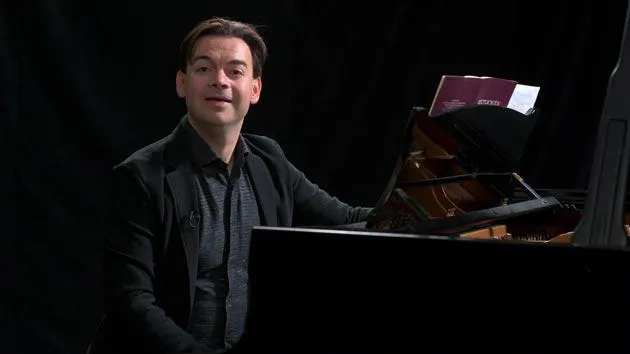
Dejan LazićIn dieser Lektion zeigt Dejan, wie man am besten die richtige Balance zwischen den Aufgaben beider Hände erreicht.
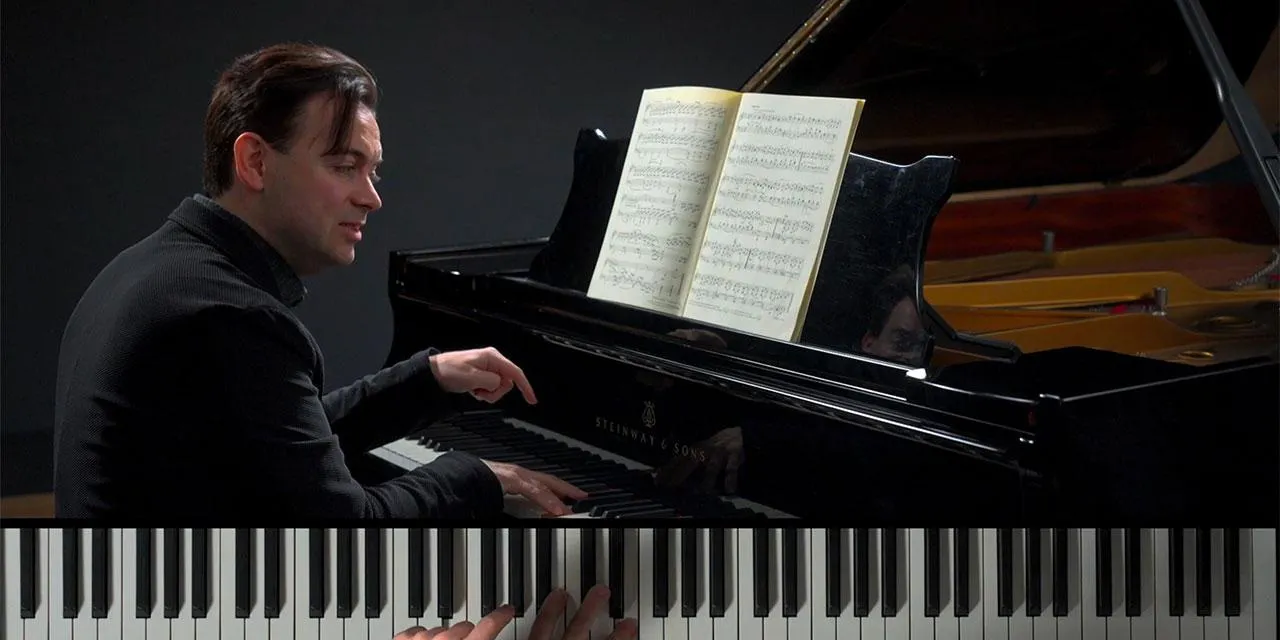
Das steckt im Kurs
20 Lektionen (2h 4m) · 1 gratis
Transkript der Lektion
Understanding Balance in Beethoven's Moonlight Sonata's Second Movement
Hi, everyone.
Let's talk about balance in this second movement of Beethoven's Moonlight Sonata.
The Challenge of Two Hands
Of course, having two hands is sometimes a burden. When playing the piano, we should, for instance, in the first movement, obey three main features:
- Two features in the right hand:
- The melody
- The accompaniment (the triplets)
- The basis in the left hand.
Yet, it should all sound equal, not one more dominant than the other.
Phrasing and Voicing
Now, in the second movement, when we address matters of balance, we also talked about:
- Phrasing
- Voicing
- Balance between the voices and between the hands.
This is not always the exact same thing.
Demonstration of the Trio
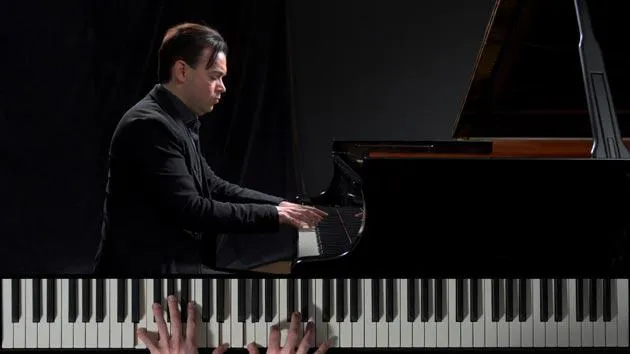
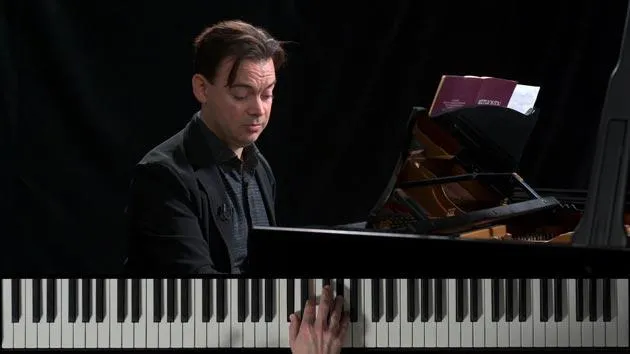
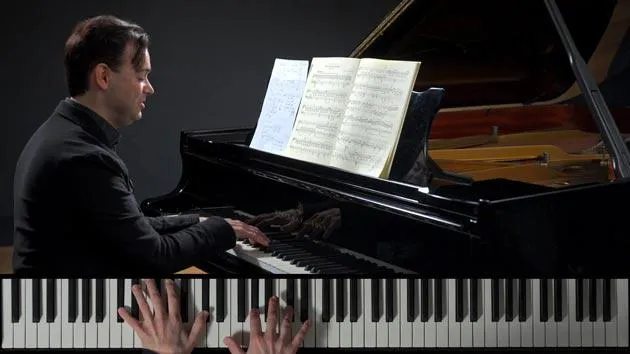
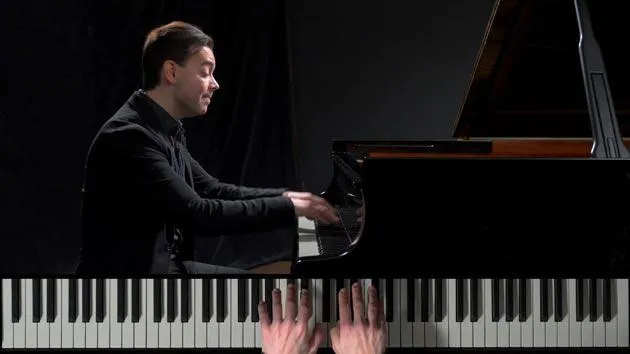
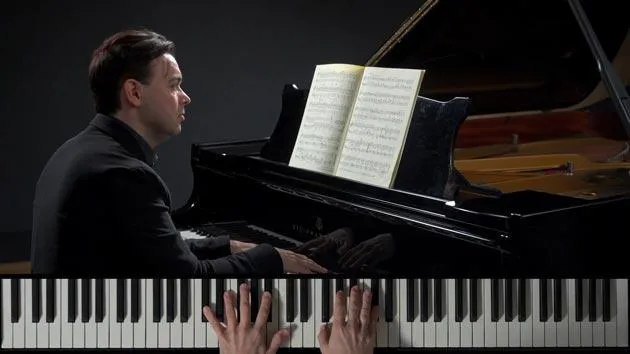
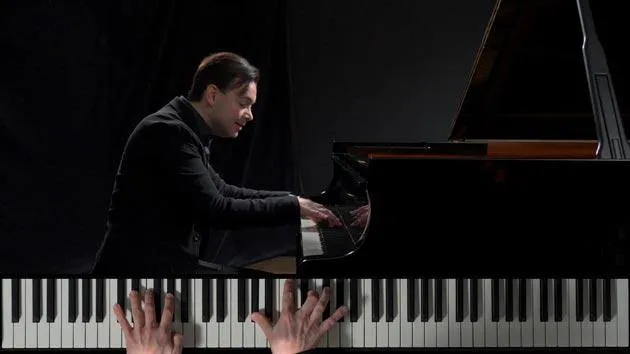
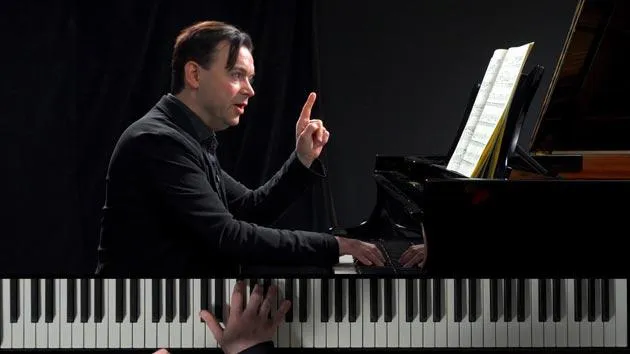
I can demonstrate the trio, the middle section of this movement, which goes like this:
"This is complete contrast to... as if there's a lack of bass."
So, this is the trio, almost like bagpipes.
The Dynamics of the Trio
- This balance here is a flat because Beethoven writes for forte piano in the left hand, but only a flat.
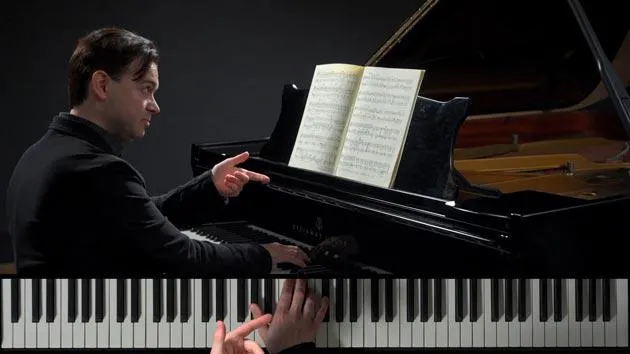
- It's very clearly marked in the score that this fortepiano goes for A flat and not for the lower D flat.
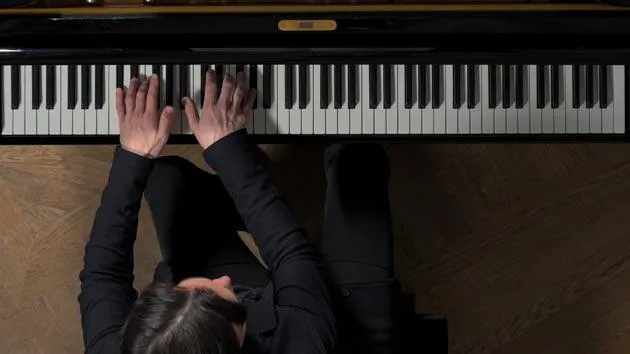
So, only for your thumb.
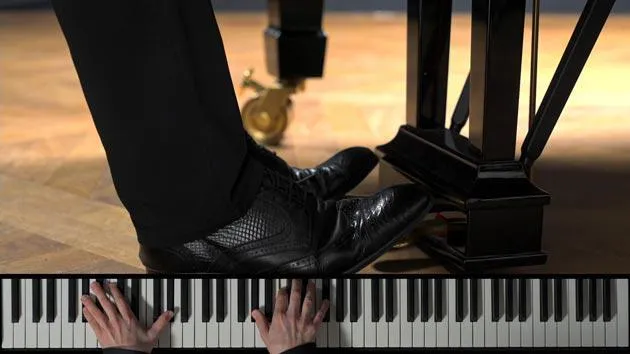
Please play it with your thumb, because obviously, you could also play it with the second finger, but we said the thumb is naturally the most robust of all fingers. This way, you can easily put weight on the thumb and not on any of the other fingers, creating a more bagpipe-like sound in the right hand.
Syncopes and Sforzanti
However, those syncopes have sforzanti (SF mark).
So it's not forte piano; it's sforzanto. It's faster, more into the bone.
"And then no sforzanto. And again here. Yes, yes, yes. And again."
See, that's the difference.
The Pianissimo Dynamics
All of a sudden, we have pianissimo, very soft in both hands. Here again, we've got this forte piano just in the left hand, but only for the thumb.
To avoid playing it too loudly, make sure to balance your hands and not play the right hand too loudly. If you play this too loudly, then you cover the thumb's forte piano.
So, try to be as pianissimo in the right hand, allowing the D flat forte piano to shine through.
"After forte, it returns to piano."
This is a proper balance where you will never lose the character of the piece. It will be in strong contrast to the main section, which is very lyrical, gracious, and dolce (sweet).
Conclusion
So, you can play with all these features. Even though this movement is relatively short, it is really compressed with all these amazing features.
It's just like:
"The best dish where you can taste a little bit of everything, even a bit of sugar, a bit of salt in the sauce."
There's really everything that Beethoven's rich personality and artistry could put on one page. So, have fun!
20 Lektionen
2 Std. 4 Min. strukturierte Videolektionen
Erweiterte Videofunktionen
Verlangsamen, Passagen loopen, mitlesen
Handy, Tablet & Desktop
Üben, wo du willst
100 % Zufriedenheitsgarantie
30 Tage Geld-zurück-Garantie
Lern deinen Guru kennen
Lern deinen Guru kennen
Dejan Lazićs frische Interpretationen des Repertoires haben ihn als einen der eigenständigsten und ungewöhnlichsten Solisten seiner Generation etabliert. Er tritt regelmäßig mit den führenden Orchestern der Welt auf, darunter die Boston und Chicago Symphony Orchestras, das Budapest Festival Orchestra, das Royal Concertgebouw Orchestra, das London Philharmonic, das Philharmonia Orchestra, das NDR Elbphilharmonie Orchester sowie die Kammerorchester Australiens, Basels und der Niederlande, und hat enge Zusammenarbeiten mit Dirigenten wie Giovanni Antonini, Iván Fischer, Michael Francis, Andris Nelsons, Ivan Repušić, Thomas Søndergård, Robert Spano, John Storgårds, Krzysztof Urbański und Jan Willem de Vriend aufgebaut.
Dejan Lazić hat zahlreiche CDs bei Channel Classics und Onyx Classics sowie eine Einspielung von Beethovens Tripelkonzert für Sony Classical veröffentlicht. Seine Live-Aufnahme von Rachmaninows Klavierkonzert Nr. 2 mit dem London Philharmonic Orchestra und Kirill Petrenko wurde mit dem deutschen "Echo Klassik"-Preis ausgezeichnet. Er hat zudem eine große Anhängerschaft im Fernen Osten und ist rege als Rezitalist und Kammermusiker tätig, mit regelmäßigen Auftritten bei bedeutenden internationalen Festivals.
Dejan Lazićs Kompositionen finden zunehmende Anerkennung, und 2015 wurde er als Komponist von der Sikorski Music Publishing Group unter Vertrag genommen. Seine Bearbeitung von Brahms' Violinkonzert als Klavierkonzert "Nr. 3" wurde 2009 mit dem Atlanta Symphony Orchestra und Robert Spano uraufgeführt und aufgenommen und erfreut sich seither anhaltend großen Erfolgs, bei den BBC Proms, im Concertgebouw Amsterdam, beim Hamburger Osterfestival und beim Chopin-Festival Warschau, auf beiden amerikanischen Kontinenten und in Japan. Sein Klavierkonzert im istrischen Stil (Op. 18) wurde 2014 beim Aspen Music Festival uraufgeführt und ist seitdem in ganz Europa und in den USA aufgeführt worden. Zu weiteren Werken zählen verschiedene Orchester-, Kammer- und Klaviermusik, Kadenzen sowie mehrere Bearbeitungen von Werken von Mozart, Schubert, R. Strauss, Wagner und Debussy.
Dejan Lazić wurde in Zagreb, Kroatien, in eine Musikerfamilie hineingeboren. Er wuchs in Salzburg, Österreich, auf, wo er am Mozarteum studierte (Klavier, Klarinette und Komposition). Seine frühen Begegnungen mit Zoltán Kocsis und Imre Rohmann beim Bartók-Festival in Ungarn waren für seine künstlerische Laufbahn ebenso entscheidend wie der bedeutende Einfluss von Peter Eötvös. Dejan Lazić lebt in Amsterdam.
In Master Moonlight Sonata by Beethoven teilt Dejan die Einsicht hinter diesen gefeierten Interpretationen und führt dich durch alle drei Sätze eines der beliebtesten Werke des Klavierrepertoires, damit du es mit echtem Verständnis statt durch Nachahmung gestalten kannst. www.dejanlazic.com







