



Kern-Tracks
Mit
Brian Funk
Das steckt im Kurs
30 Lektionen (2h 20m) · 1 gratis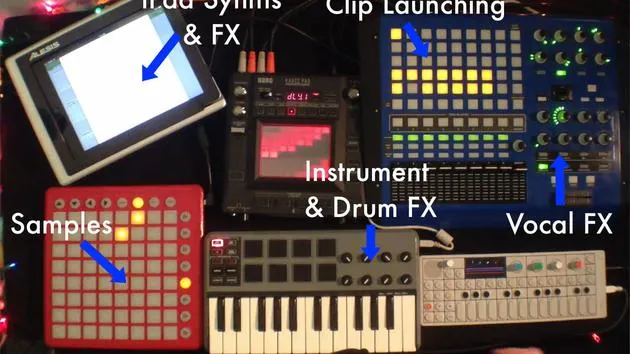
Transkript der Lektion
Using the APC40 for Live Performance
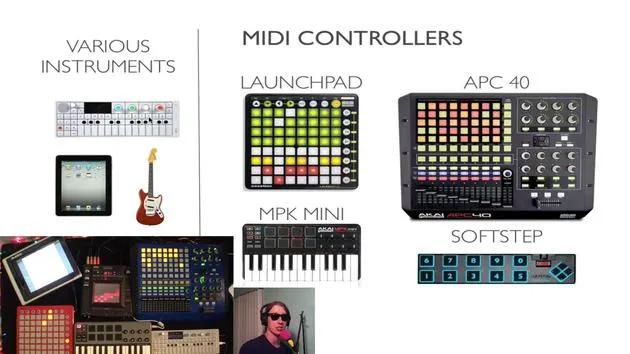
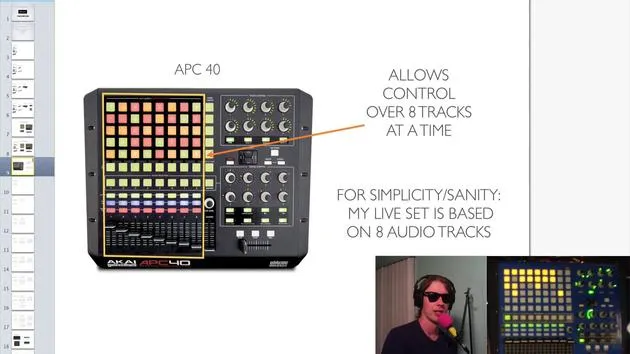
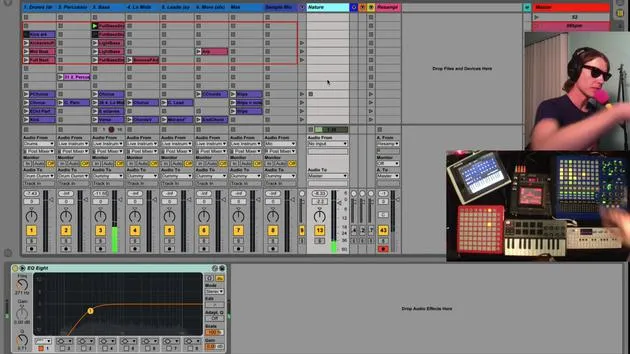
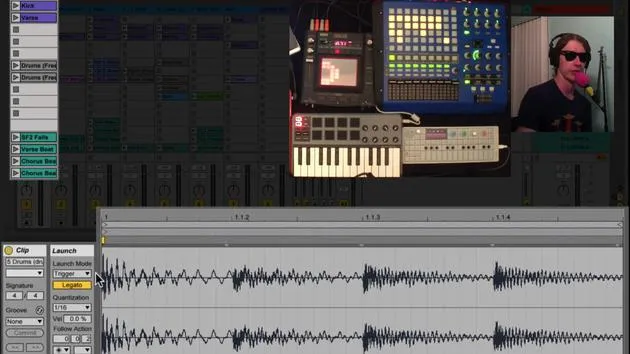
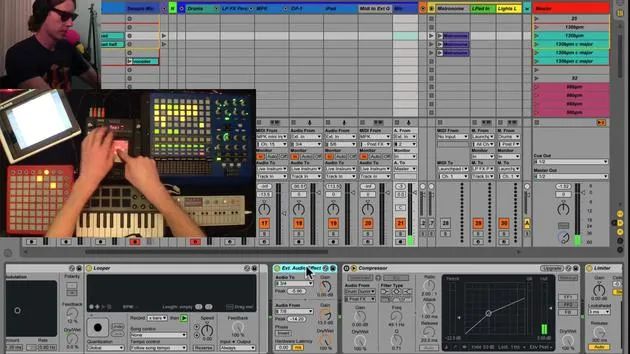
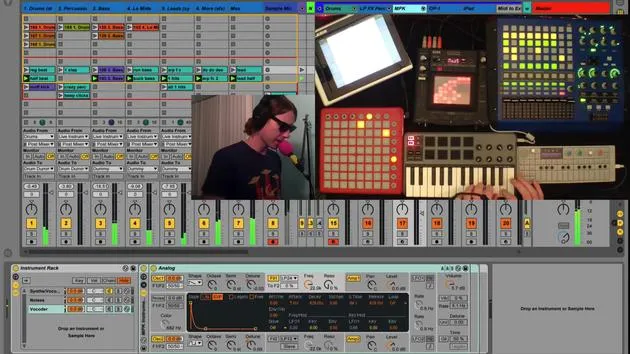
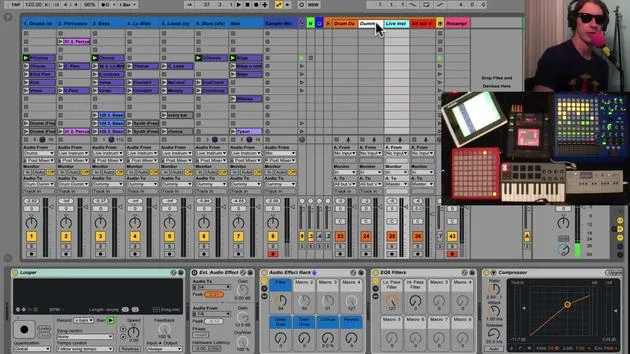
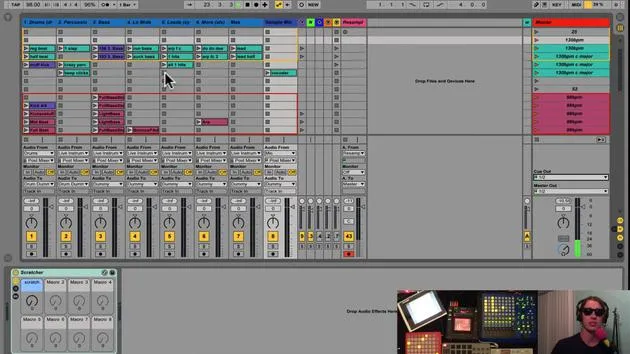
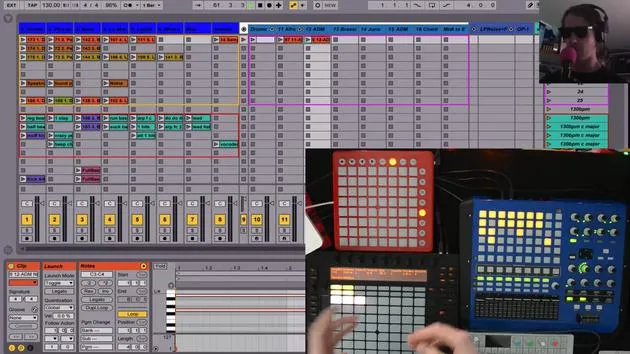
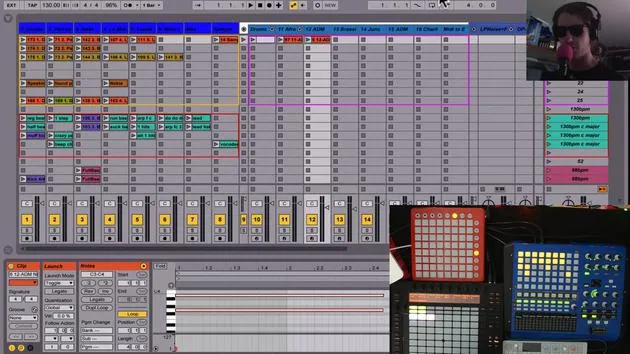
Okay, so the first thing I want to talk about is the way I'm using the APC40 here. The APC40 allows control over eight tracks at a time. They're right here. I got my eight tracks, so it's something to think about.
Track Organization for Simplicity
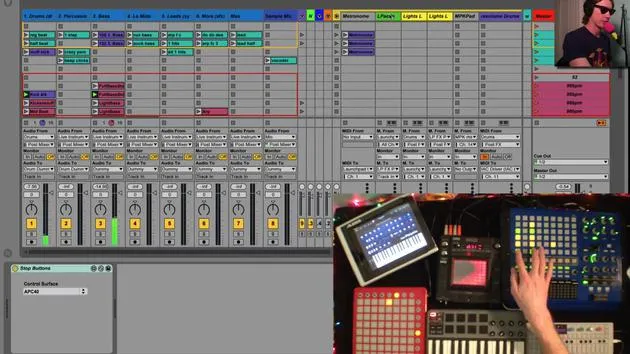
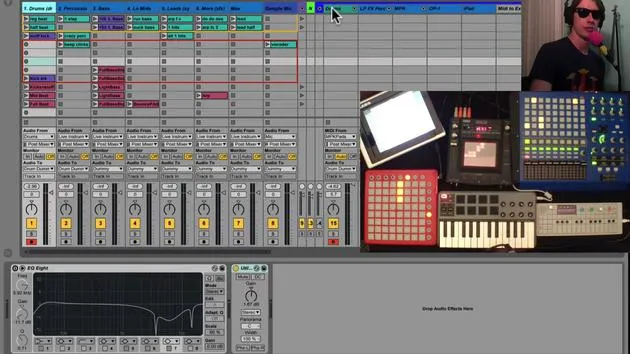
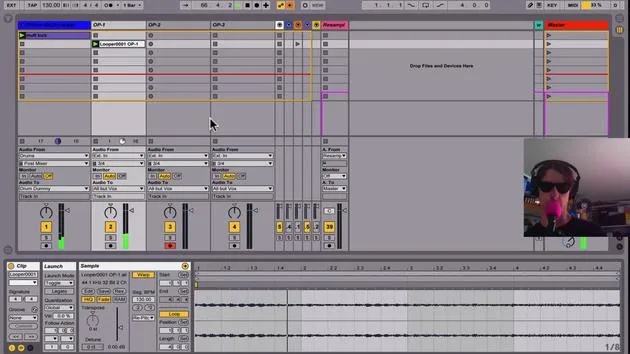
Because it controls eight tracks, I've decided that in my live set, the first eight tracks will all be clips, as I'm going to be using this for launching clips. So, I've decided that I'm only going to have eight audio tracks of clips. The real reason for that is, as I put in here:
"This is for simplicity and sanity."
These are important things to consider when you're playing live. You don't want to be at a live show navigating left and right to all these different tracks. You don't want to get lost and then be scratching your head in the middle of the performance trying to figure out where the heck you are in your set.
So I like to keep it simple and limit myself to eight tracks. Of course, that's not a rule, but this is just an idea I like to use.
Instrument-Specific Tracks
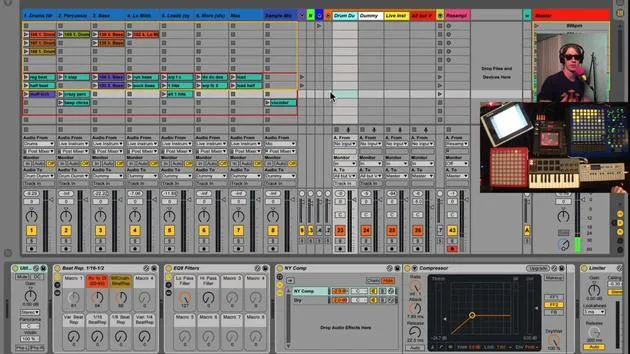
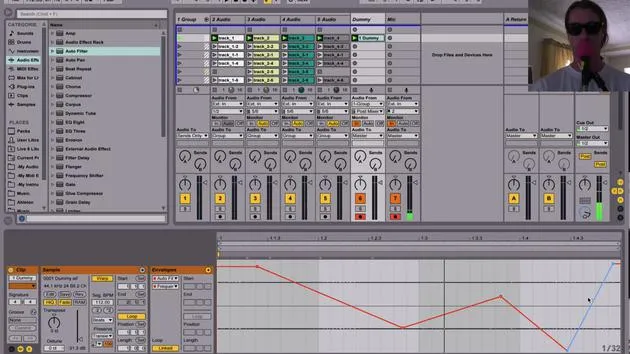
To keep things even simpler, each one of my tracks corresponds to a certain type of instrument:
-
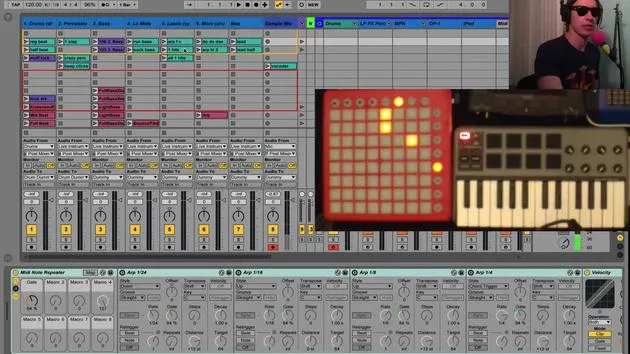
Track 1: Drums
I keep all of my drums in this one track. If I launch this clip here, you'll hear a drum track going. Every single song I have has all the drum beats in this one track. -
Track 2: Percussion
In this example, I do have a drum beat, which acts as a sort of second drum sound. This is mainly my percussion track, where you can see I have some hi-hats going. Those are just nice to drop in separately from the drums. -
Track 3: Basses
So all the low frequency stuff, like my synths, are kept here. I want to know where my bass is at all times. I want to keep it regular, so I always know where to find it. -
Track 4: Low Mids
This isn't quite bass but is a little higher. You can hear the difference as I progress through the tracks. -
Track 5: Leads and Synth Racks
This is where I put my leads, things I want to stand out. If there's an important part, it tends to be on track five. -
Track 6: Particular Sounds
Generally speaking, this has a higher frequency than the tracks before it. -
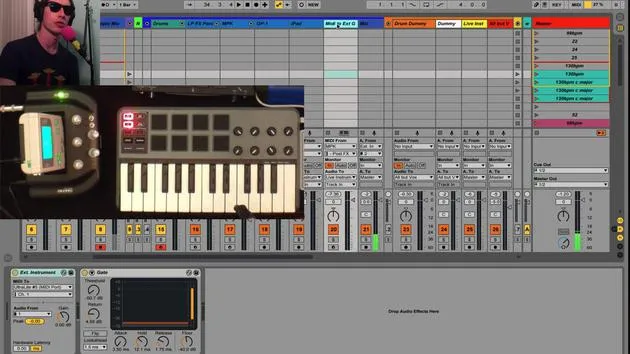
Track 7: Miscellaneous Sounds
This track is just called "Mas." It might contain a lead or something higher pitched. You won't find too many low-frequency sounds on this track. -
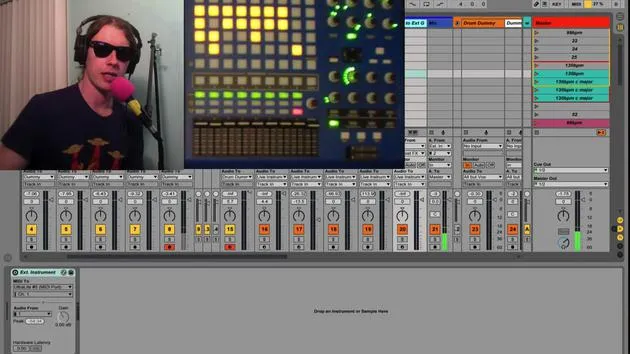
Track 8: Microphone
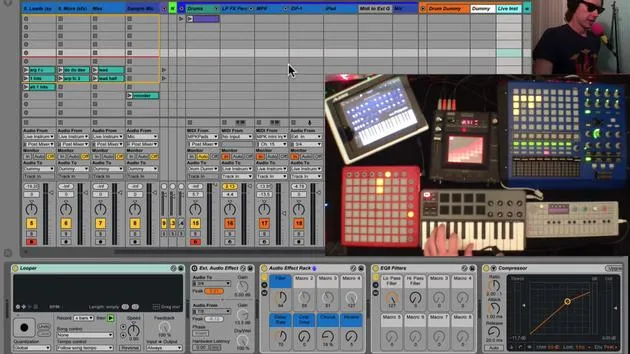
This track is connected to my microphone and is a place where I can record.
"I can record the sounds that I'm saying. It's a great way to do vocal harmonies."
I can sing a part, then immediately loop it and sing another part.
Conclusion
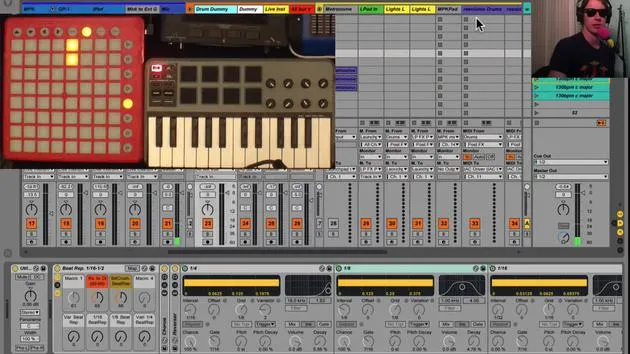
The reason I do eight clips and eight tracks of clips is because my APC40 has eight tracks. It's just a nice way to work. I always know that these faders apply to the first eight tracks of clips, so I like to keep that separate.
That's how I work with my audio clips.
30 Lektionen
2 Std. 20 Min. strukturierte Videolektionen
Erweiterte Videofunktionen
Verlangsamen, Passagen loopen, mitlesen
Handy, Tablet & Desktop
Üben, wo du willst
100 % Zufriedenheitsgarantie
30 Tage Geld-zurück-Garantie
Lern deinen Guru kennen
Lern deinen Guru kennen
Brian Funk ist Musiker, Produzent, Songwriter und Ableton Certified Trainer. Seit 2014 unterrichtet er den Kurs Advanced Music Production with Ableton Live für das Berklee College of Music. Er hat in tourenden Rockbands Gitarre, Bass, Schlagzeug und Synthesizer gespielt und gesungen, und konzentriert sich heute auf sein elektronisches Solo-Set, mit dem er seine Studio-Experimente auf die Bühne bringt.
Brian liebt das Schreiben, das Unterrichten und das Sounddesign. Er produziert Ableton-Live-Tutorials und Sound Packs und veröffentlicht seit 2011 kostenlose Ableton Live Packs – bislang über 125. Als Ableton Certified Trainer hat er Unterricht und Seminare gegeben, die jede Phase des Produktionsprozesses abdecken, und schreibt regelmäßig auf seinem Blog sowie für andere Publikationen.
Beeinflusst von Rock and Roll, Videospielen, frühem Hip Hop, Punk und Electronica – von The Beatles, Neil Young, Nirvana und Aerosmith bis hin zu Neon Indian – beschreibt er seinen eigenen Sound als 'futuristisch und doch nostalgisch'. In seinem MusicGurus-Kurs Live Performance in Ableton Live zeigt er dir, wie er Studio-Ideen in ein echtes, praxisnahes Live-Set verwandelt: Sounds sampeln und daraus spielbare Instrumente machen, Gitarren und Synths durch elektronisches Equipment leiten und live spielend und singend spontan mischen und komponieren. Am Ende bist du in der Lage, dein eigenes elektronisches Set selbstbewusst aufzubauen und zu performen.







