



Die richtigen Akkorde wählen
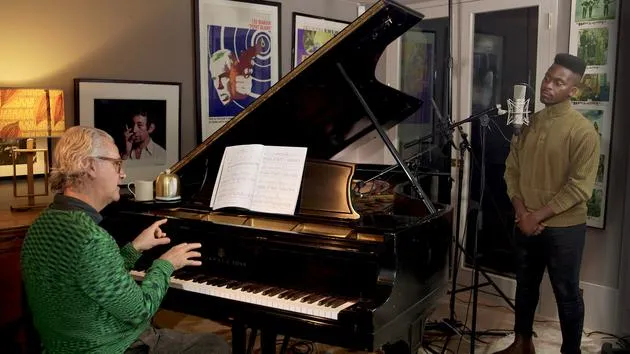
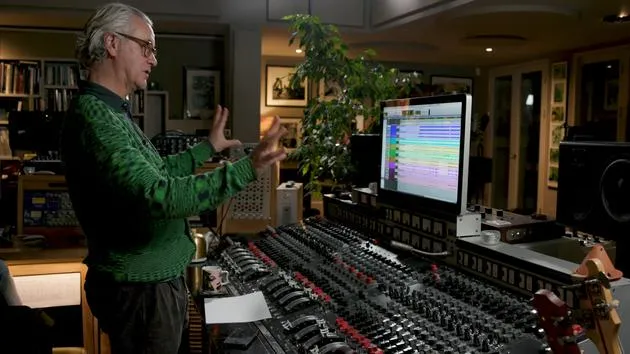
Guy Chambers rekonstruiert, wie er die Akkorde für 'Angels' von Robbie Williams fand, indem er eine Harmonie wählte, die Melodie und Text trägt und die Stimmung des Songs setzt.
Das steckt im Kurs
18 Lektionen (1h 33m) · 1 gratis

Transkript der Lektion
Music Lesson: Crafting a Song
Introduction
So the song started by Rob walking in my studio, which was actually in the bedroom of my flat at that time. He began singing this melody to me with the words:
"I sit and wait, does an angel contemplate my faith?"
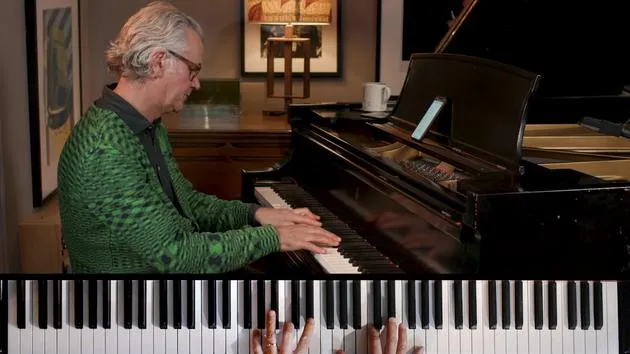
I was thinking, What key is that in? So, I'm sort of on the piano doing this,
"The place is where we go, oh, it's he."
I think I might have said to him, "Stop, that's brilliant. Can you start that again?"
Collaboration Begins
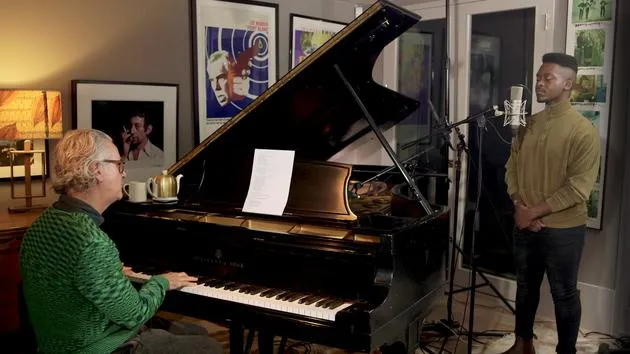
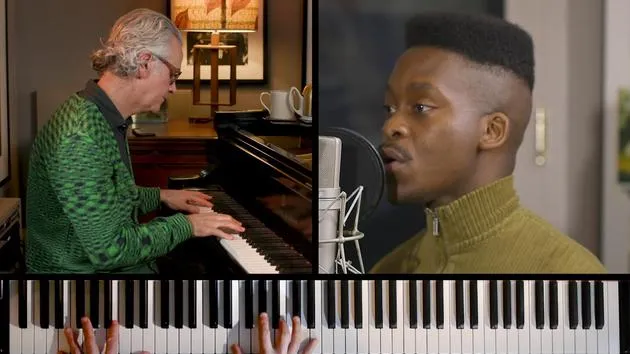
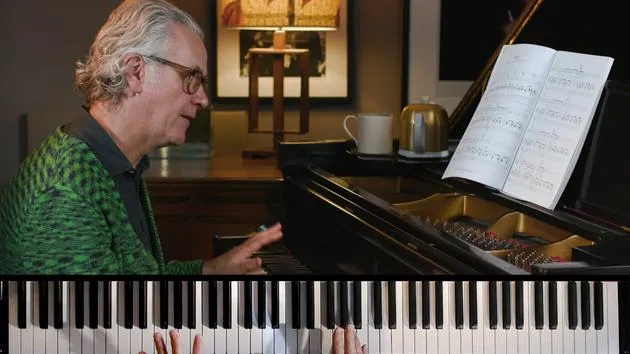
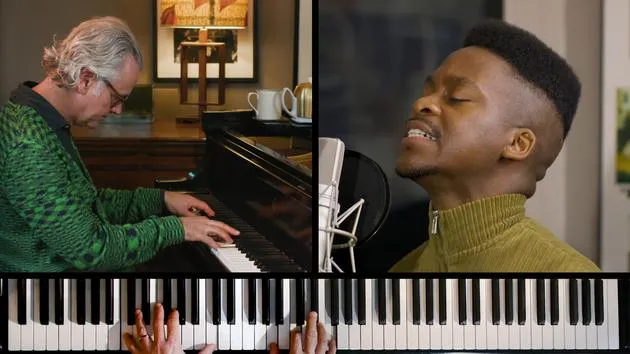
So he started again, and when he did, I played these chords with him:
"I sit and wait, does an angel contemplate my faith?"
Because I'd heard the melody once, I had an idea of where the chords should work with that melody:
- The places where we go when we're grey and old
"So stop singing."
And then you can, of course, carry on sticking to those chords. I've been told that's what happens if you stick to the same chords. It kind of works with the melody, but because the melody is quite similar to the one before, the harmony needs to move.
Creating a Musical Journey
The music needs to change to create a journey that takes you to the chorus. That's why I shifted from E, A, B to F sharp minor discord. This then takes you to a completely different place: C sharp minor.
When I'm lying in my bed, thoughts running through my head, and I feel that love is dead, I'm loving angels instead. As you could hear there, after the F sharp minor, A, C sharp minor, it goes to D, which is, you know, somewhere completely different.
This is nice because it sort of triggers in my mind that something exciting is going to happen.
The Lyrics' Impact
What's really cool about the lyrics of this song is that because Rob came up with all these lyrics for this verse,
"I'm loving angels instead,"
at the end of the verse, it sort of already branded the song. I was like, Oh, wow. That sums up the whole song in like 12 lines.
I was immediately really excited by it. There's the title there, Angels. It was like, Wow. I remember thinking that at the time.
Chorus Development
Then, when we came to where it should go for the chorus, I wanted to pick a chord that hadn't been used in the verse.
Going back to the verse chords, we've used:
- E
- A
- B
- F sharp minor
- C sharp minor
- D
The only other chord we haven't used is G sharp minor, which, for a chorus, makes me feel uneasy. If I started the chorus with that chord, it feels like we're in a bridge because it feels unsettling.
For the beginning of a chorus, you want a release, like:
"Oh, she offers me protection,
A lot of love and affection,
Whether I'm right or wrong."
Then it continues to:
"And down the waterfall,
Wherever it may take me,
I know that life won't break me.
When I come to call, she won't forsake me,
I'm loving angels instead."
Melodic Leap
In terms of the melody, it's unusual because it goes from just an E triad. But the next note it hits is a whole ninth away from the first note. It's ninth notes:
1, 2, 3, 4, 5, 6, 7, 8, 9.
That's a big leap, and quite unusual. I remember when we came up with it. It was a bit like, Wow, that's... I think maybe even Rob said, "I'm not sure if I can sing that."
I reassured him, You can definitely sing it. Just go for it, it'll be fine. He was very unsure about his voice in those early days, but having such a big jump like that makes the chorus super dramatic.
Influences and Inspiration
I often get asked where the idea for the song came from. The song that comes to mind is Hey Jude. I mean, Hey Jude has a similar feel in the piano:
"Hey Jude, don't make it bad."
It has a comparable piano feeling. That leap is quite significant, and I think in the back of my mind I was thinking we should have a similar kind of jump up.
But when you're writing a song, you're not necessarily thinking all these thoughts; they're sort of in your subconscious. They just jump up, and you're in the moment.
18 Lektionen
1 Std. 33 Min. strukturierte Videolektionen
Erweiterte Videofunktionen
Verlangsamen, Passagen loopen, mitlesen
Handy, Tablet & Desktop
Üben, wo du willst
100 % Zufriedenheitsgarantie
30 Tage Geld-zurück-Garantie
Lern deinen Guru kennen

Lern deinen Guru kennen
Guy Chambers ist einer der erfolgreichsten lebenden Songwriter Großbritanniens.
Er ist der Autor hinter den Songs, die wir aus dem Radio, aus dem Kino und von der Tanzfläche kennen. Songs, die wir von unseren Partys und Hochzeiten kennen. Songs, die die halbe Welt Note für Note mitsingen kann. Songs, die uns in der Zeit dorthin zurückversetzen, wo wir einst waren. Songs, die uns über den Alltag hinaustragen, dorthin, wo wir uns wünschten zu sein; 'Angels'; 'Let Me Entertain You'; 'Strong'; 'No Regrets'; 'Millennium'; 'Rock DJ'; 'Feel', um nur einige zu nennen.
"Guy war der erste Mensch im Geschäft, der mich je ernst genommen hat", sagt sein langjähriger Schreibpartner Robbie Williams. "Der erste Mensch, der den Künstler sehen konnte, zu dem ich wusste, dass ich werden könnte".
Die Liste seiner weiteren Mitstreiter liest sich wie der Adel der Popmusik. Über die Jahre hat Guy für Diana Ross, Tom Jones, Tina Turner (deren glühende Version von 'Feel' man wirklich hören muss, um sie zu glauben), Kylie Minogue, James Blunt, Scissor Sisters, Rufus Wainwright und Mark Ronson und viele andere geschrieben und produziert.
Er fordert sich beständig heraus und sucht neue kreative Vorhaben, eines davon war die Schaffung einer Folk-Oper für Kinder nach Oscar Wildes Kurzgeschichte 'The Selfish Giant', die er seiner verstorbenen Mutter Pat widmete. Die Show wurde 2018 am Vaudeville Theatre im Londoner West End uraufgeführt.
2019 veröffentlichte Guy sein Solo-Klavierdebütalbum 'Go Gentle Into the Light' – eine Sammlung einiger der beliebtesten Songs, die er und Robbie Williams gemeinsam geschrieben haben, wobei die Single 'The Road To Mandalay' über 6 Millionen Streams erreichte.
Er produzierte das offizielle BBC-Children-in-Need-Album 'Got it Covered' mit Stars wie Olivia Colman, Jodie Whittaker und Helena Bonham Carter, das Platz 1 der britischen Charts erreichte.
Guy und Robbie Williams taten sich mit Chris Heath zusammen, um Musik und Text für die Musical-Adaption der RSC von David Walliams' Bestseller 'The Boy in the Dress' zu komponieren, die mit Fünf-Sterne-Kritiken (The Independent, What's On Stage) am Royal Shakespeare Theatre in Stratford-Upon-Avon Premiere feierte.
Guy hat Robbie Williams' jüngstes Nummer-1-Album im Vereinigten Königreich, 'The Christmas Present', produziert und die Single 'Time for Change' mitgeschrieben.
Er lebt mit seiner Frau Emma und ihren vier Kindern in Camden und in Sussex, wo er "guten Wein, gutes Essen, Kino und so ziemlich alles Französische" genießt.
"Und das Songschreiben, natürlich".







