



Einführung und Swing-Bogenführung
Mit
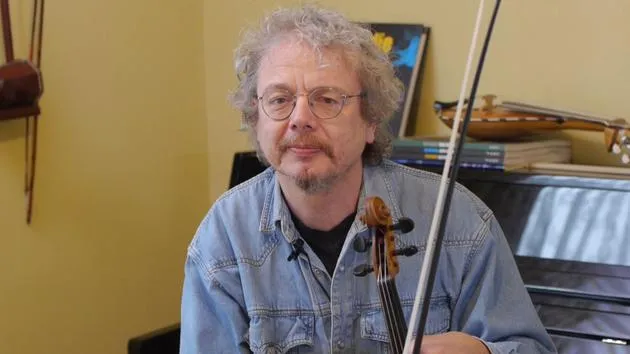
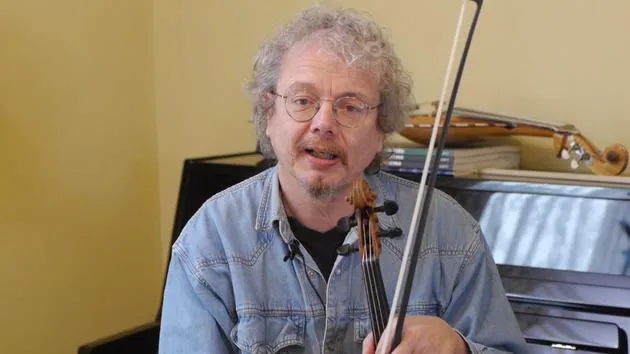
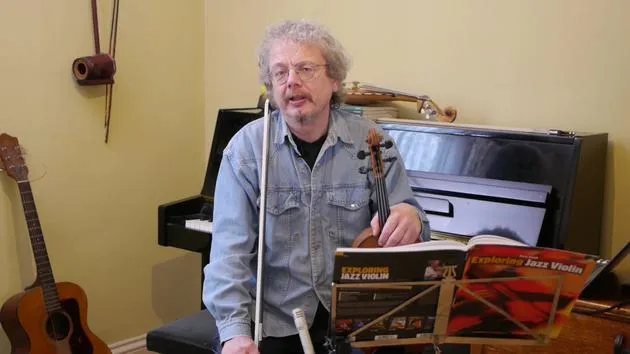
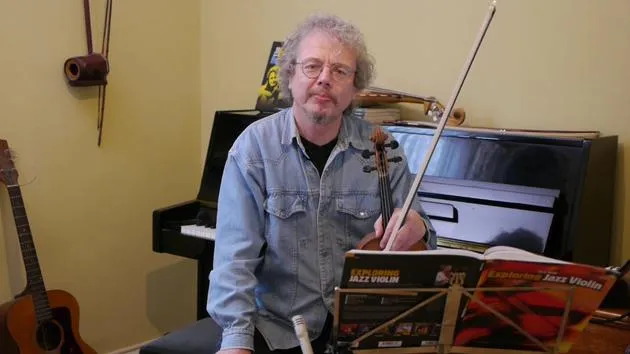
Chris HaighChris Haigh stellt die Swing-Bogenführung vor – notierte gerade Achtel ungleichmäßig spielen, mit kurzen, angedeuteten Bogenstrichen, um das essenzielle Jazz-Feeling zu bekommen.
Das steckt im Kurs
26 Lektionen (1h 53m) · 1 gratis
Transkript der Lektion
Swing Bowing Lesson
Okay, in this lesson, we're going to be looking at swing bowing. Swing is an essential part of jazz, and for a violinist, getting the bowing is one of the most important things.
Understanding Swing Melodies
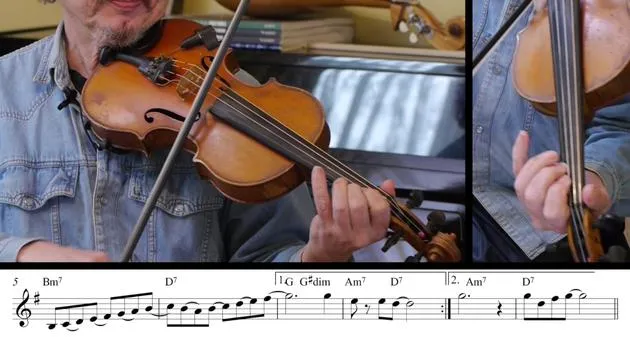
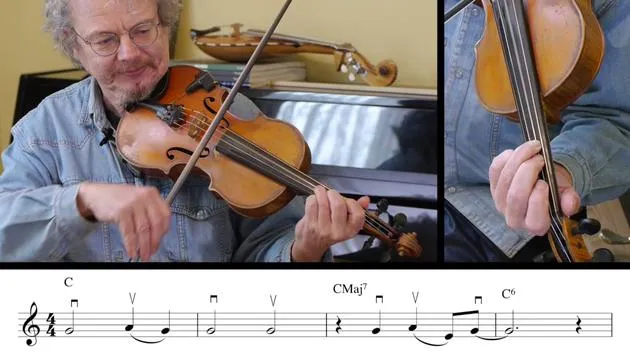
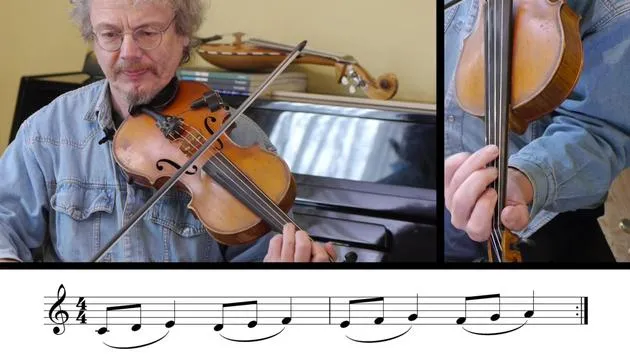
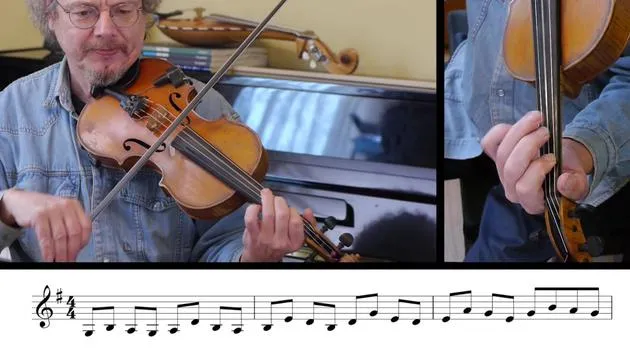
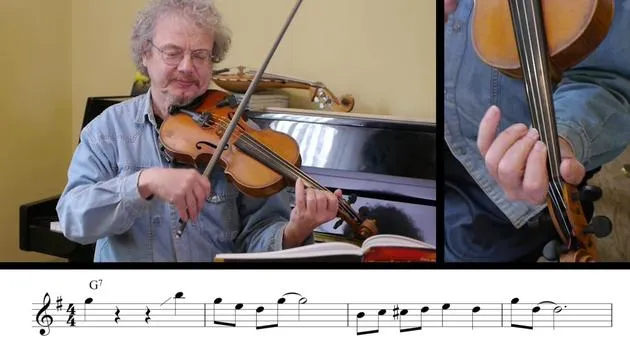
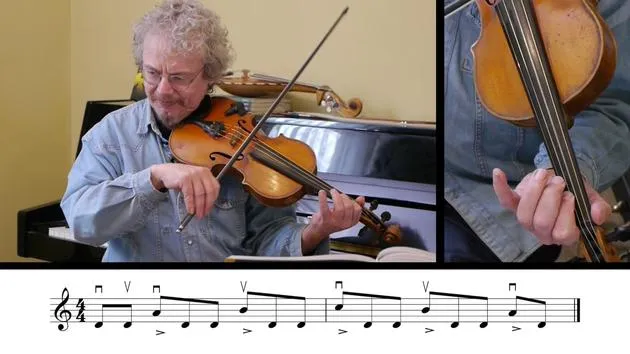
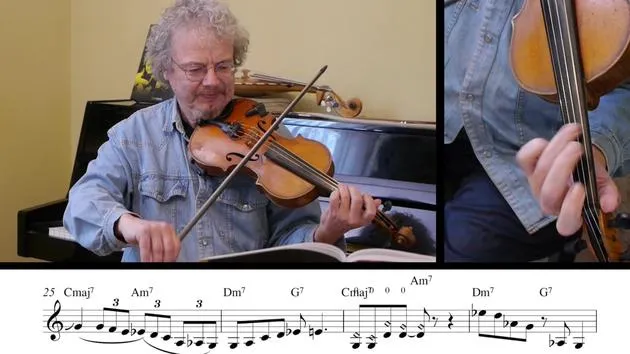
Swing melodies are written in sheet music with equal eighth notes (the quavers). However, they are played unevenly. So, whereas they're written, they'll actually be played like this:
- Achieved with short, uneven bows.
- Every second note is shorter or even ghosted (by which I mean it almost disappears).
Ghosted Notes
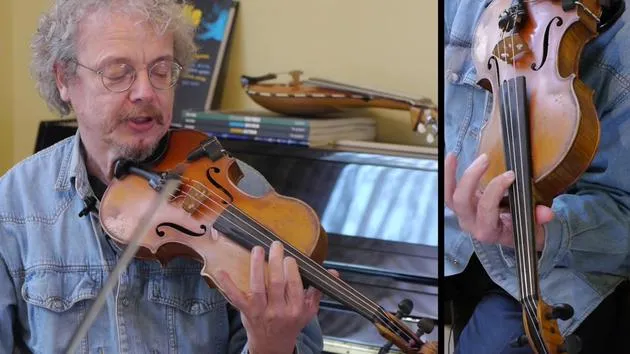
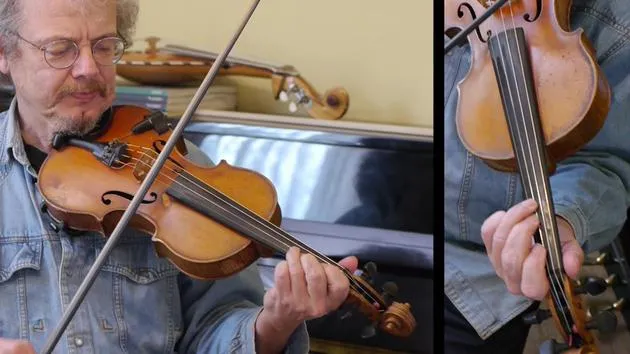
A ghosted note would be like this. You can practice your scales like this.
The Problem with Separate Bows
What we've done so far is just use separate bows, but there's a problem with this approach. As you play separate bows, you eventually run out of bow because you're doing:
- Long, short, long, short, long, short, long, short.
The way to get around this is by using bowing patterns that include slurs.
Common Bowing Patterns
Chain Bowing
Probably the most common bowing pattern is called chain bowing. This consists of starting off with a down bow and then slurring pairs. This gives a very even sound, swings nicely, and is easy to execute.
1 and 3 Pattern
Another pattern is what I call the 1 and 3. This consists of:
- One down bow
- Three slurred up bows
This is a nice pattern because it gives a bit of a punch. It sounds like:
Ba ba doo badap, ba doo badap badoo bada.
5 and 3 Pattern
Another pattern that I call the 5 and 3 consists of:
- Five separate bows
- Three slurred bows
This pattern creates syncopation and sounds like:
Ba ba da ba da ba ba ba da ba da ba.
Mastering the Patterns
So, in practice, which of these patterns are you going to actually use?
The answer, unfortunately, is all of them.
You need to master each one and be able to switch between them without really thinking about it at all. Learning the patterns initially is very easy, requiring only a few minutes of work. However, getting to a point where it becomes so automatic that you don't have to think about it may take weeks, months, or even years.
Practicing with a Tune
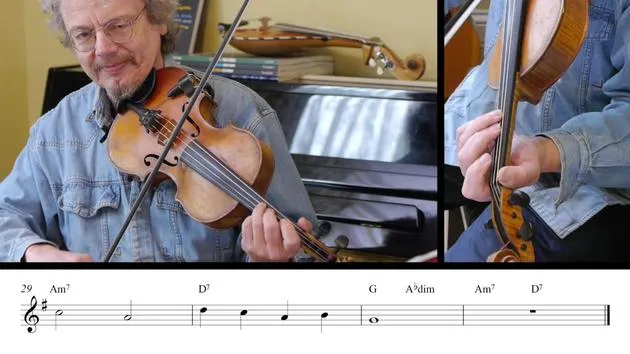
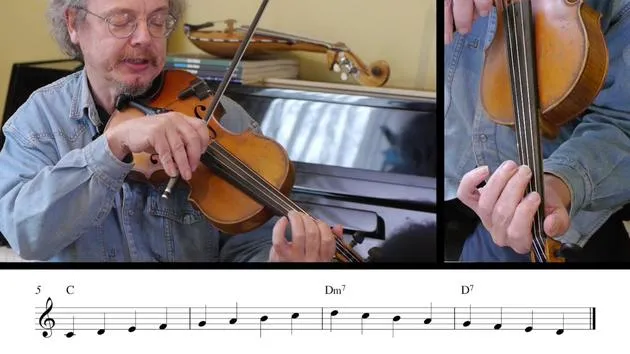
A tune that we can use to practice all of these different patterns is one I've written called Swinging the Sc.
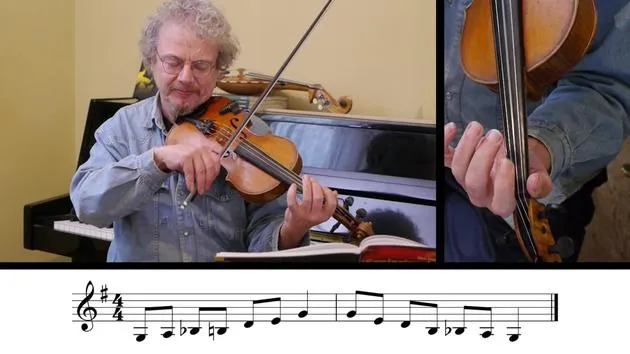
When you're playing improvisations, you will use these patterns, but you won't generally use scales in the way that we've just practiced them (from bottom to top and back down again). Instead, you'll use fragments of scales and patterns based on scales.
Here's an example of a Stefan Grappelli type phrase where he creates a pattern known as a descending cascade using a scale.
26 Lektionen
1 Std. 53 Min. strukturierte Videolektionen
Erweiterte Videofunktionen
Verlangsamen, Passagen loopen, mitlesen
Handy, Tablet & Desktop
Üben, wo du willst
100 % Zufriedenheitsgarantie
30 Tage Geld-zurück-Garantie
Lern deinen Guru kennen
Lern deinen Guru kennen
Chris Haigh ist seit 25 Jahren professioneller Fiddle-Spieler mit Erfahrung in vielen verschiedenen Genres. Er hat auf über 75 Alben gespielt und dabei mit Künstlern wie Alison Moyet, Bob Geldof, All About Eve, Michael Ball, David Soul, Oumou Sangare, The Quireboys, Riverdance, Morcheeba, James Galway und Steps zusammengearbeitet.
Er hat Swing-Jazz mit The Kimbara Brothers, Diz Disley, Le Jazz, The Hot Club of London und den Quecumbar Allstars gespielt und leitet die siebenköpfige sowjetische Swing-Band The Kremlinaires.
Chris gibt Unterricht und Workshops zur Jazzgeigen-Technik und hat Jazzgeige an den Universitäten Middlesex, Brunel und Newcastle sowie am Truro College unterrichtet. Zu seinen Veröffentlichungen zählen neun Fiddle-Bücher, darunter The Fiddle Handbook.
Außerdem betreibt er Fiddling Around (fiddlingaround.co.uk), vermutlich die umfassendste und meistbesuchte Quelle für Fiddle-Wissen im Netz.







